
Have you ever felt like you have been consistently creating content, promoting it across different platforms, and sharing links everywhere, but the number of clicks still feels disappointing? Sometimes, the problem is not that your content is bad, your product is unattractive, or your audience does not care. The real issue might be how you manage your links and read the data behind every click.
In today’s digital era, a link is not just an address that takes people to a specific page. A link is a small pathway that can reveal many important things: who is interested, where they come from, what device they use, when they are active, and what type of content makes them curious enough to take action. When managed properly, link management & analytics can become a powerful tool to make your content strategy more organized, your promotions more targeted, and your digital growth much faster.
What Is Link Management & Analytics?
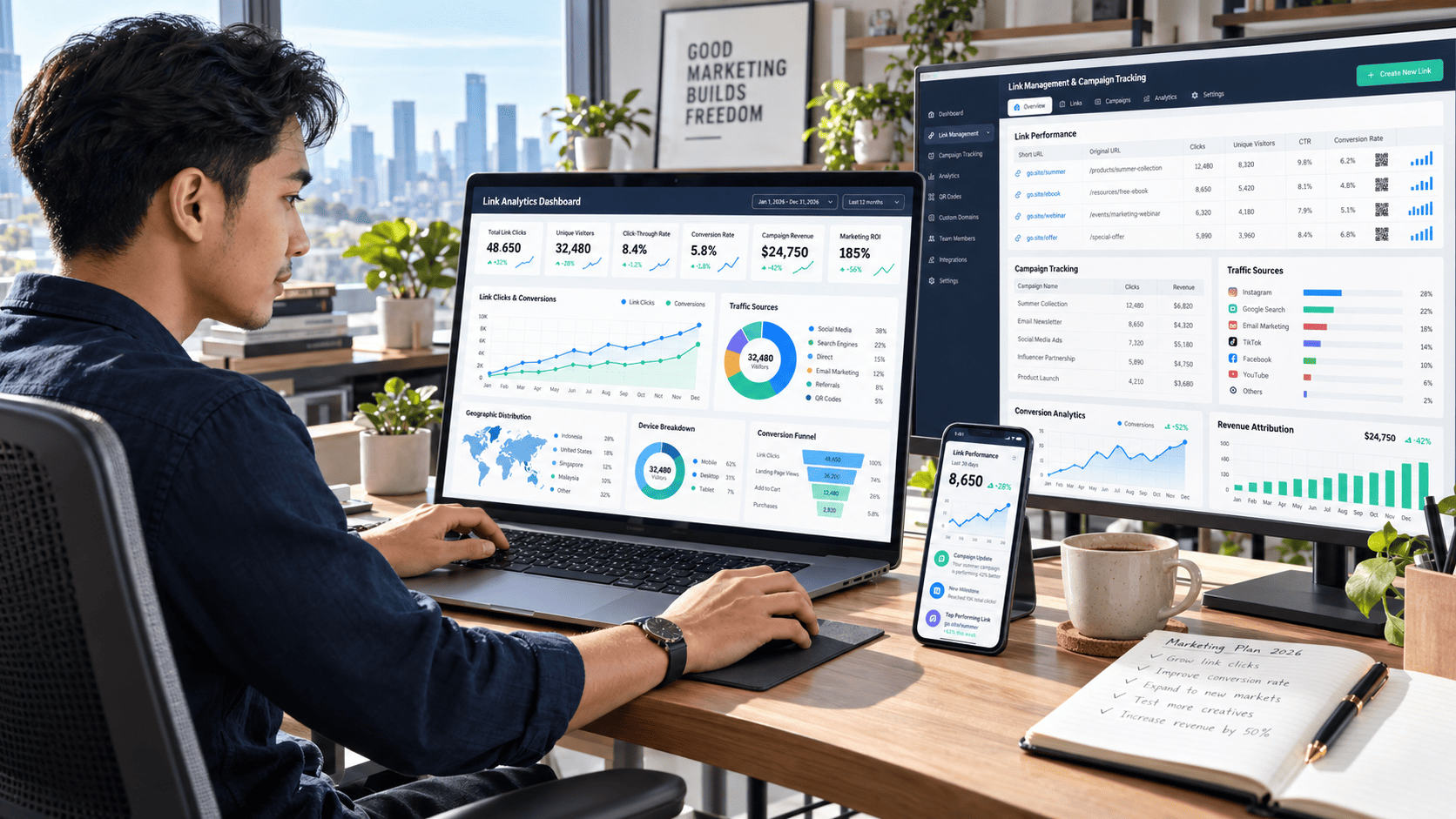
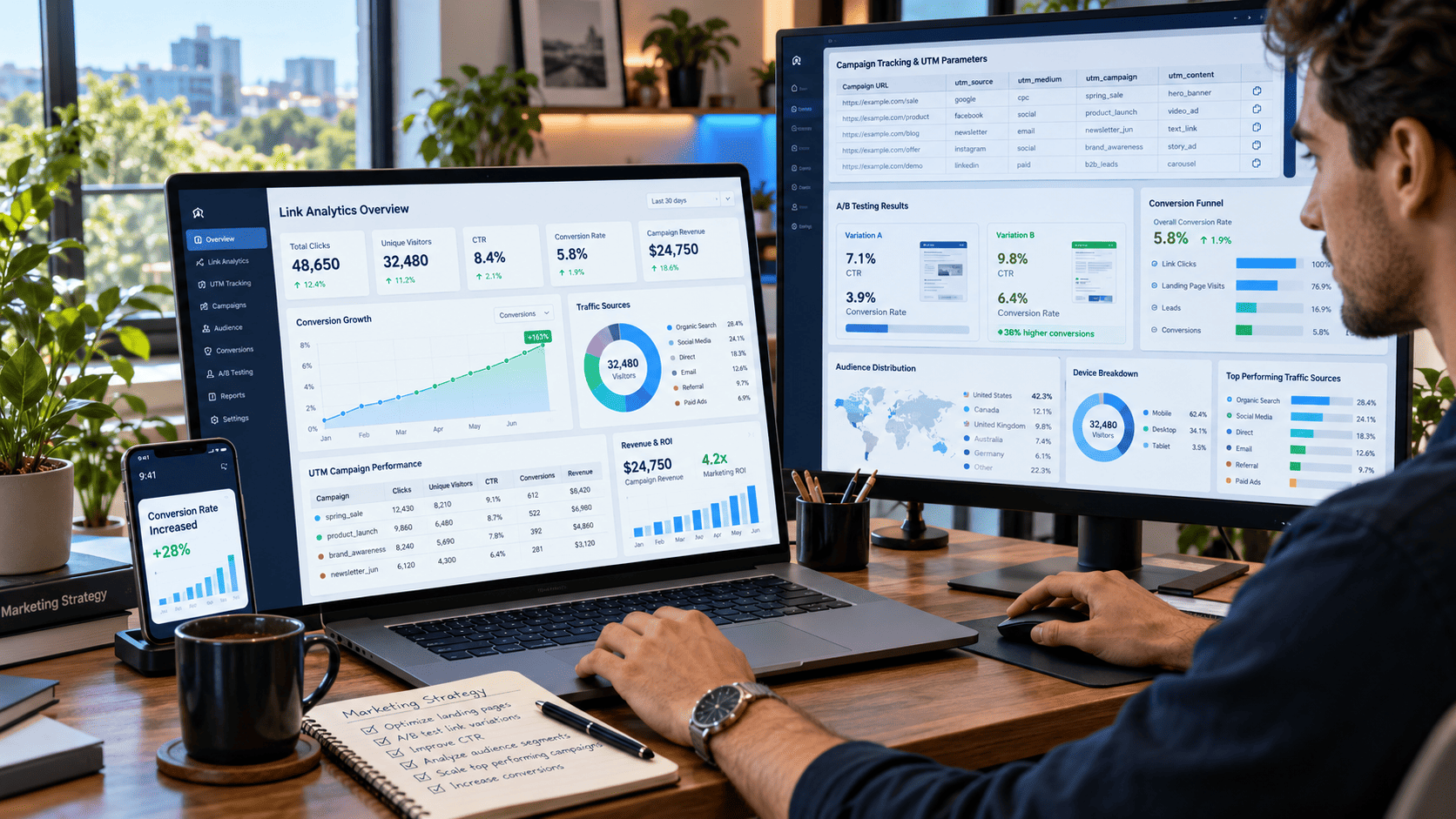
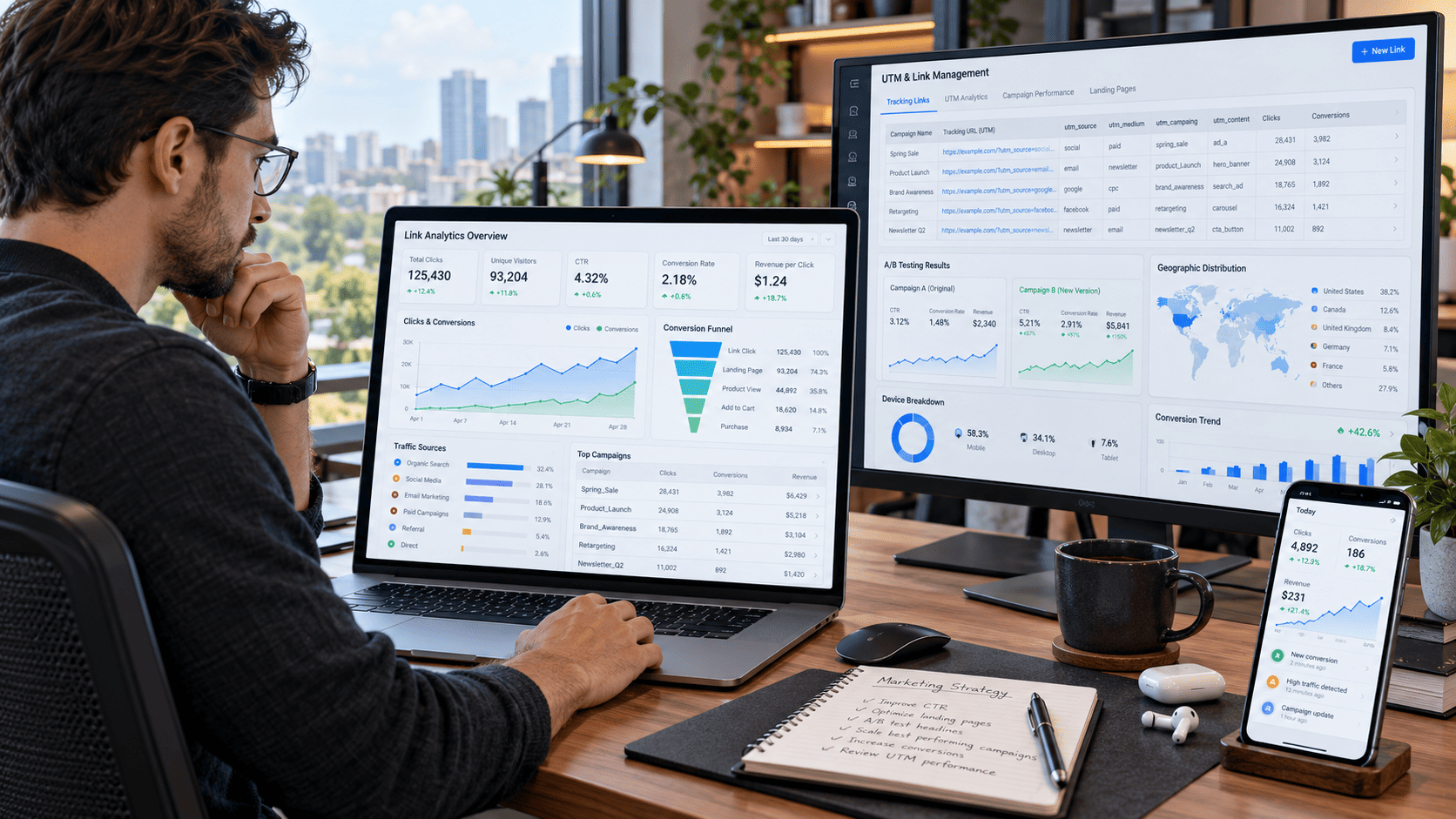
Link management is the process of organizing, shortening, labeling, sharing, and monitoring links so they are easier to use and analyze. Meanwhile, analytics is the process of reading data from link performance, such as the number of clicks, traffic sources, audience location, click time, and the most effective platforms.
Imagine you are a content creator sharing one product link on Instagram, TikTok, WhatsApp, and a blog. Without clear tracking, you only know the total number of people who visited the page. However, you do not know which platform brought the most clicks, what time your audience was most active, or which content actually encouraged people to take action.
With link management & analytics, you can discover things such as:
- Links from Instagram Story get the most clicks.
- Audiences from TikTok click a lot, but rarely buy.
- Blog articles bring less traffic, but higher-quality visitors.
- Links shared at night perform better than links shared during the day.
From simple data like this, you can make smarter decisions instead of relying only on guesses.
Why Link Management Matters for Content Creators and Online Businesses
Many people focus on creating content but forget to measure the results. In the digital world, even great content still needs a well-organized distribution path. A link is one of the main paths that connects your audience to the final destination, such as an article, landing page, online store, registration form, video, product catalog, or promotional page.
Making Links Look More Professional
Long and messy links often look unprofessional, especially when shared in social media bios, captions, WhatsApp messages, or promotional materials. Links that are too long can also make people hesitate to click because they look unfamiliar or suspicious.
With link management, you can make links shorter, cleaner, and easier to remember. Instead of sharing a long URL filled with random characters, you can use a short link that looks neater and matches your campaign.
For example, a skincare product promotion link can be made simpler with a clear campaign name. A blog article link can be named according to its topic. An event link can be made short so it is easy to share through chat or digital posters.
A clean-looking link is not only about appearance. It also helps build trust.
Making Multiple Campaigns Easier to Manage
If you only manage one or two links, everything may still feel easy. But when you start running many pieces of content, many products, many articles, or many promotions, your links can quickly become messy.
For example, you may have links for:
- Latest blog articles
- Affiliate products
- Registration forms
- WhatsApp catalogs
- YouTube videos
- Promotional landing pages
- Newsletters
- Ad campaigns
Without proper management, you may forget which links are still active, which ones are no longer relevant, and which ones have the best performance. Link management helps keep everything organized, allowing you to work faster and avoid the mistake of sharing the wrong link.
The Secret of Analytics: Small Data That Can Change Big Strategies
Analytics often sounds technical, but its benefits are very practical. You do not need to be a data expert to start using it. The important thing is knowing which numbers to pay attention to and how to turn them into action.
Total Clicks Are Not the Only Measure of Success
Many people focus too much on the number of clicks. High clicks do look exciting, but a high number of clicks does not always mean success if the audience does not take the next step.
For example, one link gets 5,000 clicks but does not generate any sales. Meanwhile, another link only gets 500 clicks but produces many registrations or purchases. From this example, it is clear that click quality is far more important than just click volume.
Some important metrics to pay attention to include:
- Total clicks
- Traffic sources
- Click ratio from each platform
- Peak click time
- Audience location
- Devices used
- Conversions after clicks
- Performance of each campaign
By understanding these metrics, you can see whether your content only attracts curiosity or truly drives action.
Knowing Which Platform Delivers the Best Results
Not every platform gives the same result. Instagram may be great for building closeness with your audience, TikTok is strong for quick reach, blogs are effective for long-term traffic, and WhatsApp is more powerful for closing sales or direct communication.
Through link analytics, you can see which platform best matches your goal. If your goal is to increase article visits, blogs and organic search may be more effective. If your goal is to sell products quickly, WhatsApp or Instagram Story may perform better. If your goal is to build awareness, TikTok may provide a stronger boost.
This data helps you allocate your energy more wisely. Instead of spending time on every platform without direction, you can focus on the channels that actually work.
How to Use Link Management & Analytics Effectively
Managing links does not have to be complicated. You can start with simple steps, then improve your system as your content or business grows.
1. Use Short Links That Are Easy to Understand
Short links are easier to look at, easier to share, and more professional. However, do not just create random short links. Use relevant names so you can easily recognize them when reading your reports.
For example, you can use structures like:
- june-promo
- free-ebook
- webinar-registration
- product-catalog
- seo-article
- instagram-bio-link
Clear names will help you distinguish each campaign without having to open them one by one.
2. Separate Links Based on Platform
One common mistake is using the same link for every platform. As a result, it becomes difficult to know the real source of your clicks.
It is better to create different links for each platform, even if the destination page is the same. For example, one landing page can have several tracking links:
- A link specifically for Instagram
- A link specifically for TikTok
- A link specifically for Facebook
- A link specifically for WhatsApp
- A link specifically for blogs
- A link specifically for email
This way, you can see which platform brings the highest-quality audience.
3. Monitor Peak Click Times
Posting time has a major impact on link performance. Some audiences are active in the morning, some click more often during lunch breaks, and others are more active at night.
By reading analytics, you can find your best timing pattern. If your promotional links get more clicks between 7 PM and 10 PM, you can use that time as your main window for sharing important content.
It may sound simple, but the impact can be significant. Content shared at the right time has a higher chance of being seen, clicked, and acted upon.
4. Test Different Versions of Call-to-Action
Sometimes, the problem is not the link itself, but the sentence that encourages people to click. A call-to-action, or CTA, plays a big role in increasing clicks.
Examples of CTAs you can test include:
- Check the complete guide here
- See the full example now
- Claim the free bonus through this link
- Read the complete strategy before you start
- Click to see the offer details
Every audience may respond differently to different language styles. With analytics, you can see which CTA gets the most clicks and actions.
Common Mistakes in Managing Links
Even though link management looks simple, many people still make mistakes that prevent their links from performing well.
Using One Link for Every Purpose
Using one link for all platforms may feel practical, but it makes analysis difficult. You cannot clearly identify the strongest traffic source or compare performance across platforms.
Not Checking Links Regularly
Links can break, destination pages can change, products can run out of stock, or promotions can end. If links are not checked regularly, your audience may be directed to irrelevant pages. This can reduce trust and cause you to lose conversion opportunities.
Only Looking at Clicks Without Understanding the Context
High clicks do not always mean your strategy is successful. You need to understand the context. Where did the clicks come from? Did the audience stay on the page? Did they buy, register, read, or leave immediately?
Good analytics is not just about reading numbers. It is about understanding the story behind those numbers.
Practical Tips to Increase Clicks and Help Your Audience Understand Better
To make link management & analytics work more effectively, you can start with small but consistent habits.
First, name your links clearly based on the campaign. Second, create different links for each platform. Third, check your click reports regularly, at least once a week. Fourth, compare the performance of old and new content. Fifth, improve your CTA if the click rate is low. Sixth, make sure the destination page matches the promise in your content.
For example, if you create content about “how to increase online sales,” the clicked link should lead to a page that truly discusses that topic. Do not send your audience to a general page that makes them confused. The better the match between your content, CTA, and destination page, the higher the chance your audience will stay.
Link Management & Analytics Help Content Grow Faster
Growing content is not only about posting more often. It is about continuously improving content based on data. This is where link management & analytics play an important role.
When you know which articles get the most clicks, you can create follow-up content with similar topics. When you know which platform is the most active, you can adjust your promotional style. When you know which CTA works best, you can reuse it in the next campaign.
Slowly, your content strategy becomes sharper. You no longer work based on guesses, but based on real patterns from audience behavior.
Conclusion
Link management & analytics are an important combination for anyone who wants to seriously grow content, an online business, personal branding, or digital campaigns. By managing links neatly and reading click data carefully, you can understand what your audience truly likes, which platforms are the most effective, and which strategies need improvement.
The secret of link management & analytics proven to work is not about using complicated tools. It is about building the habit of reading data and taking action based on it. Start with simple steps: organize your links, separate them by platform, monitor performance, test CTAs, and improve your strategy regularly.
If you want more clicks, better audience understanding, and faster content growth, do not let your links remain just ordinary addresses. Turn every link into a source of insight that helps you grow smarter in the digital world.