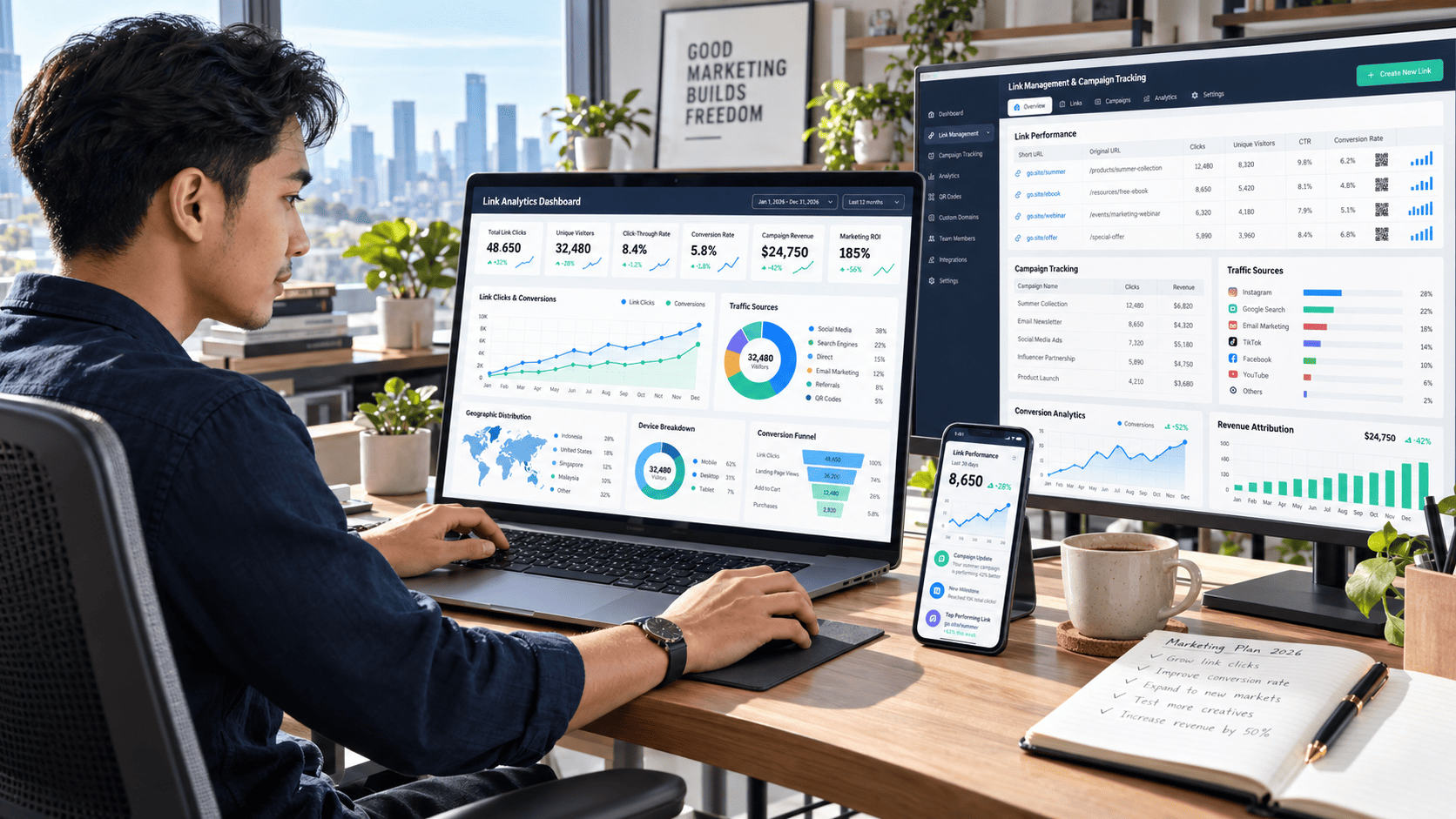

A link may look like the simplest part of a digital campaign, but it often carries more valuable information than most marketers realize. Every click can reveal where your audience came from, what caught their attention, which device they used, and whether they continued toward the action you wanted.
Unfortunately, many content creators, marketers, and online business owners still share long, unorganized links without tracking what happens afterward. They may receive traffic, but they cannot clearly explain why one campaign performs well while another struggles.
The proven secret is not simply creating more links. It is building a structured link management and analytics system that turns every click into useful insight. With the right approach, you can create cleaner links, measure campaign performance, understand audience behavior, and make smarter decisions that gradually increase engagement and conversions.
What Is Link Management and Why Does It Matter?
Link management is the process of creating, organizing, tracking, updating, and analyzing the links used across digital channels. These links may appear in social media posts, email campaigns, advertisements, blog articles, landing pages, messaging apps, or downloadable resources.
Instead of treating each URL as a static address, link management transforms it into a measurable marketing asset.
A well-managed link can help you understand:
- Which platform sends the most visitors
- Which campaign generates the highest click-through rate
- Where your audience is located
- What devices people use
- What time users are most active
- Which content encourages further action
- Where potential customers leave the conversion journey
Without this information, campaign decisions are often based on assumptions. You may continue promoting content on a platform that produces many impressions but very few valuable visitors.
Link analytics replaces that uncertainty with real data.
The Real Reason Some Links Get More Clicks
People do not click links simply because they exist. They click when the surrounding message creates enough curiosity, trust, relevance, or urgency.
A successful link usually combines three important elements:
- A clear reason to click
- A trustworthy appearance
- A smooth experience after the click
Imagine seeing two links in a social media post. The first is a long URL filled with random characters and tracking parameters. The second is short, readable, and connected to a recognizable brand. Most users will naturally feel more comfortable with the second option.
However, appearance is only the beginning. The message before the link must also communicate value.
“Click here” gives users very little motivation.
“See the complete campaign breakdown” tells them exactly what they will receive.
The destination must then deliver what was promised. If the link leads to a slow, confusing, or irrelevant page, the campaign may generate clicks without generating meaningful results.
How Link Analytics Reveals Audience Behavior
Basic analytics tells you how many people clicked. Advanced link analytics helps you understand the story behind those clicks.
Traffic Sources Show Where Attention Comes From
Traffic source data identifies the channels sending visitors to your content. You may discover that Instagram produces the highest number of clicks, while email visitors spend more time on your website and convert more frequently.
This distinction matters.
The channel with the most traffic is not always the channel with the most valuable traffic. A smaller audience with strong intent may contribute more revenue than a large audience that clicks out of curiosity.
Create separate tracking links for each platform rather than using the same URL everywhere. For example:
- One link for Facebook
- One link for Instagram
- One link for email newsletters
- One link for paid advertising
- One link for influencer partnerships
This structure allows you to compare performance accurately.
Device Data Improves the User Experience
Link analytics can also reveal whether visitors use mobile phones, tablets, or desktop computers.
If most clicks come from smartphones, your destination page must load quickly and remain easy to navigate on a smaller screen. Buttons should be visible, text should be readable, and forms should require minimal effort.
A campaign can have an excellent message and strong targeting but still fail because the landing page was designed mainly for desktop users.
Device data helps you identify that problem before wasting more traffic.
Location Data Supports Better Targeting
Geographic analytics shows where your audience is located. This can help you adjust language, publishing schedules, offers, pricing, and promotional messages.
For example, a content creator may believe most followers are from the United States but discover that the strongest engagement comes from Southeast Asia. That insight could influence posting times and future content topics.
An online store may notice strong click activity from a country where shipping is unavailable. Instead of ignoring the data, the business can explore local delivery options or create region-specific campaigns.
Time-Based Data Identifies Peak Engagement
Audience activity changes throughout the day and week. Link analytics can reveal the hours when people are most likely to click.
Publishing every post at the same time may be convenient, but it is not always effective. A professional audience might engage during lunch breaks or weekday mornings, while entertainment-focused audiences may become more active at night.
Tracking links over several weeks gives you enough information to identify useful patterns rather than relying on one unusually successful post.
A Practical Link Management Strategy That Works
A strong system does not need to be complicated. It simply needs to be consistent.
Step 1: Define One Goal for Every Link
Before creating a link, decide what the user should do after clicking.
The goal might be to:
- Read an article
- Watch a video
- Download a resource
- Register for an event
- Join an email list
- Purchase a product
- Request more information
One link should lead toward one clear action. When a page contains too many competing choices, users may become confused and leave without completing any of them.
Step 2: Create a Consistent Naming Structure
Unorganized links quickly become difficult to manage, especially when several campaigns are active at the same time.
Use a naming format that includes relevant campaign details, such as:
Platform – Campaign – Content – Date
A link name could look like:
Instagram – Summer Campaign – Video A – July
This structure makes reporting easier and reduces the risk of comparing the wrong data.
Step 3: Use Tracking Parameters Carefully
UTM parameters are small pieces of information added to a URL to identify the source, medium, campaign, and content variation.
A properly tagged link can tell analytics tools whether a visitor came from an email, social post, advertisement, or partner campaign.
Keep your naming conventions consistent. Using “facebook,” “Facebook,” and “FB” as separate source names can split data into different categories and make reports harder to interpret.
Choose one standard format and use it across the entire team.
Step 4: Shorten and Brand Important Links
Short links are easier to share, remember, and display. Branded links can also increase trust because users can recognize the organization behind them.
However, shortening should not hide the true purpose of the destination. Avoid misleading links that create curiosity but send users somewhere unexpected. That approach may increase clicks temporarily, but it damages trust and can reduce long-term engagement.
Step 5: Test Different Messages
The same destination can be promoted using different headlines, calls to action, and content formats.
For example:
- “Read the complete guide”
- “Discover the strategy behind the results”
- “See how the campaign generated more clicks”
Create a separate tracking link for each variation. After collecting enough data, compare which message attracts clicks and which one produces the strongest post-click behavior.
A high click-through rate is helpful, but the winning message should also attract people who remain interested after arriving.
The Metrics That Matter Most
Link analytics dashboards often display many numbers, but not every metric deserves equal attention.
Total Clicks
Total clicks measure how often a link was opened. This is useful for understanding overall interest, but it does not always represent unique visitors.
One person may click the same link several times.
Unique Clicks
Unique clicks estimate how many individual users interacted with the link. Comparing unique clicks with total clicks can show whether people return to the same resource.
Click-Through Rate
Click-through rate compares the number of clicks with the number of impressions, views, or delivered messages.
A high click-through rate usually suggests that the content, audience, and call to action are well aligned.
Conversion Rate
Conversion rate measures how many visitors complete the desired action after clicking.
This is often more important than total clicks. A campaign that receives 500 clicks and 50 conversions may be more valuable than one that receives 5,000 clicks and only 10 conversions.
Bounce and Engagement Behavior
A click does not automatically mean the visitor found what they needed. Website analytics can show whether people leave immediately, continue reading, visit additional pages, or complete important events.
Combine link analytics with website analytics to understand the entire journey.
Common Link Management Mistakes to Avoid
One common mistake is using the same link across every campaign. This makes it almost impossible to identify which channel or message produced the result.
Another mistake is focusing only on click volume. Large numbers may look impressive, but low-quality traffic can produce poor engagement and weak conversions.
Broken or outdated links also create unnecessary frustration. Campaign links should be reviewed regularly, especially after website pages, product offers, or domain structures change.
Finally, avoid collecting data without acting on it. Analytics only becomes valuable when it influences future decisions.
A simple monthly review can answer three important questions:
- What performed best?
- What performed poorly?
- What should change next?
Turn Every Click Into a Better Decision
The proven secret to link management and analytics is consistency. Create separate links for important channels, use clear tracking parameters, organize campaigns carefully, and evaluate what visitors do after they click.
Over time, these small habits reveal powerful patterns. You will understand which platforms attract valuable audiences, which messages create curiosity, and which landing pages turn attention into action.
Do not treat links as simple pathways between pages. Treat them as measurable signals that show what your audience wants and how they behave.
Start by reviewing the links in one active campaign. Organize them, track them separately, and compare the results. Then use what you discover to improve your next piece of content, email, advertisement, or landing page.
Every click contains information. The faster you learn from it, the faster your digital strategy can grow.