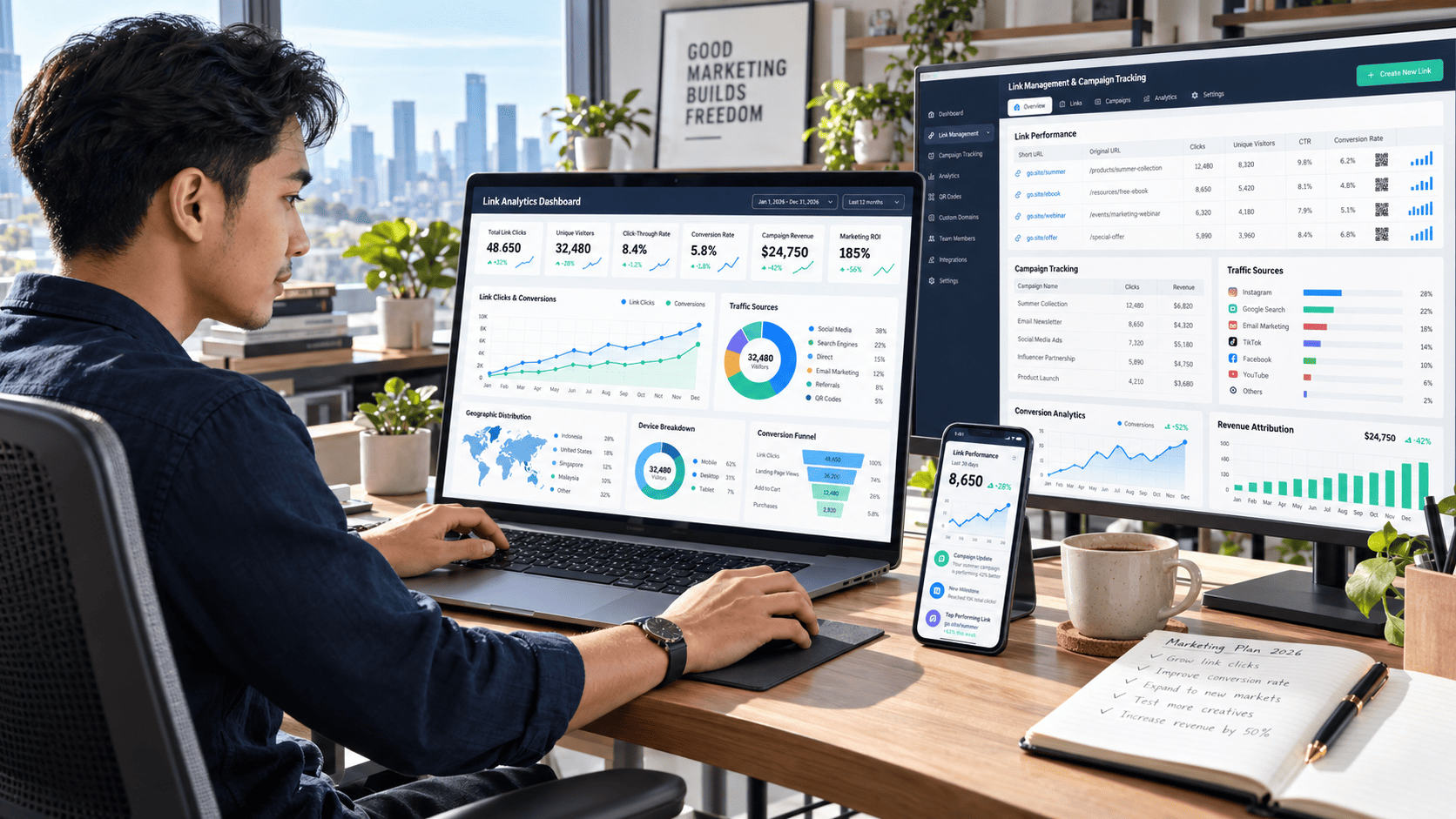

Publishing great content is only half the battle. You can spend hours writing an article, designing a landing page, or creating a social media post, yet still struggle to understand why some links attract hundreds of clicks while others barely get noticed.
The problem is not always the quality of the content. Sometimes, the real issue is how links are organized, distributed, tracked, and optimized.
Without effective link management and analytics, every campaign becomes a guessing game. You may know how many people viewed a post, but not which platform generated the most valuable visitors. You may see clicks increasing, but have no idea whether those visitors stayed, subscribed, or purchased anything.
The proven secret is simple: treat every link as a measurable part of your content strategy rather than a basic path from one page to another.
When links are managed properly and supported by accurate analytics, you gain a clearer picture of your audience. You can discover what attracts attention, which channels perform best, and what changes can accelerate content growth.
What Is Link Management and Why Does It Matter?
Link management is the process of creating, organizing, monitoring, updating, and optimizing the links used across your website, social media accounts, email campaigns, advertisements, and other digital channels.
A basic link only sends someone to a destination. A properly managed link can reveal much more, including:
- Where the visitor came from
- Which campaign generated the click
- What device the visitor used
- When the link received the most engagement
- Which content topic attracted attention
- Whether visitors completed a desired action
For content creators, marketers, bloggers, and online business owners, this information is extremely valuable. It transforms ordinary clicks into useful audience insights.
Imagine sharing the same article on Facebook, Instagram, LinkedIn, and an email newsletter. When every platform uses the exact same untracked URL, you may see total traffic but struggle to identify which channel produced the best results.
With organized tracking links, each source can be measured separately. You may discover that Facebook generates the most clicks, while email subscribers spend more time reading and convert at a higher rate. That distinction allows you to improve future campaigns with greater confidence.
The Connection Between Link Management and Content Growth
Content growth rarely happens because of one viral post. Sustainable growth usually comes from repeating what works, improving what underperforms, and removing activities that waste time.
Link analytics provides the evidence needed to make those decisions.
More Clicks Do Not Always Mean Better Results
A campaign that generates 5,000 clicks may appear successful. However, if most visitors leave immediately, those clicks may have limited value.
Meanwhile, another campaign may generate only 1,000 clicks but produce more newsletter registrations, product inquiries, or sales.
That is why link performance should not be evaluated using click volume alone. Strong link analytics connects clicks with deeper engagement metrics, such as:
- Time spent on the destination page
- Bounce or engagement rate
- Pages viewed per session
- Newsletter subscriptions
- Downloads
- Purchases
- Contact form submissions
The goal is not simply to attract more clicks. It is to attract the right clicks from people who are genuinely interested in the content or offer.
Analytics Reveals What Your Audience Actually Wants
Audiences do not always behave the way creators expect.
A blogger may believe readers prefer long tutorials, only to discover that short comparison guides receive more clicks. A business may focus heavily on promotional content while educational posts consistently attract more qualified visitors.
Link analytics removes assumptions from the process.
By comparing click activity across topics, headlines, platforms, and formats, clear patterns begin to appear. These patterns can guide future editorial decisions and help you create content that matches real audience interests.
How to Build an Effective Link Management System
A strong link management strategy does not need to be complicated. The most important factor is consistency.
1. Organize Links by Campaign and Channel
Avoid creating links without a clear naming structure. Every tracked link should indicate where it is being used and what campaign it belongs to.
For example, links can be organized according to:
- Campaign name
- Social media platform
- Content format
- Publication date
- Target audience
- Promotional objective
A consistent structure prevents confusion when dozens or hundreds of links begin accumulating.
Keep Naming Conventions Simple
A practical label might include the content topic, platform, and campaign period. A link used for an email campaign could be labeled differently from the version shared on Facebook.
The names should be easy for team members to understand without opening every link individually.
2. Use Trackable Links for Every Major Distribution Channel
Separate links should be created for major traffic sources. This allows you to compare their performance accurately.
For example, one article may use different tracked links for:
- Facebook posts
- Instagram bio
- LinkedIn updates
- YouTube descriptions
- Email newsletters
- Paid advertisements
- Partner websites
Although every link leads to the same article, the tracking information identifies the source of each visit.
This makes it easier to calculate which channel delivers the strongest engagement and return on effort.
3. Add UTM Parameters Where Appropriate
UTM parameters are tracking details added to the end of a URL. They help analytics platforms identify the source, medium, and campaign connected to a visit.
A tracked URL may contain information such as:
- Source: Facebook, Google, newsletter, or partner site
- Medium: Social, email, referral, or paid advertising
- Campaign: Product launch, seasonal promotion, or content series
- Content: A specific button, image, headline, or placement
UTM tracking becomes especially useful when the same destination appears in multiple campaigns.
However, consistency is essential. Using different spelling or capitalization for the same channel can split the data into separate categories and make reporting less reliable.
4. Shorten Long Links Carefully
Long tracking URLs can look messy, especially on social media or printed materials. A branded short link can make the URL cleaner, easier to remember, and more professional.
For example, instead of sharing a long address filled with tracking parameters, a brand could use a short, recognizable link related to the campaign.
Short links can also improve management by allowing the destination to be updated without replacing the public-facing URL.
However, transparency matters. Visitors may hesitate to click unfamiliar shortened links. Using a branded domain can create more trust than relying on an unknown generic shortener.
5. Monitor Broken and Outdated Links
Broken links create a frustrating experience and can reduce trust. They may also prevent visitors from reaching important pages, products, or resources.
Links can stop working for several reasons:
- A page was deleted
- The URL structure changed
- A product is no longer available
- A campaign landing page expired
- An external website moved its content
Regular link audits help identify these issues before they affect too many visitors.
High-traffic pages should receive priority. A broken link inside a popular article can waste hundreds or thousands of potential visits.
Key Link Analytics Metrics Worth Tracking
A dashboard filled with numbers is only useful when you know which metrics support your goals.
Total Clicks
Total clicks show the overall level of interest in a link. This is useful for comparing headlines, platforms, and campaign reach.
However, total clicks should always be reviewed alongside engagement and conversion data.
Unique Clicks
One person may click the same link several times. Unique clicks provide a clearer estimate of how many individual visitors interacted with it.
The difference between total and unique clicks may also reveal repeated interest. For example, visitors may return to a guide because they find it useful.
Click-Through Rate
Click-through rate compares the number of clicks with the number of people who saw the link.
A low click-through rate may indicate that the headline, call-to-action, placement, or visual needs improvement.
A high rate suggests that the message successfully captured attention, although the quality of the destination page still determines whether visitors take further action.
Traffic Source
Traffic-source data reveals where clicks originate. It helps identify which channels deserve more attention.
A platform generating fewer clicks may still produce more engaged visitors. That is why traffic sources should be evaluated based on both quantity and quality.
Device and Location Data
Device information shows whether visitors use smartphones, tablets, or desktop computers. This can influence page design, loading speed, button placement, and content length.
Location data may reveal unexpected markets or regional interests. A creator targeting one country could discover growing engagement from another region, creating an opportunity for localized content.
Conversion Rate
Conversion rate measures how many visitors complete the intended action after clicking.
The action may involve:
- Making a purchase
- Joining an email list
- Downloading a resource
- Booking a consultation
- Creating an account
- Completing a form
This is often one of the most important metrics because it connects link activity with measurable outcomes.
Practical Ways to Increase Clicks Using Analytics
Analytics becomes powerful when it leads to action.
Test Different Headlines and Calls-to-Action
Small wording changes can produce significant differences in click performance.
Compare direct calls-to-action such as “Read the Full Guide” with benefit-focused wording such as “Discover How to Increase Your Traffic.”
Test one major element at a time. Changing the headline, image, button text, and audience simultaneously makes it difficult to identify what caused the result.
Match the Link With User Intent
A link should lead visitors to the content they expect.
When a social media post promises a beginner’s guide, the destination should not immediately push an unrelated product. A mismatch between the message and landing page can increase exits and damage trust.
Clear alignment creates a smoother journey from curiosity to action.
Focus on High-Performing Channels
Analytics may reveal that certain platforms consistently generate stronger results. Instead of distributing equal effort everywhere, invest more time in channels that attract the most valuable visitors.
This does not mean abandoning every low-performing platform immediately. Some channels require a different content style, posting schedule, or audience approach.
Use the data to experiment before making a final decision.
Refresh Successful Content
Older content may continue receiving clicks long after publication. When analytics reveals a high-performing article, update it with fresh examples, improved visuals, relevant internal links, and a stronger call-to-action.
Refreshing proven content is often more efficient than constantly starting from zero.
Common Link Management Mistakes to Avoid
Even a good strategy can produce unreliable results when tracking is inconsistent.
Common mistakes include:
- Using the same tracking link across every platform
- Creating unclear campaign names
- Ignoring duplicate or outdated links
- Measuring clicks without checking conversions
- Using misleading short links
- Forgetting to test destination pages
- Allowing broken links to remain active
- Tracking excessive data without a clear objective
The best system is not necessarily the most complex. It is the one that provides accurate, understandable information and supports better decisions.
Conclusion: Turn Every Link Into a Growth Opportunity
Effective link management and analytics give you more than attractive short URLs or detailed dashboards. They provide a reliable way to understand how people discover, interact with, and respond to your content.
By organizing links consistently, tracking individual channels, reviewing meaningful metrics, and applying what the data reveals, you can increase clicks without relying on guesswork. More importantly, you can identify which clicks lead to genuine engagement, loyal audiences, and measurable growth.
Start by reviewing the links in your most important content or campaign. Separate the major traffic sources, track their performance, and compare the results over time. One small improvement in how links are managed can reveal insights that reshape your entire content strategy.
Put the data to work, refine what already performs well, and turn every link into a smarter path toward sustainable content growth.