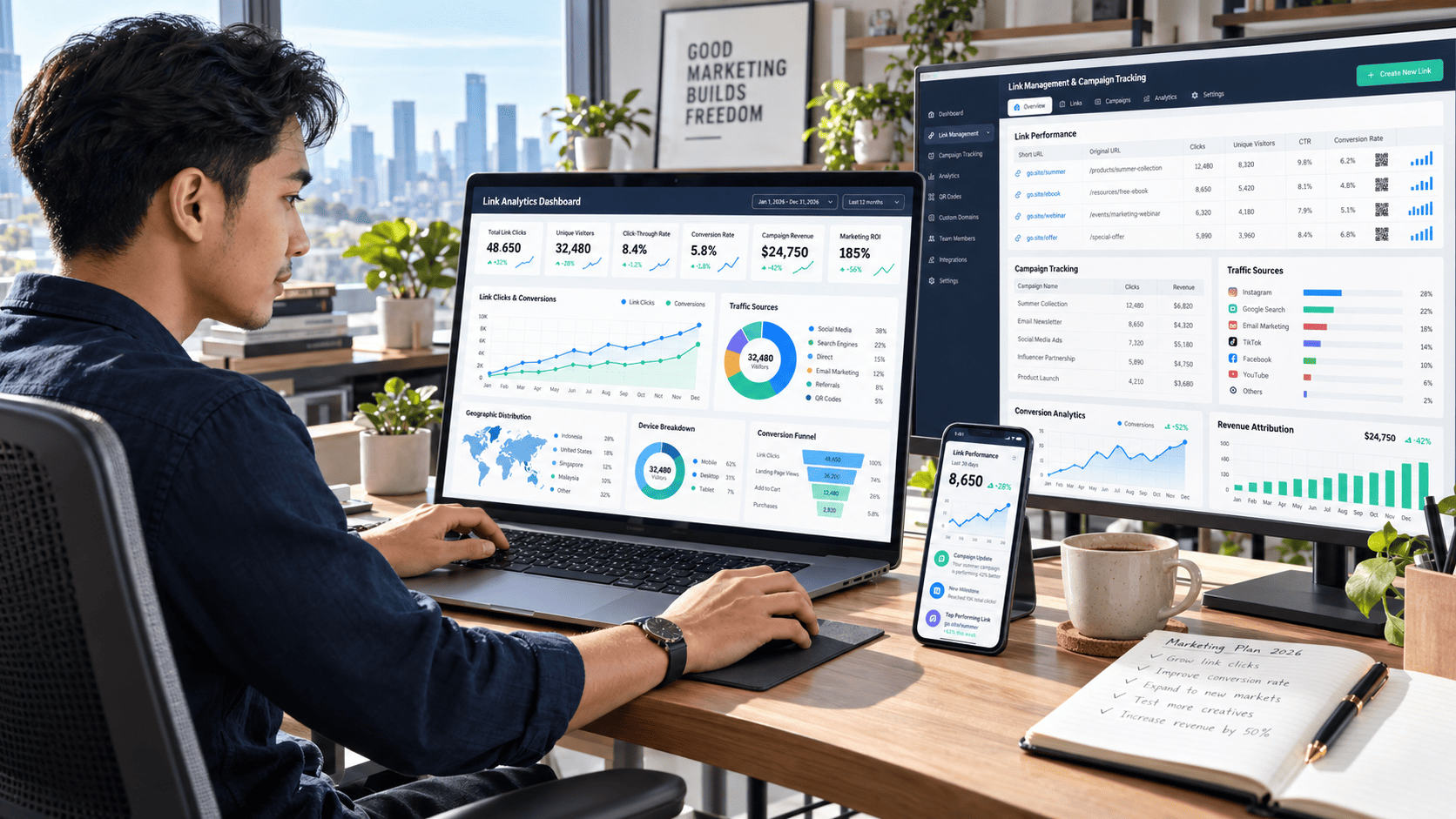

Why Link Management & Analytics Matter More Than Ever
A single link can look simple, but behind that link, there is often a whole story waiting to be discovered. It can show where your audience comes from, what content they care about, which platform gives you the best traffic, and whether your campaign is actually working or just looking busy on the surface.
For content creators, bloggers, digital marketers, affiliate publishers, small business owners, and online brands, links are no longer just clickable text. They are traffic paths, audience signals, conversion bridges, and growth tools. Without proper link management & analytics, you may be sharing links every day without knowing which ones bring real results.
Imagine posting the same campaign link on Instagram, TikTok, Facebook, email, and your blog. The clicks come in, but you do not know which platform performed best. You may think your audience loves your Instagram post, while the real traffic is actually coming from your email subscribers. This is where smart link tracking changes everything.
Link management & analytics help you stop guessing and start making decisions based on real behavior.
What Is Link Management?
Link management is the process of organizing, customizing, tracking, and optimizing the links you share online. Instead of using long, messy URLs, you can create clean, branded, and trackable links that are easier to remember and more trustworthy to click.
For example, instead of sharing a long affiliate or campaign URL filled with random characters, you can create a shorter and cleaner version that looks professional. This makes your content look more polished and helps your audience feel safer when clicking.
Good link management usually includes:
- Shortening long URLs into clean links.
- Creating branded links that match your domain or brand name.
- Organizing links by campaign, platform, or content type.
- Tracking clicks and traffic sources.
- Updating destination URLs without changing the shared link.
- Measuring performance across different channels.
This may sound simple, but it can have a huge impact on your content growth. When every link is organized and measurable, you can clearly see what works and what needs improvement.
What Is Link Analytics?
Link analytics is the data behind your links. It tells you how people interact with the URLs you share. Instead of only seeing that a link received clicks, you can understand the deeper details behind those clicks.
With link analytics, you can usually track data such as:
- Total clicks
- Unique clicks
- Traffic source
- Device type
- Country or location
- Browser used
- Time and date of clicks
- Campaign performance
- Conversion behavior
This information helps you understand your audience better. For example, if most of your clicks come from mobile users, you need to make sure your landing page loads fast and looks good on smartphones. If your audience clicks more at night, you can schedule your posts during that time. If one platform sends high clicks but low conversions, you may need to adjust your message or offer.
The secret is not just collecting data. The real secret is knowing how to use that data to improve your next move.
The Proven Secret: Stop Sharing Links Blindly
Many creators and marketers make the same mistake. They create content, add a link, publish it, and hope for the best. If the post gets clicks, they feel happy. If it performs badly, they move on without understanding why.
That approach wastes a lot of potential.
The proven secret to link management & analytics is simple: every link should have a purpose, and every click should teach you something.
Before sharing any link, ask yourself:
What is the goal of this link?
Is it meant to drive traffic to a blog post? Promote a product? Grow an email list? Increase affiliate sales? Bring visitors to a landing page? When the goal is clear, it becomes easier to measure success.
Where will this link be shared?
A link shared on TikTok may perform differently from a link shared in an email newsletter. Social media audiences often click because of curiosity, while email subscribers may click because they already trust you.
What action do you want after the click?
Getting clicks is good, but clicks alone are not always enough. You may want readers to buy, subscribe, read another article, watch a video, or fill out a form. Your link strategy should support that next step.
When you treat every link as part of a bigger journey, your content becomes more strategic and your growth becomes easier to understand.
How Link Management Helps Boost Clicks
Clean and professional links can increase trust. People are more careful about what they click today, especially when links look suspicious, too long, or unclear. A short, branded, and relevant link can feel safer and more intentional.
For example, a link like:
yourbrand.com/seo-guide
looks more trustworthy than a random URL filled with symbols and tracking codes.
A good link also creates curiosity. If the link name clearly matches the content, people know what to expect. This can improve click-through rate because the link feels useful, not confusing.
Link management also helps you test different versions of your content. You can create separate tracking links for different platforms and compare the results. One link can be used for Instagram Stories, another for Facebook posts, another for email, and another for blog banners. Even if they all lead to the same page, the analytics will show which channel gives the strongest performance.
That means you are not only sharing links. You are building a system that helps you grow smarter.
Understanding Audience Behavior Through Link Analytics
Audience behavior is one of the most valuable things you can learn from your links. Sometimes, your audience tells you what they like through comments or messages. But most of the time, they reveal it through actions.
They click certain topics more often. They ignore some offers. They respond better to specific platforms. They visit during certain hours. They use particular devices.
Link analytics helps you notice these patterns.
For example, let’s say you are a blogger who writes about digital marketing. You share three links in one week:
- A guide about SEO basics.
- A tutorial about email marketing.
- A review of a social media tool.
After checking your analytics, you notice that the SEO guide gets the most clicks, but the social media tool review gets the most conversions. That tells you something important. Your audience may be curious about SEO, but they are more ready to take action when it comes to tools.
This kind of insight can shape your future content strategy. You can create more comparison articles, tool reviews, tutorials, and landing pages around topics that lead to real action.
Practical Ways to Use Link Management & Analytics
A strong link strategy does not need to be complicated. You can start with simple steps and improve over time.
1. Create Different Links for Different Platforms
Do not use the same generic link everywhere if you want clear data. Create separate links for each platform. For example:
- One link for Instagram
- One link for TikTok
- One link for Facebook
- One link for email
- One link for your blog
This makes it easier to compare performance and understand which channel deserves more attention.
2. Use Clear and Descriptive Link Names
A link should be easy to understand. Avoid random words or unclear codes. Use names that describe the destination or campaign.
For example:
yourbrand.com/content-growth-guide
is better than:
yourbrand.com/x78ab91
Clear links are easier to remember, easier to trust, and better for branding.
3. Track Your Best-Performing Content
Not every piece of content will perform equally. Some posts will bring quick traffic, while others will continue generating clicks for weeks or months. Link analytics helps you find these winning pieces.
Once you know which links perform best, you can promote them again, update the content, create related posts, or turn them into email campaigns.
4. Watch the Quality of Clicks, Not Just the Quantity
High clicks do not always mean high success. A link can get thousands of clicks but very few conversions. Another link may get fewer clicks but better results.
Pay attention to what happens after the click. Are people staying on the page? Are they signing up? Are they buying? Are they reading more content?
The best link strategy focuses on meaningful clicks, not just big numbers.
5. Improve Campaigns Based on Real Data
Link analytics gives you feedback. Use that feedback to improve your headlines, captions, calls-to-action, landing pages, and posting schedule.
If one platform performs badly, test a new caption. If mobile users leave quickly, improve page speed. If one topic gets strong clicks, create more content around it.
Small improvements can lead to big growth over time.
Common Mistakes to Avoid
Even with good tools, many people still fail to use link management properly. The biggest mistake is only checking total clicks. Total clicks are useful, but they do not tell the full story.
Another mistake is not labeling links clearly. If you create too many links without proper names, your dashboard becomes messy and hard to understand. Organized links make analysis easier.
Some people also forget to review old links. Broken links, outdated offers, expired campaigns, and irrelevant landing pages can hurt user experience. With proper link management, you can update destinations and keep your audience moving in the right direction.
The goal is not to create more links. The goal is to create better links that support better decisions.
Why Content Creators and Online Businesses Need This
For content creators, link management & analytics can show which posts drive the most traffic. For affiliate marketers, it can reveal which products get clicks and sales. For businesses, it can identify which campaigns bring leads. For bloggers, it can show which articles deserve more internal links or promotion.
In a competitive digital world, attention is limited. You cannot afford to waste time promoting content without knowing what works. Smart link tracking gives you a clearer view of your audience and helps you focus on strategies that produce results.
It also makes your work look more professional. Clean links, organized campaigns, and measurable performance are signs that you are serious about growth.
Conclusion: Smarter Links Create Smarter Growth
Link management & analytics are not just technical tools. They are powerful growth systems that help you boost clicks, understand audience behavior, and improve your content strategy with confidence.
When you manage your links properly, you gain control. When you track analytics, you gain clarity. And when you use that clarity to improve your content, your growth becomes more intentional and more sustainable.
Start by organizing your most important links, creating separate tracking links for each platform, and reviewing your analytics regularly. Pay attention to what your audience clicks, when they click, where they come from, and what they do next.
The more you understand your links, the better you understand your audience. And the better you understand your audience, the faster your content can grow.
Now is the perfect time to stop sharing links blindly and start turning every click into a smarter decision.