.png)
Have you ever felt like you have been consistently creating content, sharing links across many platforms, and even using attractive captions, but the number of clicks still remains average? Many content creators, bloggers, online business owners, affiliate marketers, and website managers experience the same thing. The problem is often not because the content is bad, but because the links being shared are not managed and analyzed properly.
In the digital world, a link is not just a destination address. A link is a bridge between content, audience, and the results you want to achieve. From one link, you can understand who is interested, where they come from, what device they use, and which content is most effective at generating clicks. This is where link management & analytics become extremely important.
With proper link management, you are not just sharing links randomly. You can measure performance, understand audience behavior, improve your content strategy, and make decisions based on data. As a result, clicks can increase, your audience becomes easier to understand, and your content growth becomes much more focused.
What Is Link Management & Analytics?
Link management is the process of managing, organizing, shortening, tracking, and optimizing the links you share across different platforms. Meanwhile, link analytics refers to the data or reports that show how those links perform.
For example, when you share a blog article link on Facebook, Instagram, TikTok, WhatsApp, or email, you naturally want to know which link gets the most clicks. Without analytics, you can only guess. With analytics, you can see real data.
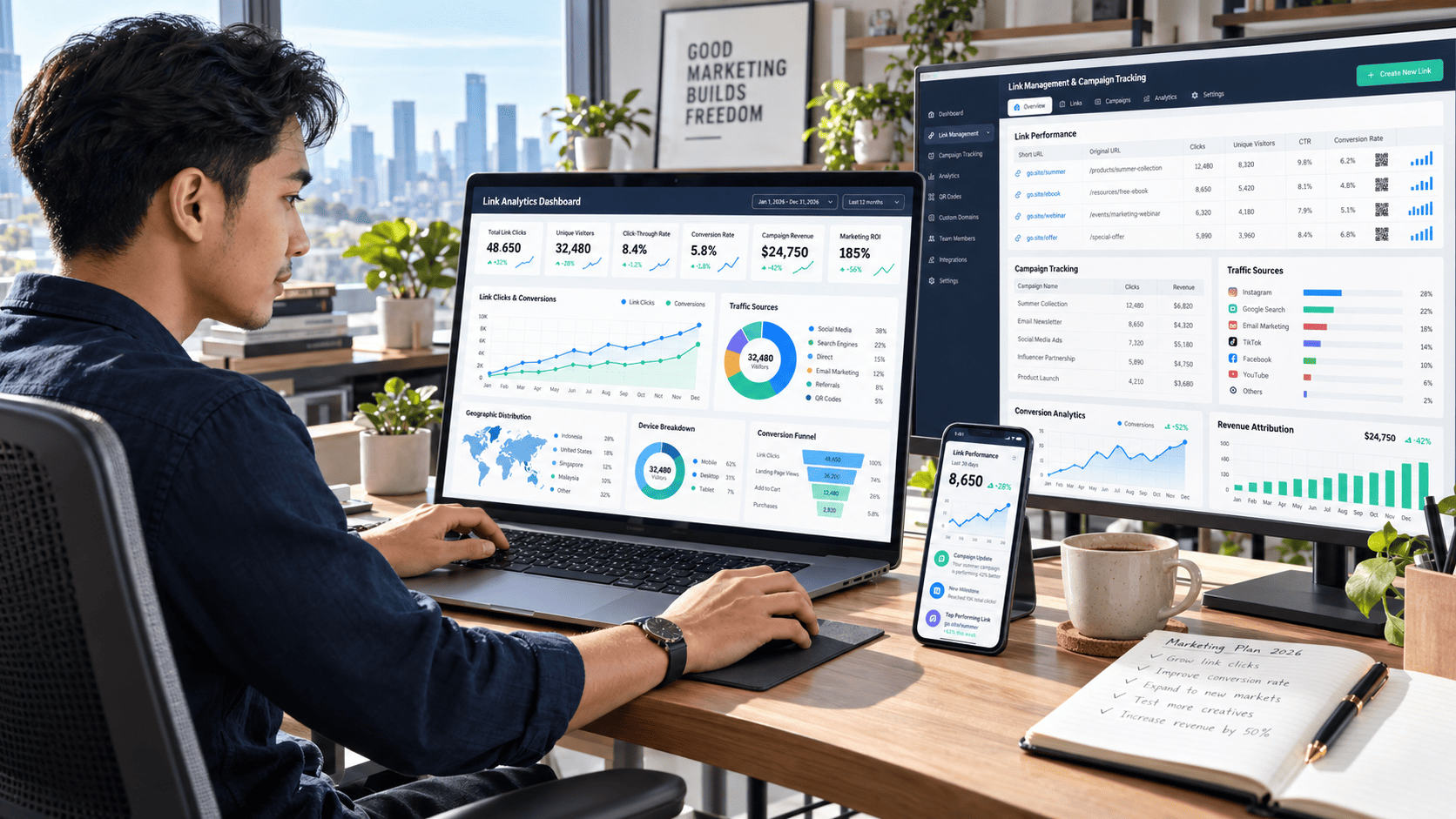
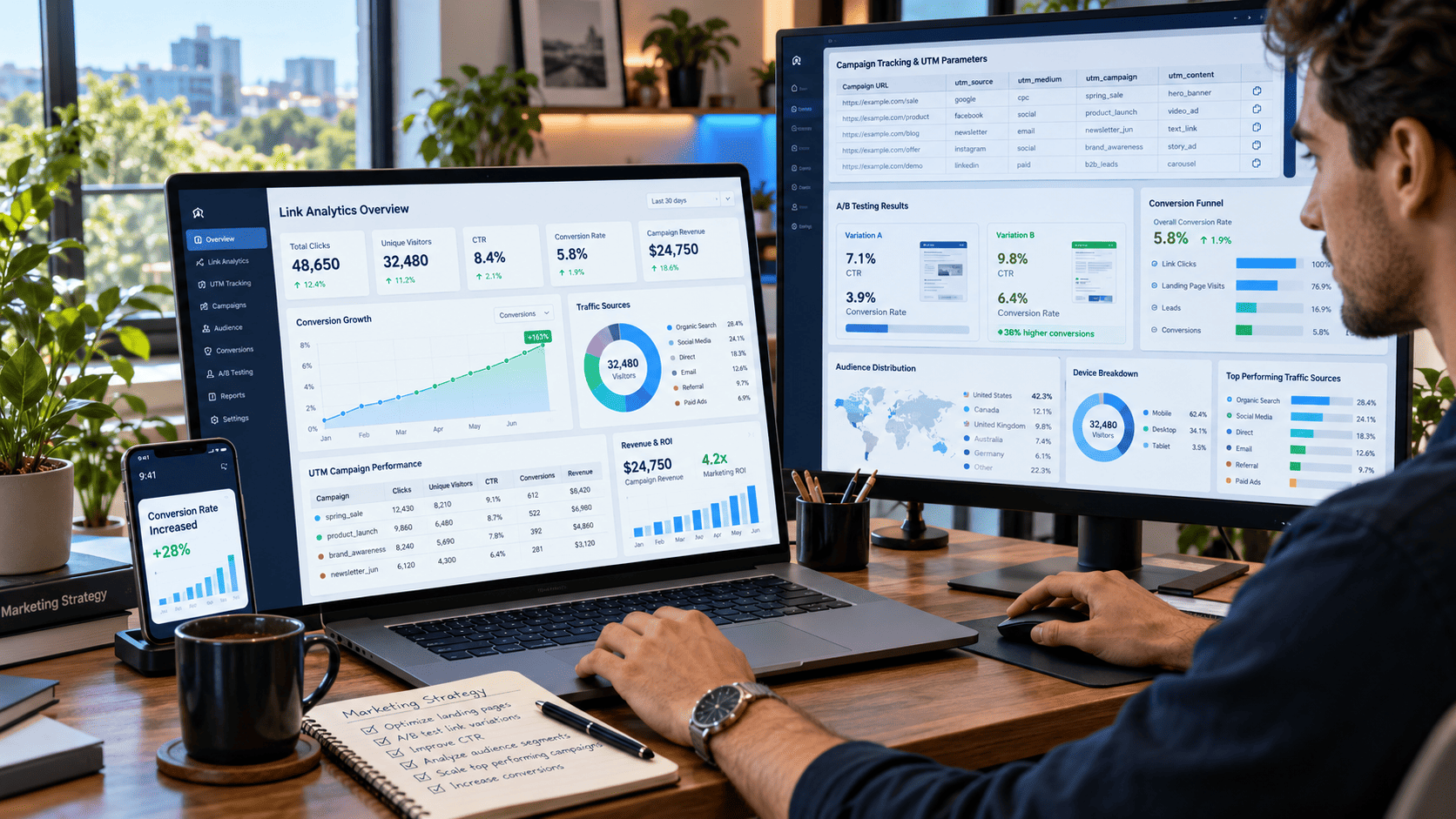
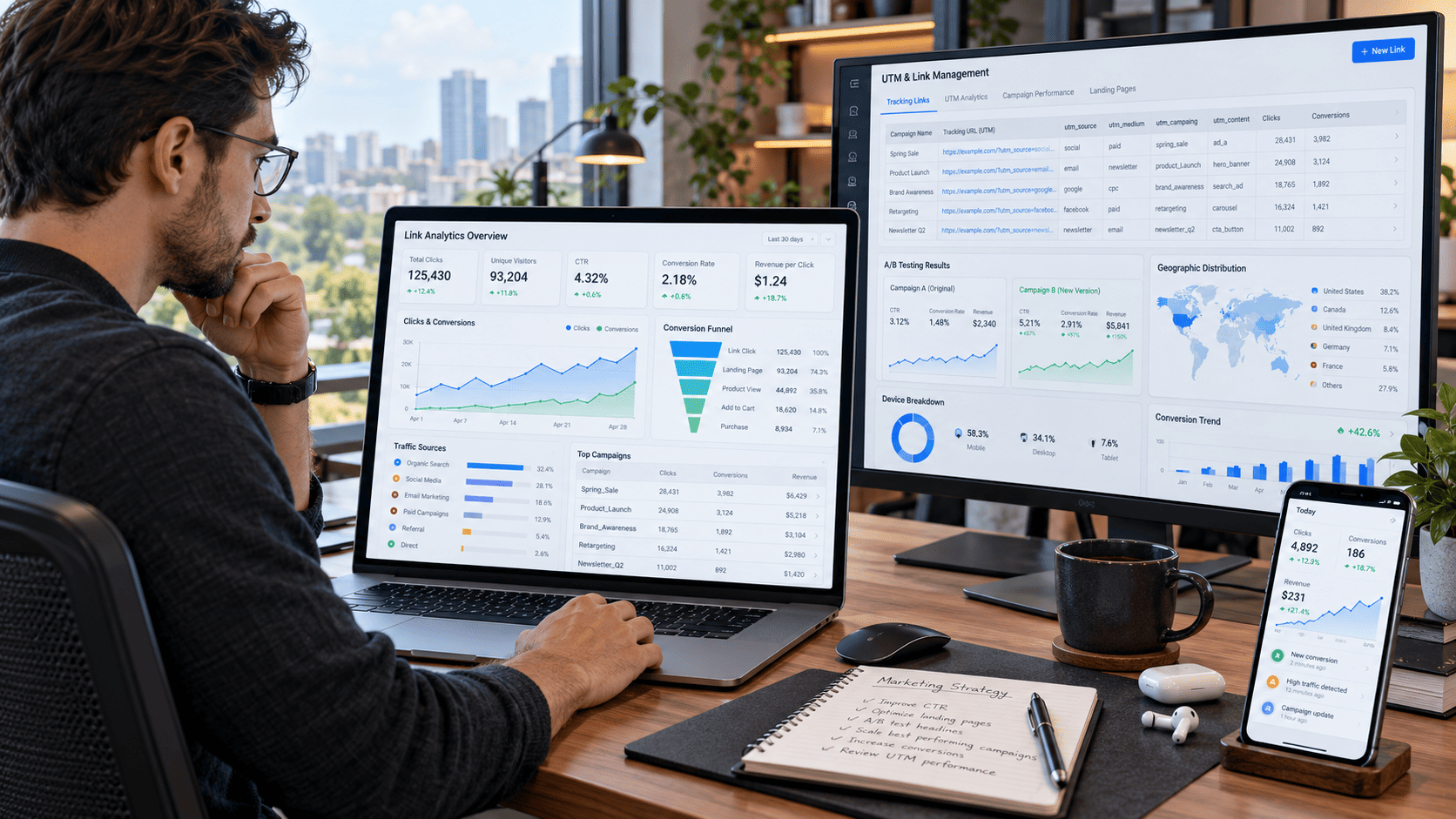
Usually, link analytics can show information such as the number of clicks, visitor location, traffic sources, device type, browser, click time, and the performance of each campaign. This data is very useful for deciding your next steps.
For content creators, this data can help identify which content is most attractive to the audience. For online business owners, link analytics can help determine which promotion is most effective. For bloggers and publishers, click data can become an important reference for developing articles that better match readers’ interests.
Why Link Management Matters for Digital Content
Many people focus on creating content but forget to manage its distribution. In reality, even great content still needs a well-organized distribution path to achieve maximum results.
Imagine you have several articles, products, or landing pages. Then, all of those links are shared randomly without proper naming, tracking, or grouping. After a few weeks, you will find it difficult to know which links are effective, which ones failed, and which ones need improvement.
With link management, every link can be structured more clearly. You can create short links that are easy to read, assign campaign names, group links based on platforms, and monitor performance from one place.
This makes digital work more efficient. You no longer need to keep guessing. Every decision can be made based on clear data.
Link Management Secrets That Can Increase Clicks
1. Use Short, Clean, and Trustworthy Links
Links that are too long often look messy and less attractive. This is especially true when the link contains random characters, long parameters, or symbols that are difficult to read. Audiences may hesitate to click because the link looks unprofessional.
Short and clean links are easier to trust. For example, instead of sharing a long URL filled with codes, you can use a short link with a relevant name. This type of link looks better, is easier to remember, and is more suitable for social media captions, profile bios, emails, or WhatsApp messages.
However, short links must still look safe. Use a clear domain, avoid names that look suspicious, and make sure the destination matches the promise in the caption. Audience trust is an important factor in increasing clicks.
2. Create Different Links for Each Platform
One common mistake is using the same link for all platforms. For example, the same link is shared on Facebook, Instagram, TikTok, Telegram, and email. As a result, it becomes difficult to know where most of the clicks come from.
It is much more effective to use a different link for each platform. For example, one link specifically for Facebook, one for Instagram, one for TikTok, and one for WhatsApp. This way, you can compare the performance of each traffic source.
From that data, you can identify which platform has the most potential. Maybe Facebook generates the most clicks, but TikTok brings a more active audience. Or maybe WhatsApp generates fewer clicks, but has a higher conversion rate. Information like this is extremely valuable for your next content strategy.
3. Use Clear Campaign Names
Good link management should be easy to read, not only for your audience but also for yourself. That is why you should use clear and consistent campaign names.
For example, if you are sharing an article about digital marketing tips in June, you can name the campaign “digital-marketing-june,” “facebook-content-promo,” or “seo-article-instagram.” This way, when you view the analytics report, you immediately understand what the link was used for.
Proper naming becomes very helpful when the number of links increases. Without a naming system, your analytics dashboard can become confusing. You will have difficulty reading data and comparing campaign performance.
4. Match Links With Audience Intent
Not all audiences are at the same stage. Some are just discovering your brand, some have already consumed your content regularly, and others are ready to buy or take action.
That is why the links you share should match your audience’s intent. For new audiences, direct them to simple educational content. For audiences who are already interested, send them to more detailed articles, product pages, or landing pages. For audiences who are ready to take action, direct them to checkout pages, forms, or direct contact options.
This strategy makes the audience journey feel more natural. They are not forced to buy immediately, but are guided gradually based on their needs.
How to Read Link Analytics Without Making the Wrong Decision
1. Do Not Focus Only on the Number of Clicks
The number of clicks is important, but it is not the only measure of success. A link with many clicks is not always the highest-quality link. People may click out of curiosity but leave immediately because the page does not match their expectations.
In addition to click count, you should also pay attention to traffic sources, visit duration, bounce rate, conversions, and behavior after the click. If a link generates many clicks but no further action, the problem may be in the page content, website speed, or a mismatch between the caption and the content.
A click is the beginning, not the end. What matters more is what happens after the audience clicks the link.
2. Pay Attention to Peak Click Times
Analytics can usually show when a link receives the most clicks. This data can help you determine the best time to share content.
For example, if most clicks happen at night, your audience may be more active after work or school hours. If clicks are higher during the day, you can adjust your posting schedule to that time.
By understanding when your audience is most active, you can share content when the chance of getting clicks is higher. This is simple, but the impact can be significant when done consistently.
3. Analyze the Devices Used by Your Audience
If most of your audience accesses links from smartphones, then the destination page must be truly mobile-friendly. Do not let your link successfully attract clicks, but visitors leave because the page looks messy on mobile devices.
Check whether your website loads quickly, buttons are easy to tap, text is comfortable to read, and the page is not too heavy. Mobile user experience has a strong impact on the final result.
For content creators and online business owners, this is especially important because many audiences now access content from social media through their phones. A good link must be supported by a destination page that is comfortable to open on mobile devices.
Practical Strategies to Optimize Links for Content
1. Use a Clear CTA
A good link still needs a strong call to action. Do not just place a link without context. Give people a reason to click.
For example, instead of simply writing “click here,” you can use phrases like “read the complete guide here,” “check the full strategy before starting your promotion,” or “read these tips to help your content grow faster.”
A clear CTA helps the audience understand the benefit they will receive after clicking the link.
2. Test Several Caption Versions
The same link can perform differently depending on the caption used. Try creating several caption versions to see which one is most effective.
For example, the first version can use an educational style, the second can trigger curiosity, and the third can focus more on benefits. After some time, compare the click data. From there, you can understand which communication style works best for your audience.
This strategy may look simple, but it is very useful for gradually improving content performance.
3. Evaluate Links Regularly
Link management is not a one-time task. You need to check link performance regularly, especially if you actively create content or run campaigns.
Pay attention to which links are improving, which are declining, and which are producing no results. High-performing links can become a reference for your next content. Meanwhile, weak links can be evaluated from the title, caption, platform, posting time, or destination page.
Regular evaluation makes your content strategy more dynamic. You are not just creating and sharing content, but also learning from the data that has been collected.
Benefits of Link Management & Analytics for Content Creators and Online Businesses
For content creators, link management & analytics help identify which content is truly liked by the audience. You can see which topics get the most clicks, which platforms are most active, and what promotional style is most effective.
For online businesses, link data can help measure promotions more clearly. You can find out which products attract the most attention, which campaigns generate the best traffic, and which audience sources have the highest potential to become buyers.
For bloggers or publishers, link analytics helps determine the direction of content development. If a certain article generates many clicks, you can create follow-up articles on related topics. This helps content grow faster because it is supported by real data, not just assumptions.
Common Mistakes in Managing Links
One of the most common mistakes is sharing too many links without a clear strategy. Audiences can become confused if one post contains too many links with different goals. It is better to focus on one main objective so the audience’s action becomes clearer.
Another mistake is not checking links before sharing them. Broken links, error pages, or incorrect URLs can damage audience trust. Before posting, make sure the link opens properly.
In addition, many people never check analytics after sharing links. In fact, that data is an important resource for improving strategy. Without reading the data, you are only repeating the same pattern without knowing what works and what does not.
Conclusion
Link management & analytics are important secrets to helping digital content grow faster. By managing links neatly, creating tracking for each platform, reading click data, and understanding audience behavior, you can build a much more effective strategy.
High clicks are not only about attractive captions or good visual design. Behind that, there is a link management system that helps you see what truly works. From that data, you can improve your content, choose the best platform, determine the right posting time, and direct your audience to the most suitable page.
From now on, do not share links randomly. Manage every link more strategically, monitor its performance, and use the data to make smarter decisions. The better you understand your links and your audience, the greater your chances of growing your content, increasing clicks, and achieving stronger digital results.