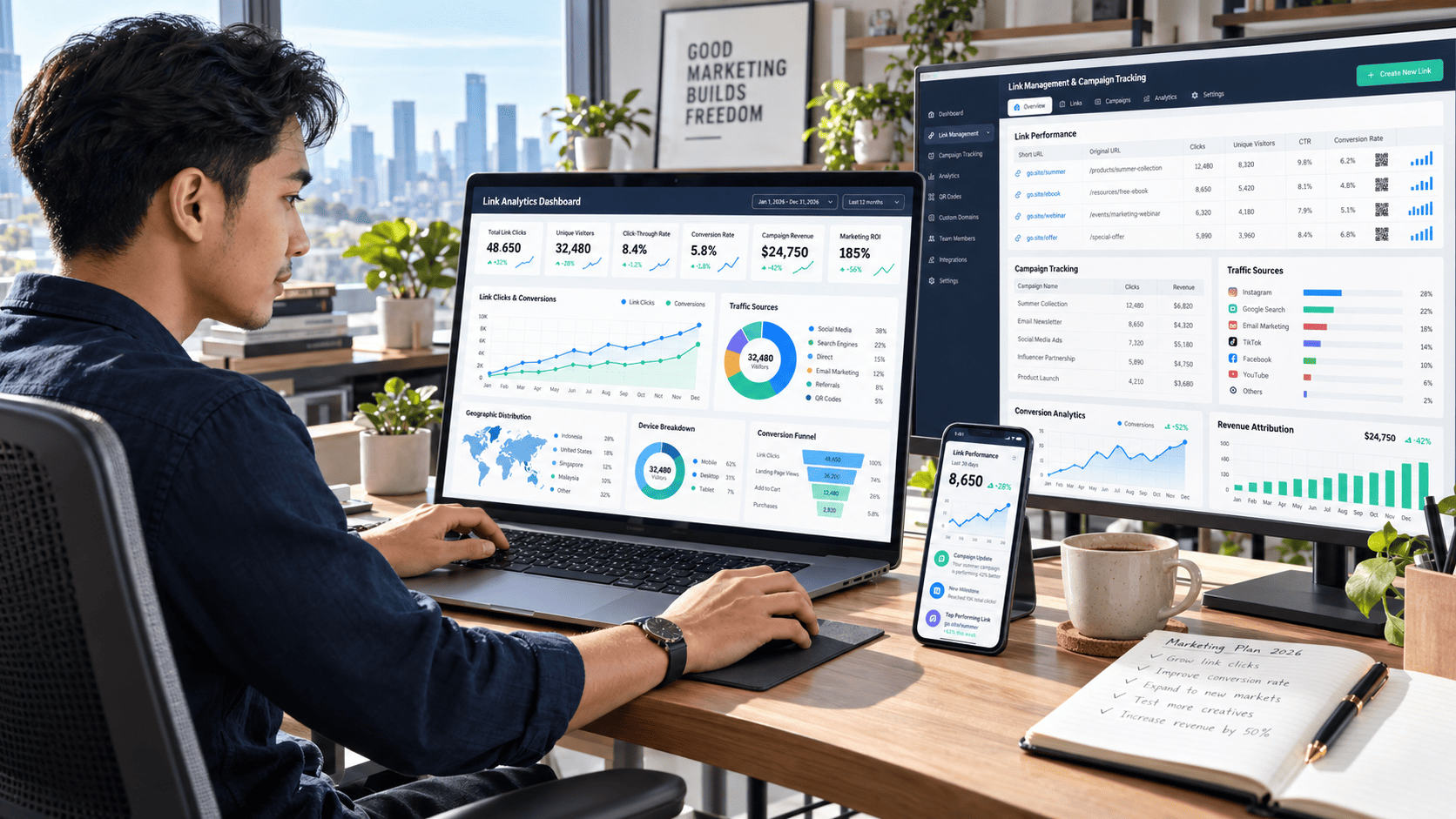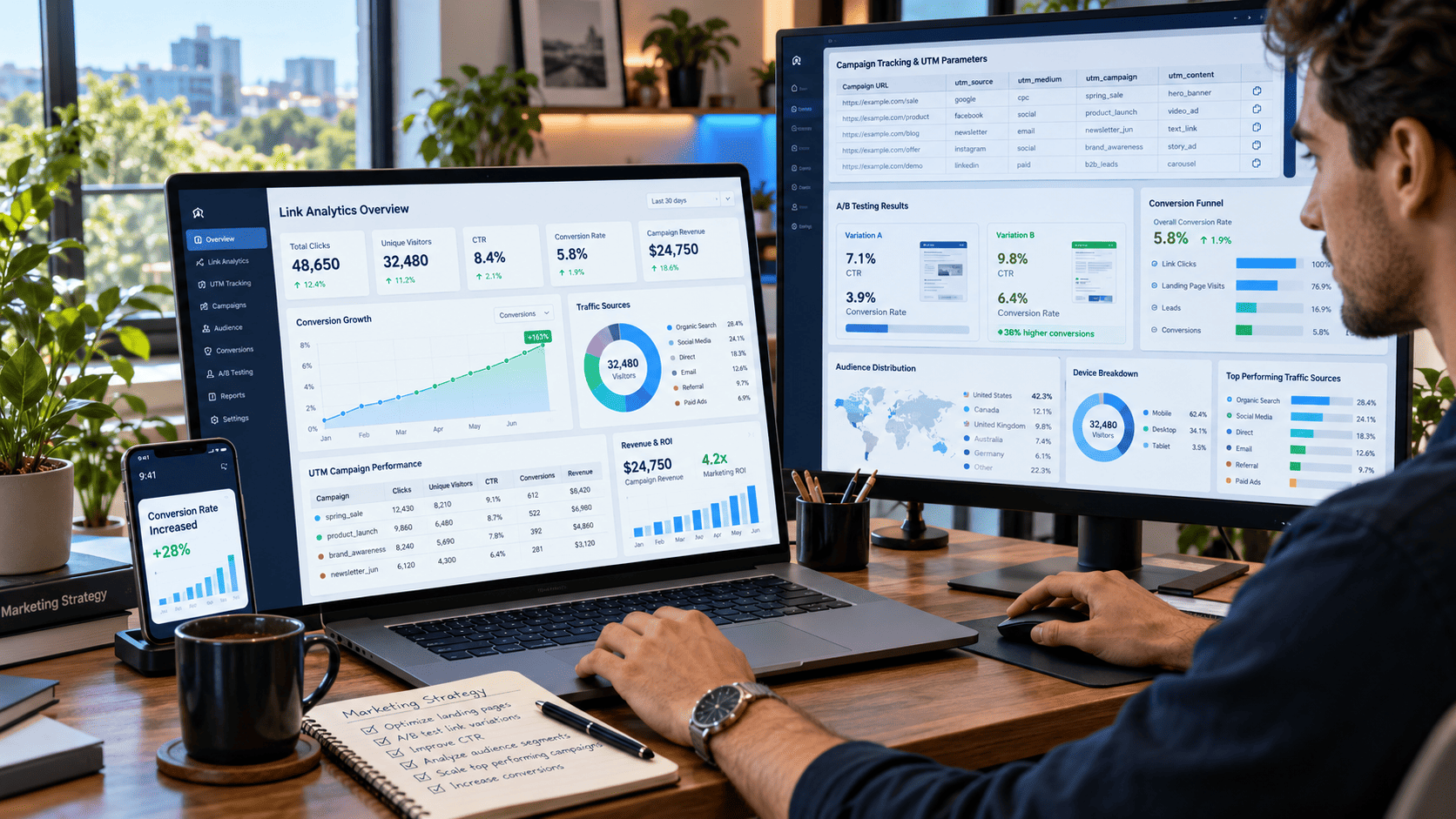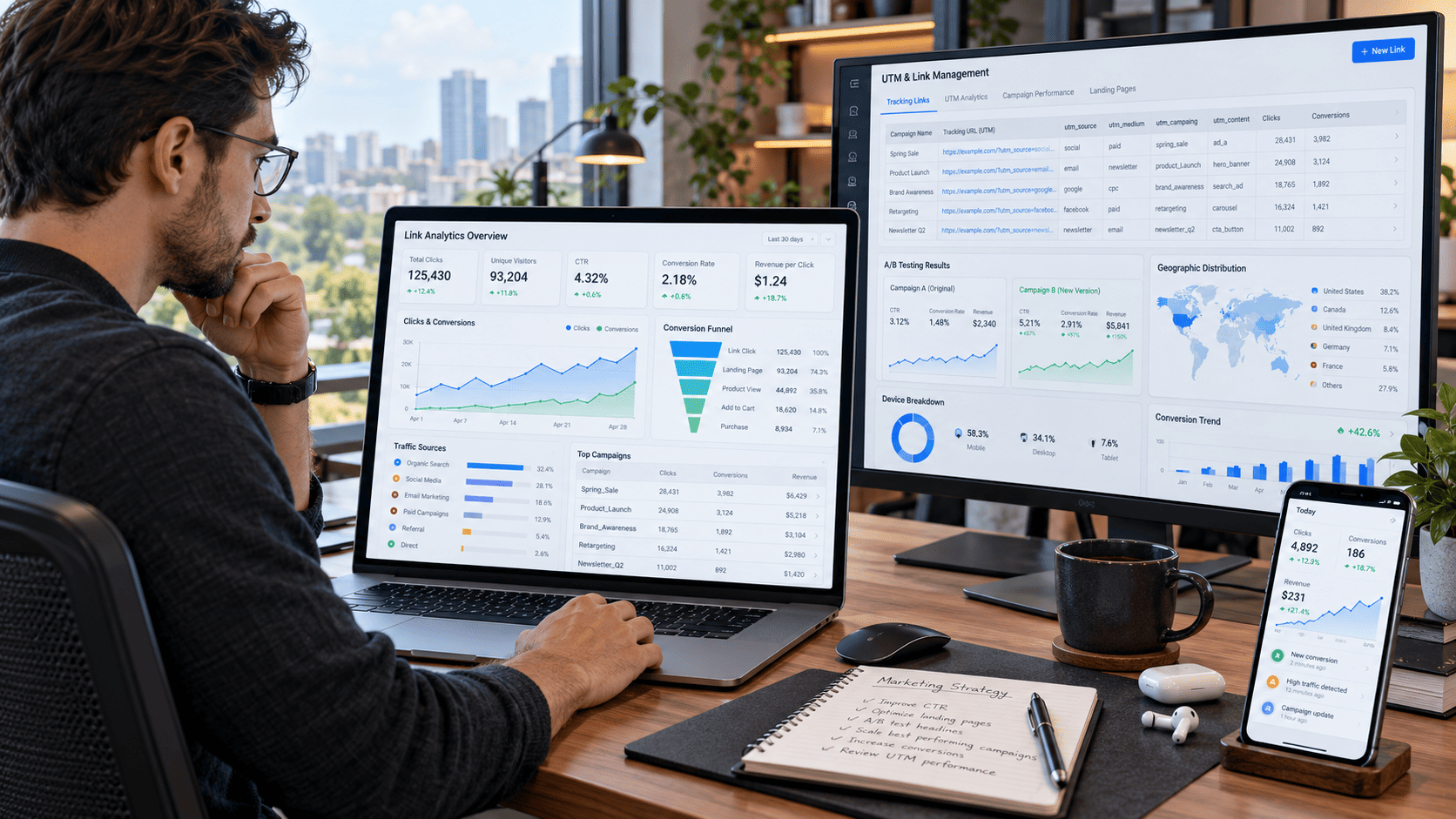

Have you ever felt like you consistently create content, share links across different platforms, and promote your posts on social media, yet the number of clicks still feels average? Sometimes, the problem is not the content itself, but how you manage and analyze the performance of your links. Many content creators, bloggers, affiliate marketers, online business owners, and digital marketing teams still share links randomly without knowing where the clicks come from, who their audience is, and which links actually deliver results.
This is where link management & analytics play a major role. With the right strategy, a link is not just a path to a website page, product, or article. A link can become a valuable source of data that helps you understand audience behavior, measure campaign effectiveness, and plan your next content strategy more intelligently. When click data is analyzed properly, you no longer have to guess what works. Instead, you can make decisions based on real evidence.
What Is Link Management & Analytics?
Link management is the process of organizing, monitoring, optimizing, and managing various links used in digital activities. These links can include blog article links, landing pages, online store pages, videos, registration forms, affiliate links, social media bio links, and promotional campaign links.
Meanwhile, link analytics is the process of reading data from every link you share. This data usually includes the number of clicks, traffic sources, visitor locations, devices used, click times, campaign performance, and audience behavior after opening the link.
In simple terms, link management helps you organize your links, while link analytics helps you understand the results. Both are closely connected. Without proper link management, your data can become messy. Without analytics, it becomes difficult to know whether the links you share are truly effective or simply passing through your audience’s timeline without impact.
Why Link Management Matters for Digital Content
Many people think of links as just supporting elements. In reality, in the digital world, links are the main bridge between content and the final goal. For example, you create an Instagram post to direct your audience to a blog article. You make a TikTok video to bring viewers to a product page. You send a promotional email so readers visit a landing page. All of these processes depend on links.
The problem is, if links are not managed properly, you can lose many opportunities. Links that are too long often look unprofessional. Links that are not tracked make it impossible to measure performance. Broken links can make potential readers or buyers leave immediately. Even using the same link across multiple platforms without separate tracking can make traffic data difficult to analyze.
With proper link management, you can:
- Make links look more professional and trustworthy.
- Track the performance of each campaign more accurately.
- Identify which platforms generate the most clicks.
- Reduce the risk of broken or misdirected links.
- Optimize content strategies based on real data.
For content creators and digital marketers, this is very important because every click has value. A single click can turn into a new reader, subscriber, potential buyer, or even a loyal customer.
The Secret to Increasing Clicks with More Strategic Links
Increasing clicks is not just about sharing links as often as possible. In fact, sharing links too frequently without a clear strategy can make your audience feel disturbed. The key is to make your links feel relevant, clear, and worth clicking.
Use Short and Easy-to-Understand Links
Links that are too long often look less appealing, especially if they contain many random characters. Audiences may hesitate to click because they do not know where the link leads. With link management, you can create shorter, cleaner, and more recognizable links.
For example, instead of sharing a long link full of tracking codes, you can use a short link with a relevant name such as:
- domain.com/seo-guide
- domain.com/content-template
- domain.com/june-promo
Links like these look more professional and help build trust before the audience clicks.
Match Links to Each Platform
Every platform has different audience behavior. Instagram audiences may prefer links that lead directly to visual pages or product pages. Blog audiences are usually more comfortable reading long-form articles. Email audiences tend to click when the link is placed within a clear context.
That is why you should not always use the same link for every platform without separating the source. Create different tracking links for Instagram, TikTok, Facebook, email, WhatsApp, and blogs. This allows you to see which platform is most effective in driving traffic.
Place Links at the Right Moment
Clicks often increase when a link appears after the audience is already interested. If a link is shown too early without context, people may ignore it. However, when the link appears after you explain a benefit, problem, or solution, the chance of getting clicks usually becomes higher.
For example, in a social media caption, you can build curiosity first. Explain a common problem your audience faces, provide a small part of the solution, and then direct them to the link to read the full guide. This method feels more natural than immediately asking people to click without giving them a strong reason.
How Link Analytics Helps You Understand Your Audience
One of the biggest benefits of link analytics is that it helps you understand your audience more deeply. Click data can provide clues about their habits, interests, and behavior. From there, you can create more relevant content instead of guessing randomly.
Identify the Best Traffic Sources
With analytics, you can see where your clicks come from. Are they from Instagram, Facebook, TikTok, Google, email newsletters, WhatsApp, or other platforms? This data is important because every traffic source has different quality.
For example, clicks from social media may be high, but the visit duration may be short. Meanwhile, clicks from email may be fewer, but the conversion rate may be better. From this insight, you can adjust your strategy. If your goal is brand awareness, social media can become the main focus. If your goal is sales, email or a dedicated landing page may be more effective.
Discover the Most Active Click Times
Link analytics also helps you understand when your audience is most active. It is possible that links shared in the morning do not perform well, while their performance increases at night. Your audience may also be more active during lunch breaks or on weekends.
This kind of information is useful for deciding posting times, promotional schedules, and newsletter delivery times. The more accurate your timing is, the higher the chance your audience will see and click your link.
Understand the Devices Your Audience Uses
Device data is also very important. If most of your audience opens links from smartphones, then your destination page must be mobile-friendly. Do not let your audience click successfully, only to find that the page loads slowly, looks messy, or has buttons that are hard to tap.
User experience after the click strongly affects the final result. High clicks will not mean much if the destination page is not comfortable to use. That is why analytics is not only useful for measuring click numbers, but also for improving the audience experience.
Practical Strategies to Manage Many Links Without Mess
The more content and campaigns you run, the more likely your links are to become disorganized. This is especially true if you manage multiple websites, social media accounts, landing pages, or affiliate programs. Without a proper system, it can be difficult to find old links, check performance, or update inactive links.
Create a Consistent Link Naming Structure
Use a naming pattern that is easy to understand. For example, you can use a format based on platform, campaign, and date. Examples include:
- ig-seo-guide-june
- tiktok-product-promo-june
- email-content-template-2026
With this kind of format, you can immediately understand the purpose of each link without opening them one by one. This becomes very helpful when the number of links grows into dozens or even hundreds.
Separate Links Based on Their Goals
Not all links have the same purpose. Some links are used to increase article traffic, some for sales, some for registrations, some for file downloads, and some for affiliate campaigns. To make analysis easier, separate links based on their main goals.
For example, create specific categories for:
- Blog article links.
- Product or online store links.
- Campaign landing page links.
- Affiliate links.
- Social media links.
- Email marketing links.
With this grouping, you can view the performance of each category more clearly.
Regularly Check for Broken Links
Broken links can damage the audience experience. Imagine someone is interested enough to click your link, but the page that appears is an error page. Besides disappointing the audience, this can also reduce trust in your brand or content.
Perform regular checks to make sure all links are still active and lead to the correct pages. If a page is no longer used, redirect the link to a new page that is still relevant.
Common Link Management Mistakes to Avoid
Many people already use link tracking, but their results are still not optimal because they continue to make some basic mistakes. These mistakes may seem small, but they can make data inaccurate.
One of the most common mistakes is using the same link for all platforms. As a result, you cannot identify the exact source of each click. Another mistake is not naming campaigns clearly, making analytics data difficult to read a few weeks later.
Some people also focus only on the number of clicks without looking at traffic quality. In reality, a high number of clicks does not always mean good performance if visitors leave the page immediately. It is better to have fewer clicks from people who are genuinely interested, read your content, register, or buy your product.
Another common mistake is not testing the destination page. The link may be organized, and the campaign may be interesting, but if the landing page is slow and not mobile-friendly, many users will leave before taking any action.
How to Turn Click Data into a Content Strategy
Analytics data is not useful if you only look at it without taking action. Its real power appears when you use the data to improve your content strategy.
If one topic gets high clicks, it is a sign that your audience is interested in that discussion. You can create follow-up content, a more complete version, short videos, carousel posts, or newsletters based on the same topic.
If one platform produces low clicks, do not abandon it immediately. Evaluate the content format first. Maybe the caption is not strong enough, the visual is not attractive, the posting time is not right, or the call-to-action is unclear.
If many clicks come from mobile devices, make sure all destination pages are lightweight, fast, and easy to navigate. If clicks are high but conversions are low, evaluate the page content. Maybe the offer is not clear, the CTA button is not visible enough, or the page is too long without a strong direction.
In this way, link analytics becomes a tool for understanding patterns. It is not just about numbers, but about clues that help you create more targeted content.
Powerful Tips to Improve Link Management & Analytics Performance
To get better results, there are several simple habits you can start applying.
First, always use different tracking links for each channel. Links from Instagram, TikTok, email, and blogs should be separated so the data becomes clearer.
Second, use specific call-to-actions. Instead of simply writing “click here,” use phrases such as “read the full guide,” “see the strategy examples,” or “check the recommended tools.”
Third, evaluate link performance regularly. You do not have to do it every day, but at least check weekly or monthly. Find out which links receive the most clicks, which ones are declining, and which ones need improvement.
Fourth, do not chase clicks only. Pay attention to what happens after the audience enters the destination page. Do they read until the end, fill out a form, buy a product, or leave immediately?
Fifth, document all important links. Store them in a dashboard, spreadsheet, or dedicated tool so they are easy to find and analyze later.
Conclusion
Link management & analytics are important secrets for making digital strategies more effective. By managing links properly, you can make them look more professional, easier to track, and more convenient for your audience to use. By reading analytics, you can identify the best traffic sources, the most active click times, the devices your audience uses, and the types of content that attract the most attention.
Higher clicks are not just the result of luck. Usually, they happen because there is a clear strategy behind them. From creating short links, separating tracking for each platform, placing links at the right moment, to regularly reading data to improve future content, every step matters.
If you have been sharing links randomly until now, it is time to become more strategic. Organize the links you use, monitor their performance, read the data, and use those insights to create more relevant content. The better you understand click data, the greater your chance of growing your content, helping your audience understand your message, and reaching your digital goals faster.