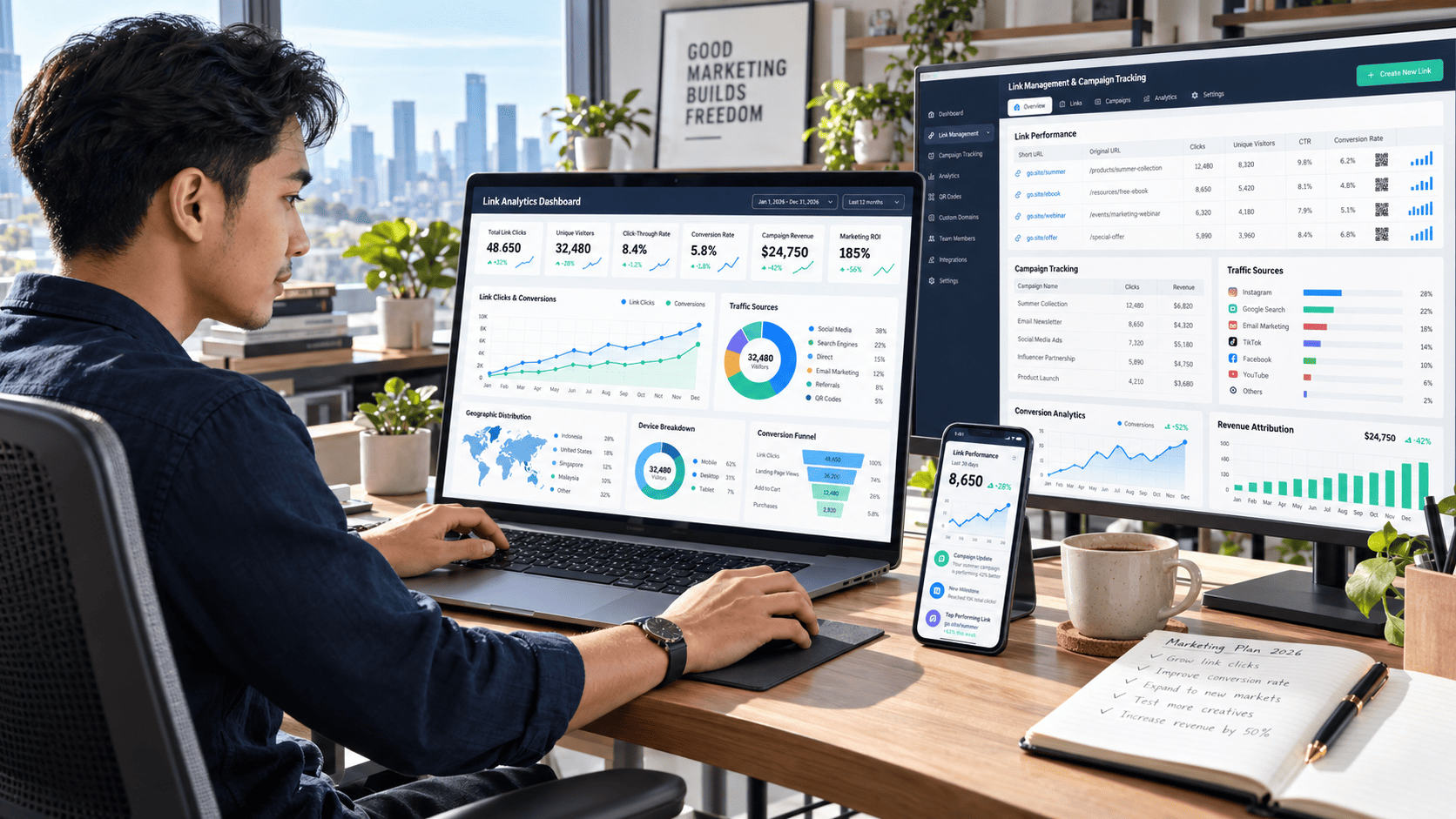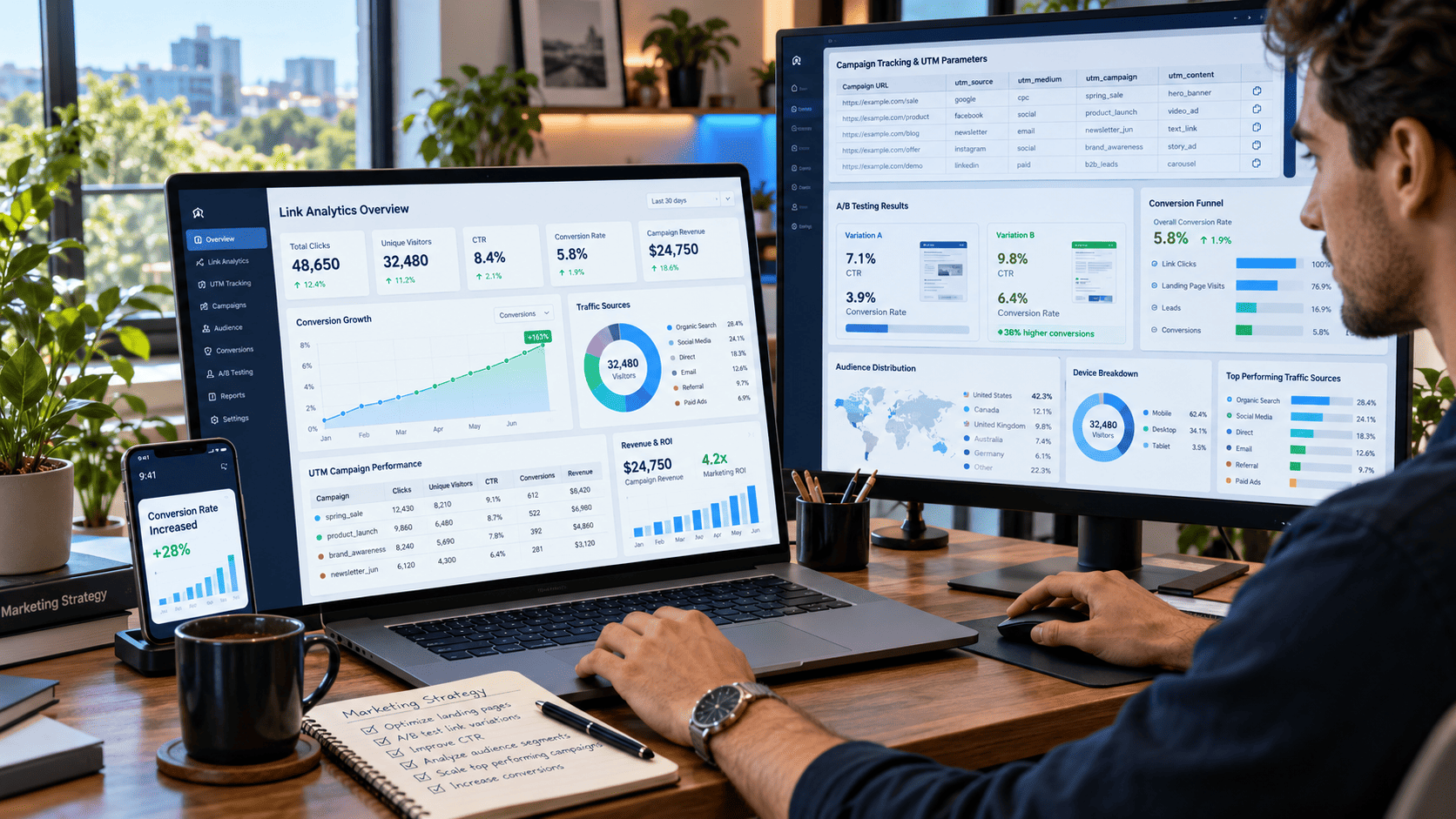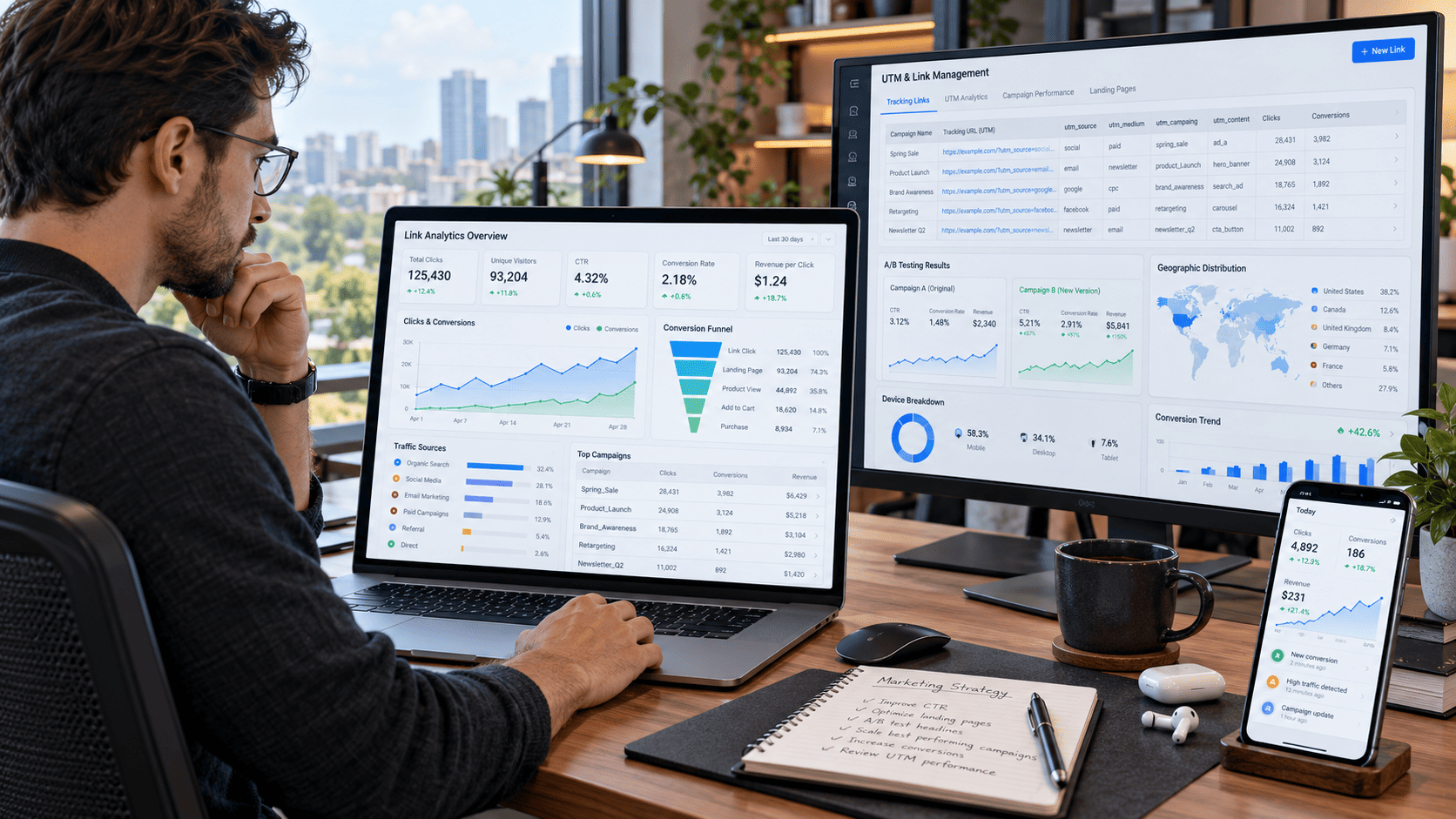

Every click tells a story. Whether you're a content creator, digital marketer, affiliate marketer, blogger, or business owner, every visitor who interacts with your links provides valuable insights that can help you improve your marketing strategy.
Unfortunately, many people focus only on generating more traffic while ignoring what happens after someone clicks a link. Without proper link management and analytics, you're essentially making marketing decisions based on guesswork instead of real data.
The good news is that effective link management doesn't have to be complicated. By organizing your links, tracking user behavior, and analyzing campaign performance, you can identify what works, eliminate what doesn't, and significantly improve your conversion rates over time.
Why Link Management Matters More Than Ever
The digital landscape has become more competitive than ever before. Consumers interact with brands across multiple channels including social media, email, blogs, search engines, podcasts, and online communities.
Each marketing channel generates different types of traffic with unique behaviors. Without organized link management, it becomes nearly impossible to answer important questions like:
- Which campaign generated the highest conversions?
- Which social media platform drives the most valuable visitors?
- What content motivates people to click?
- Which audience segments are most likely to purchase?
Link management allows you to centralize your marketing efforts while collecting actionable insights that help you continuously improve campaign performance.
Understanding Link Analytics
Link analytics is the process of measuring how people interact with your URLs. Instead of simply counting clicks, modern analytics provide deeper insights into user behavior.
Essential Metrics You Should Track
Not all metrics are equally valuable. Focus on data that directly influences your marketing decisions.
Total Clicks
This metric shows overall engagement with your campaign. While high click volume is encouraging, it doesn't always indicate success.
For example, a viral social media post may generate thousands of clicks but very few sales.
Unique Visitors
Unique clicks reveal how many individual users visited your destination.
This helps distinguish between repeat visitors and new audiences, giving you a clearer picture of campaign reach.
Click-Through Rate (CTR)
CTR measures how effectively your call-to-action encourages people to click.
A higher CTR often indicates:
- Better messaging
- More relevant offers
- Stronger audience targeting
- Improved creative design
Conversion Rate
Perhaps the most important metric of all.
Conversions could include:
- Product purchases
- Newsletter subscriptions
- Form submissions
- Free trial registrations
- App downloads
Tracking conversions helps determine whether traffic is generating real business value.
Building an Organized Link Management System
Successful marketers rarely manage links randomly.
Instead, they create structured systems that simplify campaign management.
Create Consistent Naming Conventions
Imagine launching 50 campaigns without standardized names.
After a few months, identifying which links belong to which campaign becomes frustrating.
A simple naming structure may include:
- Platform
- Campaign
- Month
- Objective
Example:
- Email-SummerSale-LeadGen
- Instagram-ProductLaunch
- Blog-SEOGuide
This organization saves hours when reviewing historical performance.
Categorize Links by Campaign
Separate links based on marketing goals.
Common categories include:
- Email marketing
- Paid advertising
- Affiliate marketing
- Organic social media
- Content marketing
- Influencer campaigns
- Product launches
Grouping campaigns makes performance comparisons much easier.
Archive Old Campaigns
Old links still provide valuable historical data.
Instead of deleting inactive campaigns, archive them for future analysis.
Historical trends often reveal seasonal patterns and recurring customer behavior.
How Analytics Improve Campaign Performance
Analytics transform marketing from assumptions into informed decision-making.
Consider a simple example.
A blogger promotes the same article through:
- Email newsletter
Without analytics, all traffic appears identical.
With link tracking, they discover:
- Email converts at 11%
- Pinterest generates the most traffic
- LinkedIn produces the highest average purchase value
- Facebook has the lowest engagement
Now future marketing budgets can focus on the highest-performing channels.
Proven Strategies to Increase Link Performance
Optimizing links goes beyond shortening URLs.
Small improvements often generate significant results.
Write Better Calls-to-Action
Generic CTAs rarely inspire action.
Instead of saying:
"Click Here"
Try:
- Download Your Free Guide
- Start Your Free Trial
- Discover the Secret Strategy
- See the Full Case Study
Specific CTAs create stronger motivation.
Test Multiple Variations
A/B testing helps identify winning combinations.
Experiment with:
- Headlines
- Button colors
- Landing pages
- CTA wording
- Images
- Audience targeting
Even small improvements can produce measurable increases in conversions.
Optimize Landing Pages
A great link cannot compensate for a poor landing page.
Ensure your destination page loads quickly, looks professional, and clearly communicates value.
Visitors should immediately understand:
- What you're offering
- Why it matters
- What action to take next
Using UTM Parameters Effectively
UTM parameters help identify where visitors originate.
Instead of seeing generic traffic, you'll know whether visitors arrived from:
- Email campaigns
- Instagram Stories
- Facebook Ads
- YouTube videos
- Guest blog posts
- Referral websites
Proper tagging provides accurate attribution and prevents confusion during campaign analysis.
Common Link Management Mistakes
Many marketers unintentionally limit their success by making avoidable mistakes.
Tracking Only Clicks
High click counts don't necessarily equal successful campaigns.
Always connect clicks with meaningful business outcomes.
Ignoring Mobile Users
Most web traffic now comes from mobile devices.
Broken layouts or slow mobile experiences dramatically reduce conversion rates.
Forgetting Regular Audits
Broken links create poor user experiences and reduce trust.
Schedule routine audits to identify:
- Broken URLs
- Redirect loops
- Expired campaigns
- Outdated landing pages
Maintaining healthy links protects both user experience and SEO performance.
Using Too Many Different Systems
Managing links across multiple disconnected platforms creates unnecessary complexity.
Whenever possible, centralize reporting to create a unified marketing dashboard.
Advanced Link Analytics Techniques
Once your basic tracking is in place, advanced analytics unlock even greater opportunities.
Audience Segmentation
Not every visitor behaves the same.
Segment audiences by:
- Device
- Country
- Traffic source
- Returning visitors
- New visitors
- Campaign type
Personalized optimization often produces significantly higher conversion rates.
Conversion Funnels
Understanding where users abandon the buying process helps identify bottlenecks.
Track every step:
- Click
- Landing page
- Product page
- Checkout
- Purchase
Small improvements at each stage can dramatically increase overall revenue.
Time-Based Performance Analysis
Traffic patterns change throughout the day and week.
Analyze:
- Best posting times
- Highest converting hours
- Weekly trends
- Seasonal campaigns
Scheduling campaigns during peak engagement periods often improves performance without increasing advertising costs.
Best Practices for Long-Term Success
Sustainable growth comes from consistent optimization rather than one-time improvements.
Develop habits such as:
- Reviewing campaign performance weekly.
- Testing one new idea every month.
- Removing underperforming links.
- Updating landing pages regularly.
- Monitoring conversion trends instead of vanity metrics.
- Keeping campaign documentation organized.
Over time, these small improvements compound into substantial marketing gains.
The Future of Link Management & Analytics
Artificial intelligence and automation are transforming digital marketing.
Modern analytics platforms increasingly offer predictive insights, automated reporting, anomaly detection, and intelligent recommendations that reduce manual work while improving decision-making.
Privacy regulations are also reshaping how marketers collect and analyze user data. Businesses that prioritize transparent tracking, first-party data, and ethical analytics will be better positioned for long-term success.
Rather than relying solely on raw traffic numbers, future-focused marketers will emphasize customer journeys, lifetime value, and meaningful engagement metrics.
Conclusion
Effective Link Management & Analytics is no longer optional—it's one of the smartest investments you can make in your digital marketing strategy. Every tracked click provides valuable insight into your audience's behavior, helping you make informed decisions that improve campaign performance, increase conversions, and maximize your return on investment.
By organizing your links, monitoring meaningful metrics, optimizing landing pages, running continuous A/B tests, and analyzing audience behavior, you'll build a marketing system that becomes stronger with every campaign you launch.
Start reviewing your links today instead of simply collecting clicks. Measure what truly matters, refine your strategy based on real data, and keep experimenting with new ideas. If you found these strategies helpful, share this guide with your team or fellow marketers and begin turning every click into measurable business growth.