
Someone discovers your content on social media, taps a link in an email, clicks a button inside a blog post, or visits your landing page through an advertising campaign. But without proper link management and analytics, that valuable information can disappear almost instantly.
You may know that 10,000 people visited your website, but where did they actually come from? Which campaign generated the most engaged visitors? Which link produced conversions instead of meaningless clicks?
These questions become increasingly important as your marketing grows.
A solid link management strategy turns ordinary URLs into measurable marketing assets. Instead of guessing what works, you can track audience behavior, compare campaigns, improve content, and make smarter decisions based on real performance data.
Here are 15 proven strategies you can use to build a stronger link management and analytics system.
1. Build a Centralized Link Management System
One of the biggest mistakes marketers make is scattering campaign links across spreadsheets, messaging apps, documents, and social media drafts.
Eventually, nobody remembers which URL belongs to which campaign.
A centralized link management system keeps your important URLs organized in one place.
You can categorize links based on:
- Campaign
- Platform
- Content type
- Traffic source
- Product
- Audience segment
- Marketing channel
For example, instead of searching through old messages for an Instagram campaign link, you can immediately find it under your social media campaign category.
Good organization may seem simple, but it becomes incredibly valuable when you're managing hundreds or thousands of links.
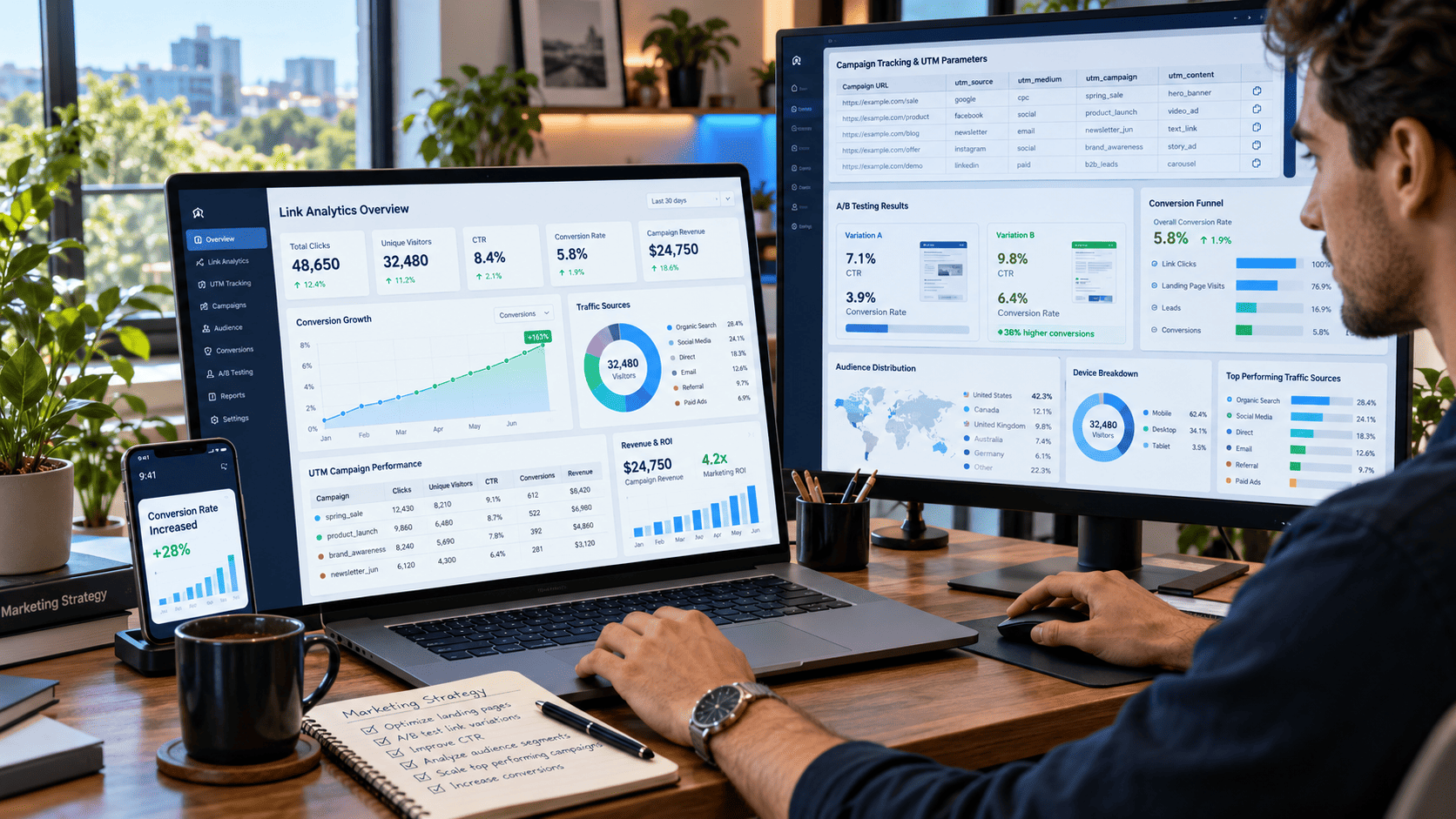
2. Use UTM Parameters for Campaign Tracking
UTM parameters are one of the most useful tools in digital marketing analytics.
They allow analytics platforms to understand exactly where visitors came from.
A basic campaign URL might include information about:
- Source
- Medium
- Campaign
- Content
- Keyword
For example, imagine you promote the same landing page through Facebook, an email newsletter, and a blog.
Without campaign tracking, all visitors may appear similar.
With UTMs, you can see which channel generated traffic, engagement, and conversions.
Create a Consistent Naming System
Avoid random campaign names such as:
campaign1
summerpromo
FB-Ad-New
Instead, create a consistent structure that your team can understand months later.
Consistency makes reports dramatically easier to analyze.
3. Track More Than Total Clicks
Total clicks are useful, but they rarely tell the whole story.
Imagine two links:
Link A receives 8,000 clicks.
Link B receives 4,000 clicks.
At first glance, Link A appears more successful.
But what if Link A generates only 20 sales while Link B generates 160?
Suddenly the smaller campaign becomes far more valuable.
That's why effective link analytics should monitor metrics beyond clicks, including:
- Unique visitors
- Conversion rate
- Bounce or engagement rate
- Revenue
- Session duration
- Leads generated
- Click-through rate
The goal isn't simply to generate more clicks. It's to generate the right clicks.
4. Separate Traffic Sources Carefully
Visitors behave differently depending on where they discover your link.
Someone clicking through Google search may already be actively searching for a solution.
Someone discovering the same page through TikTok may simply be curious.
Someone clicking from an email newsletter may already know your brand.
By separating traffic sources, you can compare performance more accurately.
Look for Quality, Not Just Volume
Suppose social media generates 60% of your traffic but email generates most of your revenue.
That information should influence where you invest your time and marketing budget.
Traffic volume is important. Traffic quality is often more important.
5. Monitor Unique Clicks
Repeated clicks can distort campaign performance.
One person might click the same link five times, but that doesn't necessarily mean five potential customers visited your website.
Unique click tracking provides a clearer picture of actual audience reach.
Comparing total clicks with unique clicks can also reveal interesting behavior.
A large difference may indicate that visitors repeatedly return to the same resource, which could signal strong interest.
6. Understand Audience Device Behavior
Your audience may interact with your links differently depending on their device.
Mobile visitors might dominate social media traffic, while desktop users could convert better on complex products or business services.
Track performance across:
- Smartphones
- Tablets
- Desktop computers
- Operating systems
- Browsers
If 80% of your clicks come from mobile devices, your landing pages should provide an excellent mobile experience.
A slow or poorly designed mobile page can waste thousands of otherwise valuable clicks.
7. Analyze Geographic Click Data
Location data can reveal opportunities that aren't obvious from total traffic numbers.
You might discover that a campaign designed for a global audience performs especially well in several specific countries or cities.
That insight could influence:
- Advertising targeting
- Publishing schedules
- Language localization
- Product pricing
- Content strategy
Turn Geographic Insights Into Action
If visitors from one region consistently generate stronger engagement, consider creating campaigns specifically for that audience.
Small geographic insights can sometimes reveal surprisingly large growth opportunities.
8. Track Conversion Events
Clicks are only the beginning of the customer journey.
Your analytics should connect link activity with meaningful actions.
Depending on your business, a conversion might include:
- Product purchase
- Newsletter signup
- App installation
- Account registration
- Contact form submission
- File download
- Subscription
- Booking
Once conversion tracking is connected to campaign links, marketing performance becomes much easier to evaluate.
Instead of asking, "Which link received the most clicks?"
You can ask, "Which link generated the most valuable customers?"
That's a much better question.
9. Compare Campaign Performance
Individual campaign statistics become more powerful when you compare them.
For example, you could compare:
- Facebook vs. Instagram
- Email vs. organic search
- Influencer A vs. Influencer B
- Banner A vs. Banner B
- Campaign this month vs. last month
Patterns will gradually appear.
You may discover that certain platforms consistently generate more conversions while others mainly create awareness.
These insights help you allocate your marketing resources more intelligently.
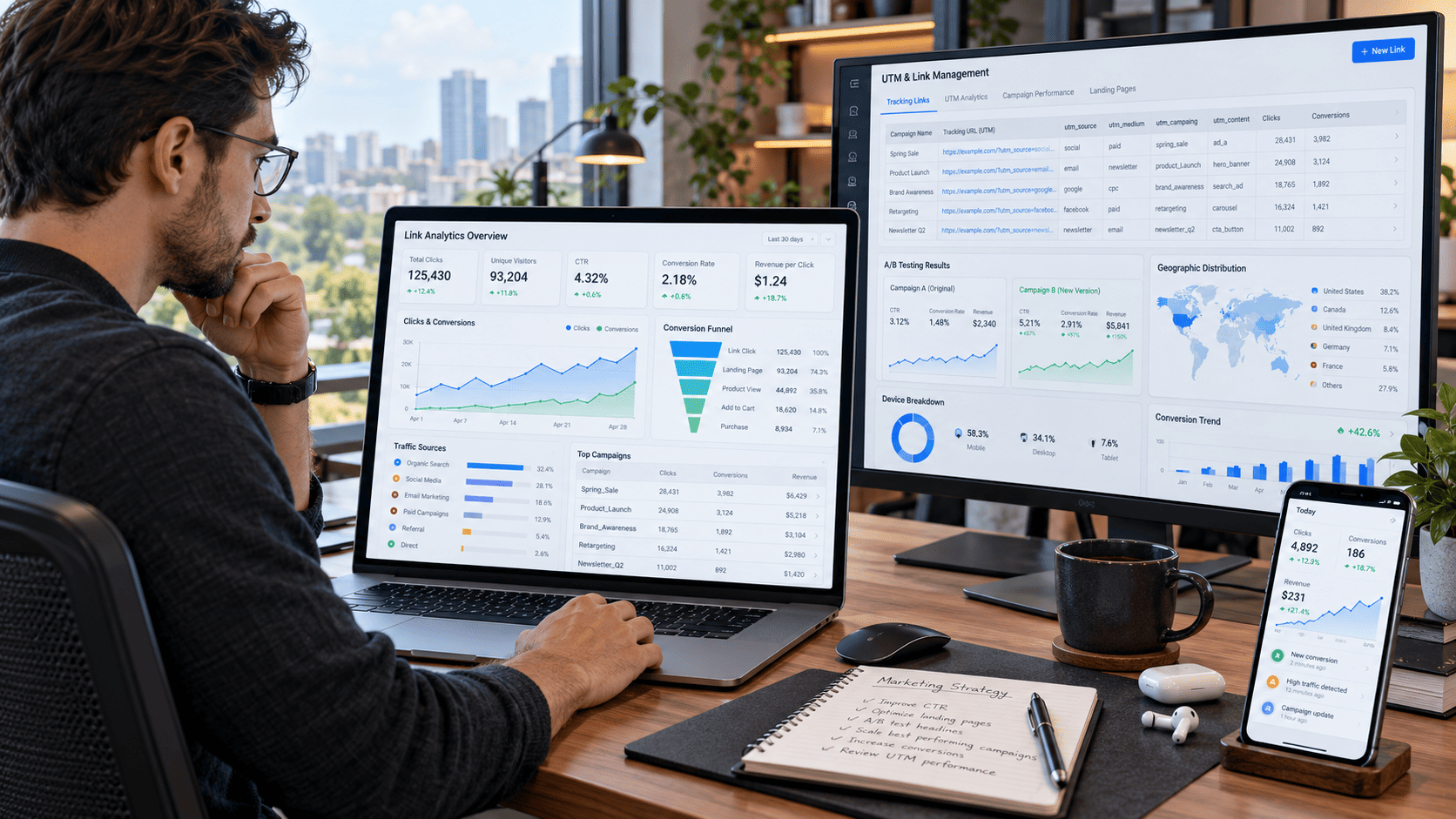
10. Use A/B Testing for Important Links
Sometimes a small change can produce a surprisingly large performance improvement.
A/B testing lets you compare different versions of the same campaign.
You might test:
- Call-to-action wording
- Button placement
- Link position
- Landing page design
- Promotional message
- Headline
- Campaign creative
Change One Major Element at a Time
If you change everything simultaneously, you'll never know which change improved performance.
Instead, test one meaningful variable, measure the result, and continue refining.
Over time, small improvements can compound into significant conversion gains.
11. Check Links Regularly
Nothing damages user experience faster than clicking a promising link and landing on a broken page.
Websites change.
Pages move.
Products disappear.
Campaigns expire.
That means previously working URLs can eventually become broken links.
Regular link monitoring allows you to identify problems before they affect large numbers of visitors.
Check important links for:
- 404 errors
- Incorrect redirects
- Expired landing pages
- Slow loading pages
- Incorrect destinations
For high-traffic campaigns, even a few hours of broken links can mean lost opportunities.
12. Create Short, Clean Campaign Links
Long URLs filled with tracking parameters can look messy when shared publicly.
A clean campaign link is easier to remember, share, and manage.
Short links can be especially helpful for:
- Social media
- QR codes
- Video descriptions
- Printed materials
- Podcasts
- Presentations
- Messaging apps
However, shortening links should not replace proper analytics.
The ideal approach combines clean URLs with detailed tracking behind the scenes.
13. Build Analytics Dashboards
Opening multiple reports every morning quickly becomes inefficient.
Instead, create a dashboard containing the metrics that actually matter.
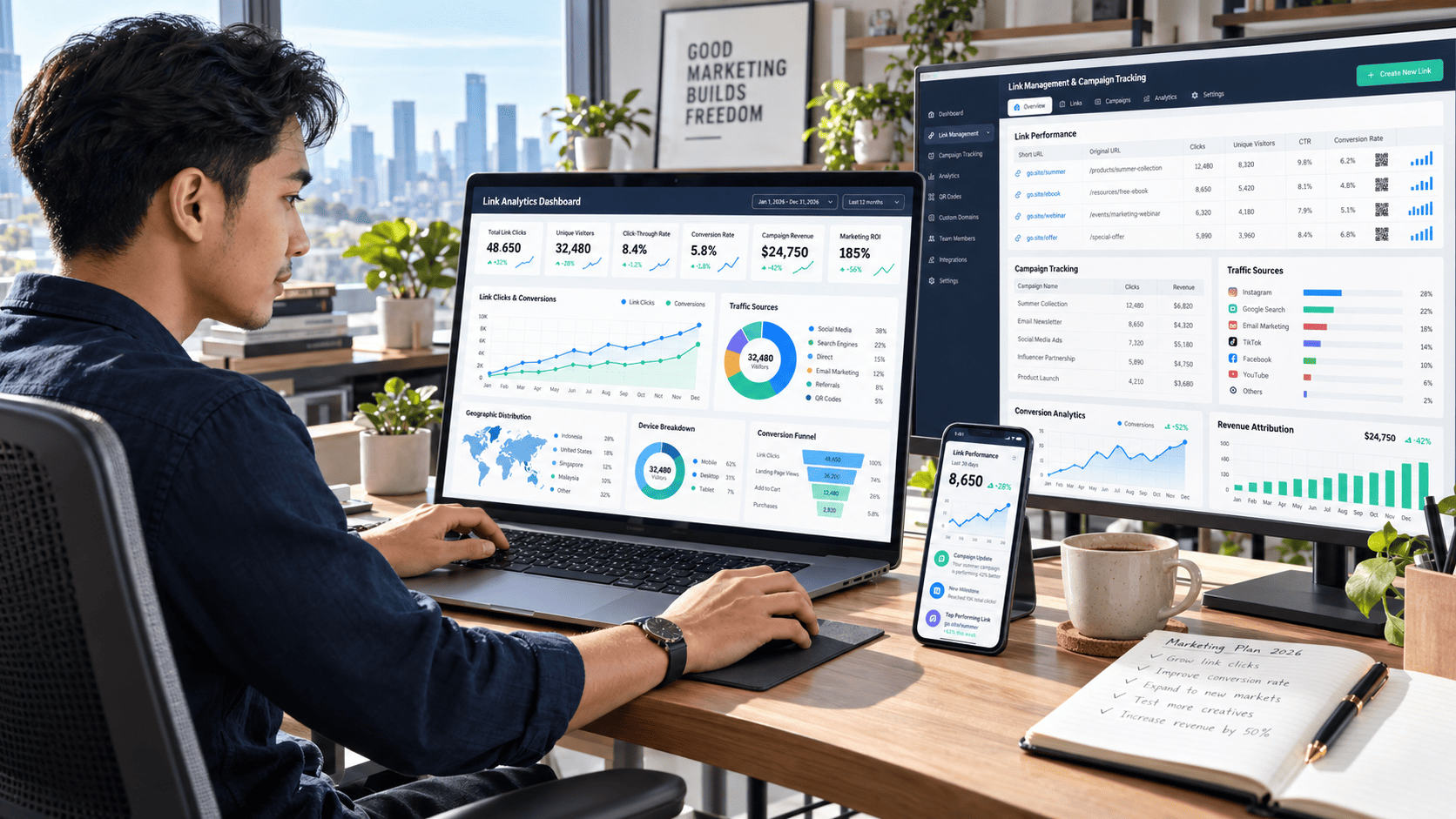
A practical marketing dashboard might display:
- Total clicks
- Unique visitors
- Top-performing links
- Traffic sources
- Conversion rate
- Geographic distribution
- Device usage
- Campaign revenue
- Recent performance trends
Keep Your Dashboard Focused
More data isn't automatically better.
Too many charts can make decision-making harder.
Your dashboard should answer the most important questions about your campaigns at a glance.
14. Identify Your Highest-Value Traffic
The campaign generating the most visitors isn't always the campaign generating the most business value.
Calculate the value of different traffic sources.
For example:
Campaign A:
10,000 visitors and 100 conversions.
Campaign B:
3,000 visitors and 150 conversions.
Campaign B generates fewer visitors but converts significantly better.
This is why conversion rate, revenue per visitor, and customer quality should influence marketing decisions alongside raw traffic numbers.
15. Turn Analytics Into Regular Decisions
Analytics becomes valuable only when it changes what you do.
Collecting impressive dashboards without taking action achieves very little.
Build a simple optimization routine.
Weekly
Check campaign performance, broken links, unusual traffic changes, and top-performing content.
Monthly
Compare marketing channels, conversion rates, audience segments, and campaign ROI.
Quarterly
Review larger patterns and decide where to increase, reduce, or redirect your marketing investment.
The most successful analytics systems create a continuous cycle:
Track → Analyze → Learn → Optimize → Repeat.
That cycle transforms data from passive statistics into an active growth strategy.
How Link Management and Analytics Work Together
Link management and analytics are often treated as separate activities, but they're most powerful when combined.
Link management gives structure to your campaigns.
Analytics provides insight into what happens after people click.
Together, they answer critical questions such as:
- Where are visitors coming from?
- Which campaigns attract the best audience?
- Which links generate conversions?
- Which channels waste traffic?
- Which content deserves more promotion?
- Where should the next marketing budget go?
Once these questions become easy to answer, marketing decisions become faster and more confident.
Common Link Analytics Mistakes to Avoid
Even experienced marketers sometimes create unnecessary reporting problems.
Watch out for inconsistent UTM naming, duplicate campaign links, missing conversion tracking, ignoring mobile visitors, measuring only clicks, and leaving old URLs unmonitored.
Another common mistake is reacting too quickly to short-term fluctuations.
A campaign might perform poorly for one day but become highly effective over several weeks.
Look for meaningful patterns instead of making major decisions from isolated data points.
Conclusion: Make Every Click More Valuable
Effective link management and analytics isn't about collecting as many statistics as possible. It's about understanding what happens between the moment someone discovers your link and the moment they take meaningful action.
Start with organized campaign links, consistent UTM tracking, unique click measurement, traffic source analysis, and conversion tracking. Then gradually add audience segmentation, device insights, geographic data, A/B testing, dashboards, and regular performance reviews.
When those pieces work together, every campaign becomes easier to measure and improve.
Instead of guessing which marketing strategy works, you'll have real data showing exactly where your best visitors come from and what encourages them to convert.
Start by auditing your most important campaign links today. Organize them, add proper tracking, and identify the channels producing your highest-value traffic. Even a few small improvements can make your next campaign significantly smarter—and more profitable.