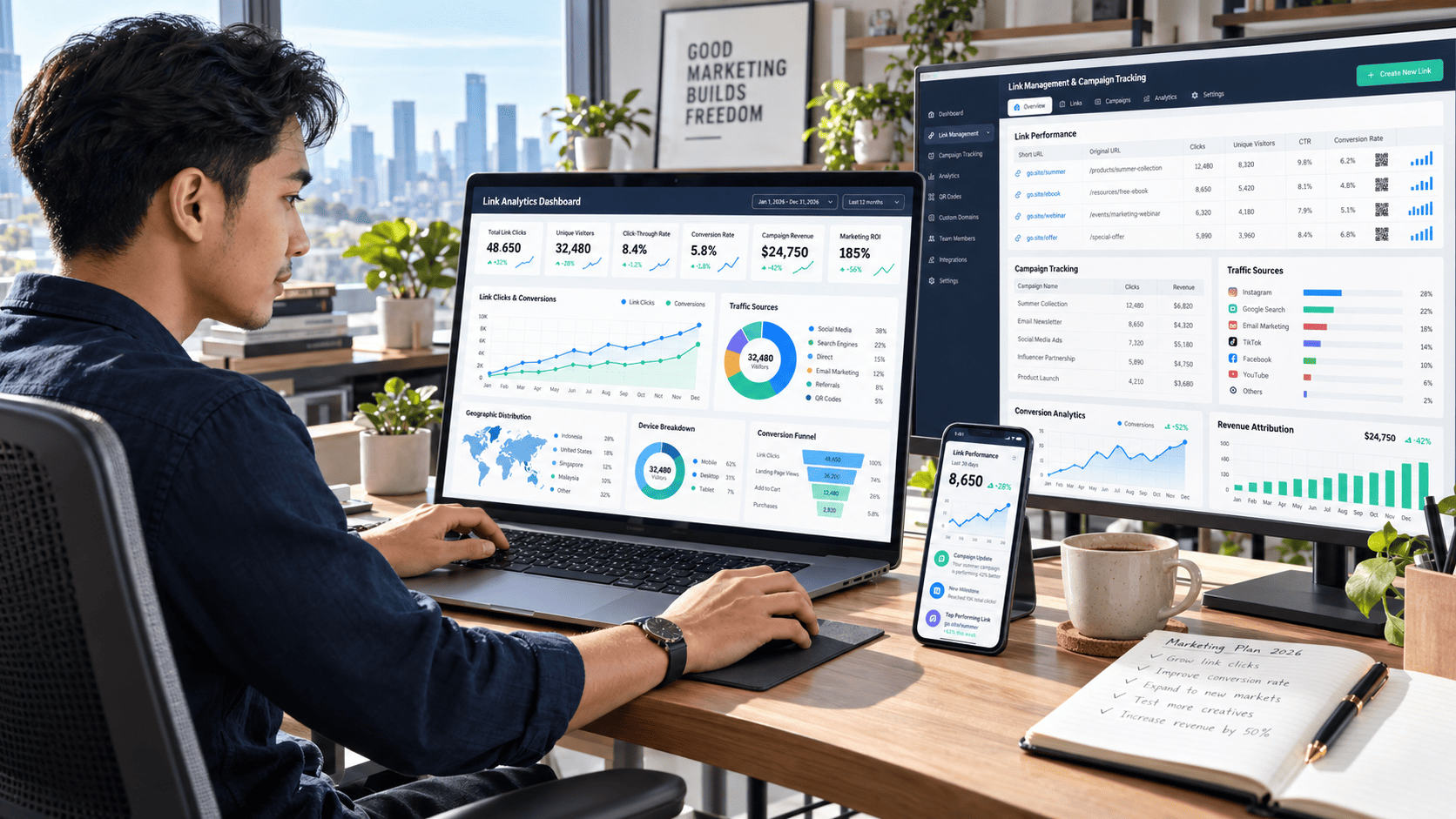

Ever posted a link and wondered why some people clicked while others completely ignored it? You create content, share it on social media, send it through email, place it in your bio, or add it to your blog, but the results feel random. Some links perform well, some disappear without impact, and sometimes you have no idea where your traffic actually comes from.
That is where link management and analytics become a game changer.
For content creators, bloggers, digital marketers, small business owners, affiliate marketers, and online entrepreneurs, links are not just simple URLs. They are digital bridges between your content and your audience. When managed properly, links can show what people like, where they come from, what makes them click, and which content deserves more attention.
The secret is not just sharing more links. The real secret is managing links smarter, tracking them clearly, and using the data to make better content decisions.
Why Link Management Matters More Than Most People Think
Many people treat links as the final step of content creation. After writing a blog post, uploading a video, or launching a campaign, they simply paste a link and hope people click. The problem is that hope is not a strategy.
Link management helps you organize, customize, track, and optimize every link you share. Instead of having messy URLs scattered everywhere, you can manage them in one place and understand how each link performs.
Imagine you are promoting the same article on Instagram, Facebook, TikTok, WhatsApp, email, and your website. Without proper link tracking, you may only see total traffic. You might know that 1,000 people visited your article, but you do not know which platform brought the most engaged visitors.
With link management and analytics, you can see the difference. Maybe Instagram brings more clicks, but email brings readers who stay longer. Maybe TikTok gets attention quickly, but your blog sidebar converts better. These small details can completely change your content strategy.
Link Management & Analytics Help You Understand Real Audience Behavior
A click is more than a number. It is a signal.
When someone clicks your link, they are showing interest. They are telling you that your headline, image, caption, placement, or offer was strong enough to make them take action. Link analytics helps you collect those signals and turn them into useful insights.
You Can See Which Content Attracts Attention
Not every topic gets the same response. Some articles may bring steady traffic, while others only get a short burst of clicks. Some product links may perform better during certain seasons. Some titles may attract more curiosity than others.
By tracking your links, you can identify which content gets the most clicks and why. For example, a content creator may discover that tutorial-style posts get more clicks than motivational posts. A blogger may find that comparison articles perform better than general guides. An affiliate marketer may notice that product review links convert better when shared through email instead of social media.
This kind of insight helps you stop guessing and start creating content based on real audience behavior.
You Can Understand Where Your Traffic Comes From
Traffic source matters because every platform has a different audience mindset.
People on Instagram may respond better to visual and lifestyle-driven content. People coming from Google Search may want detailed answers. Email subscribers may already trust you, so they may be more likely to click deeper links. WhatsApp audiences may prefer direct and practical content.
Link analytics allows you to separate those sources. Instead of looking at one large traffic number, you can understand which channel brings quality visitors.
This is powerful because growth is not always about getting more traffic. Sometimes, it is about focusing on the traffic source that gives the best results.
The Hidden Power of Short Links and Custom URLs
Long links often look messy, especially when they contain tracking parameters, random symbols, or complicated structures. They can make a post look less professional and harder to trust.
Short links solve this problem by making URLs cleaner, simpler, and easier to share.
For example, a long product link filled with random characters can be turned into a short and branded link that looks more professional. This is especially useful for social media bios, printed materials, email campaigns, YouTube descriptions, and affiliate promotions.
Branded Links Build More Trust
A generic short link may work, but a branded link usually looks more trustworthy. If your audience sees a link connected to your brand or website name, they are more likely to feel safe clicking it.
Trust is important because people are more careful online now. A suspicious-looking link can reduce clicks even when the content behind it is valuable. A clean, branded, and relevant link can make your content feel more credible.
Custom Slugs Make Links Easier to Remember
A custom slug is the readable part of a URL. Instead of using random letters and numbers, you can create a link like:
yourbrand.com/seo-guide
yourbrand.com/free-template
yourbrand.com/product-review
This makes your link easier to remember, easier to type, and more attractive when shared. It also helps your audience understand what they will get before clicking.
How Analytics Can Help Increase Clicks
Getting more clicks is not only about writing attractive captions. It is also about understanding what works and repeating it with better execution.
Link analytics gives you the data needed to improve your click-through rate. You can compare different links, platforms, placements, and campaigns to see what brings the best results.
Test Different Headlines and Captions
Sometimes, the same link can perform differently depending on how you present it.
For example, a blog article about productivity tools may get average clicks with a simple caption like “Check out these productivity tools.” But it may perform better with a more benefit-driven caption like “These tools can help you finish work faster without feeling overwhelmed.”
By tracking each version with different links, you can see which message gets more attention.
This is a simple but powerful way to improve your content without changing the entire strategy.
Track Link Placement
Where you place a link can affect how many people click it.
A link at the top of an article may perform differently from a link at the bottom. A link in an Instagram bio may get different results compared to a link in Stories. A call-to-action button may outperform a plain text link.
With link analytics, you can compare placements and find the best position for your most important links.
Measure Campaign Performance
If you run campaigns, link tracking becomes even more important. Whether you are promoting an ebook, product, service, event, newsletter, or affiliate offer, you need to know which campaign actually works.
Analytics can show total clicks, unique clicks, traffic source, location, device type, and sometimes even conversion behavior. This makes it easier to decide which campaign should be continued, improved, or stopped.
Practical Link Management Tips for Faster Content Growth
Smart link management does not have to be complicated. The key is consistency. Once you create a simple system, it becomes easier to manage links and make better decisions.
1. Organize Links by Campaign or Content Type
Do not let your links sit randomly in different documents, notes, or chat messages. Organize them based on category.
You can group links by blog posts, affiliate products, social media campaigns, email campaigns, landing pages, or client projects. This helps you find links faster and compare performance more easily.
Good organization saves time, especially when you manage many pieces of content.
2. Use Clear Naming Rules
Clear naming makes analytics easier to understand. Instead of naming links randomly, use names that explain the purpose.
For example:
Instagram Bio - SEO Guide
Email Newsletter - June Promo
TikTok Caption - Free Template
Blog CTA - Product Review
This way, when you check your analytics, you instantly know what each link represents.
3. Create Different Links for Different Platforms
Avoid using one link everywhere if you want accurate data. Create separate tracked links for each platform.
For example, if you promote the same article on Facebook, Instagram, TikTok, and email, create one unique link for each source. This makes it easier to see which platform gives the best results.
The content may be the same, but the audience behavior can be very different.
4. Review Analytics Regularly
Data is only useful when you actually review it.
Set a simple routine to check your link performance. You do not need to do it every hour. For most creators and small businesses, checking weekly is enough to spot useful patterns.
Look at which links get the most clicks, which platforms perform best, which links are declining, and which content deserves to be updated or promoted again.
5. Remove or Update Broken Links
Broken links can hurt user experience. When someone clicks a link and lands on an error page, they may lose trust and leave immediately.
Regularly check your important links, especially links in your bio, website menu, old blog posts, email sequences, and affiliate content. Update links when pages move, products change, or campaigns end.
Clean links create a smoother experience for your audience.
Common Mistakes That Make Link Analytics Less Useful
Many people use link tools but still fail to get meaningful insights because they make simple mistakes.
One common mistake is using the same link for every platform. This makes it hard to know where the clicks came from. Another mistake is only looking at total clicks without considering quality. A link with fewer clicks may still be more valuable if those visitors stay longer, subscribe, buy, or engage more deeply.
Another mistake is ignoring old links. Some older articles, videos, or social media posts may still bring traffic. If those links are outdated, you could be losing potential results without realizing it.
Good link management is not only about creating links. It is about maintaining them, reading the data, and improving based on what the audience actually does.
Link Management & Analytics Make Your Content Strategy Smarter
Content growth becomes easier when every link teaches you something.
Instead of creating content blindly, you can use link analytics to discover what your audience cares about. You can see which topics get attention, which platforms deserve more focus, and which calls-to-action need improvement.
For example, if your analytics show that beginner-friendly guides get more clicks than advanced tutorials, you may decide to create more simple educational content. If your product links perform better from email than social media, you may focus more on building your mailing list. If certain links get many clicks but low conversions, you may need to improve the landing page.
Small improvements like these can lead to stronger long-term growth.
Conclusion: Smarter Links Lead to Smarter Growth
Link Management & Analytics is not just a technical tool for marketers. It is a practical growth system for anyone who shares content online. When you manage links properly, you understand your audience better, increase clicks more strategically, and make content decisions based on real data instead of guesswork.
The secret is simple: every link should have a purpose, every click should teach you something, and every insight should help you improve your next move.
Start by organizing your most important links, creating separate tracked links for each platform, and reviewing your analytics regularly. Over time, you will see which content works, which audience responds, and which strategy helps your content grow faster.
If you want better clicks, clearer audience insights, and more consistent content growth, begin with your links. They may look small, but when managed well, they can become one of the most powerful parts of your digital strategy.