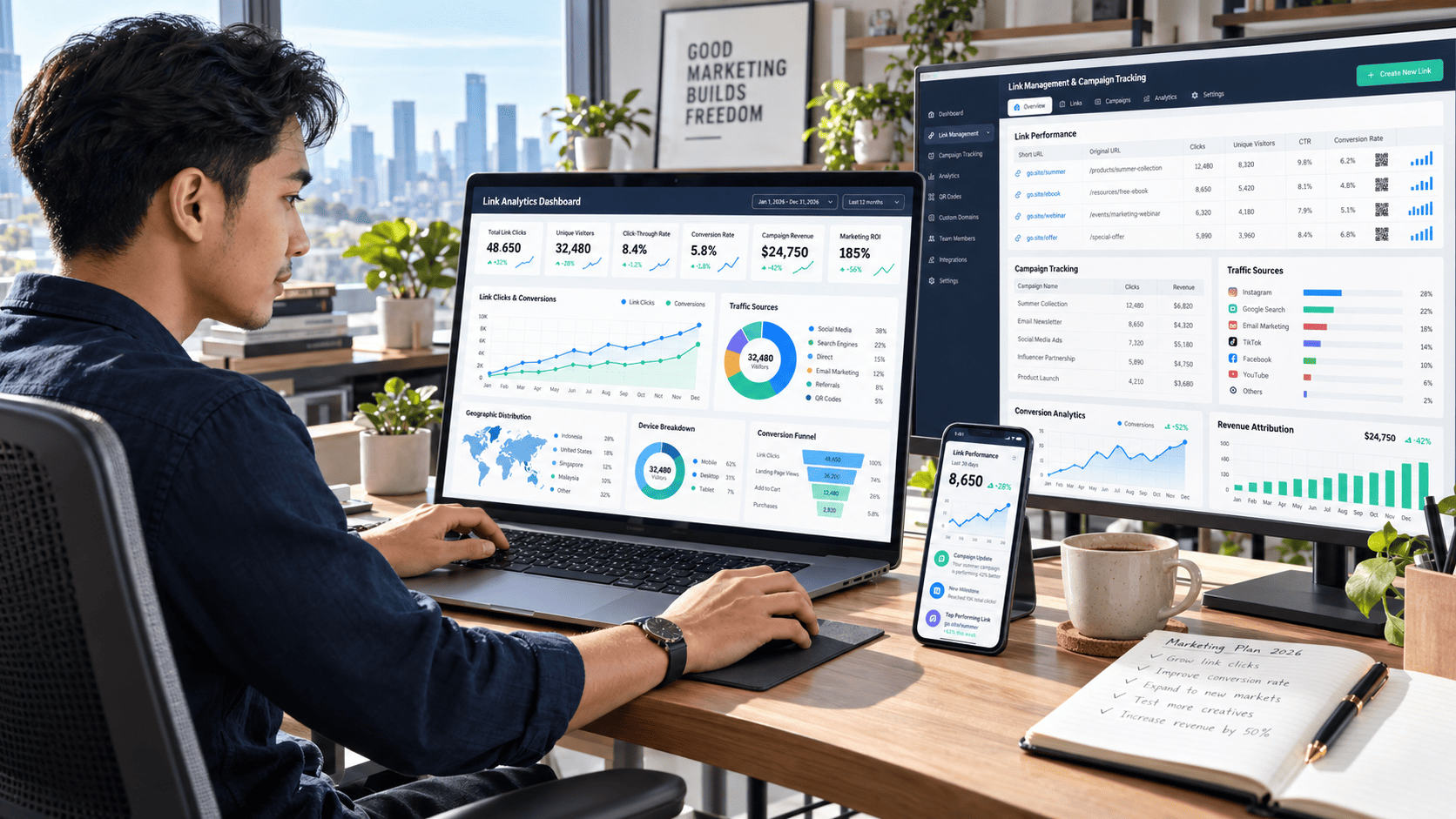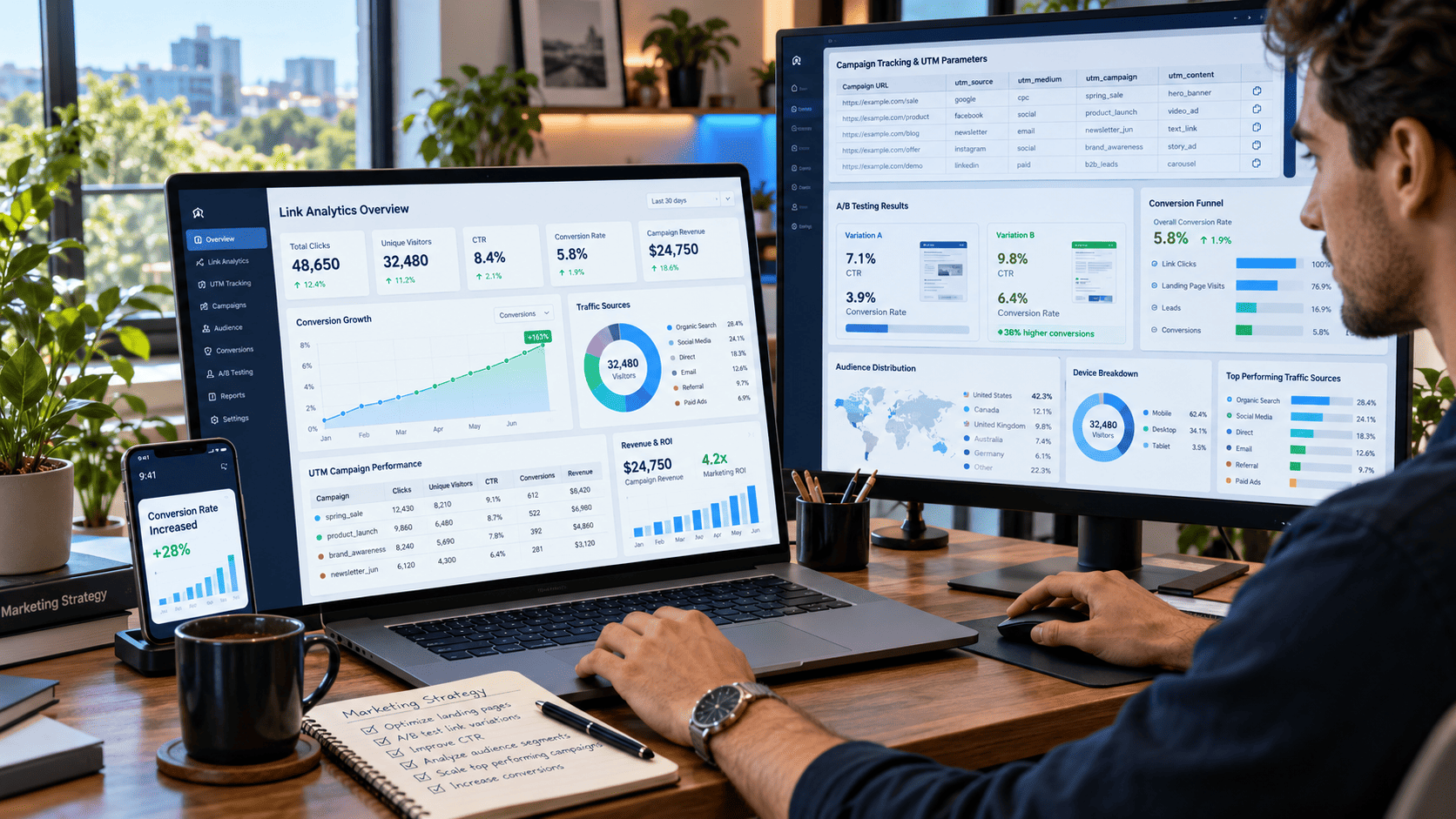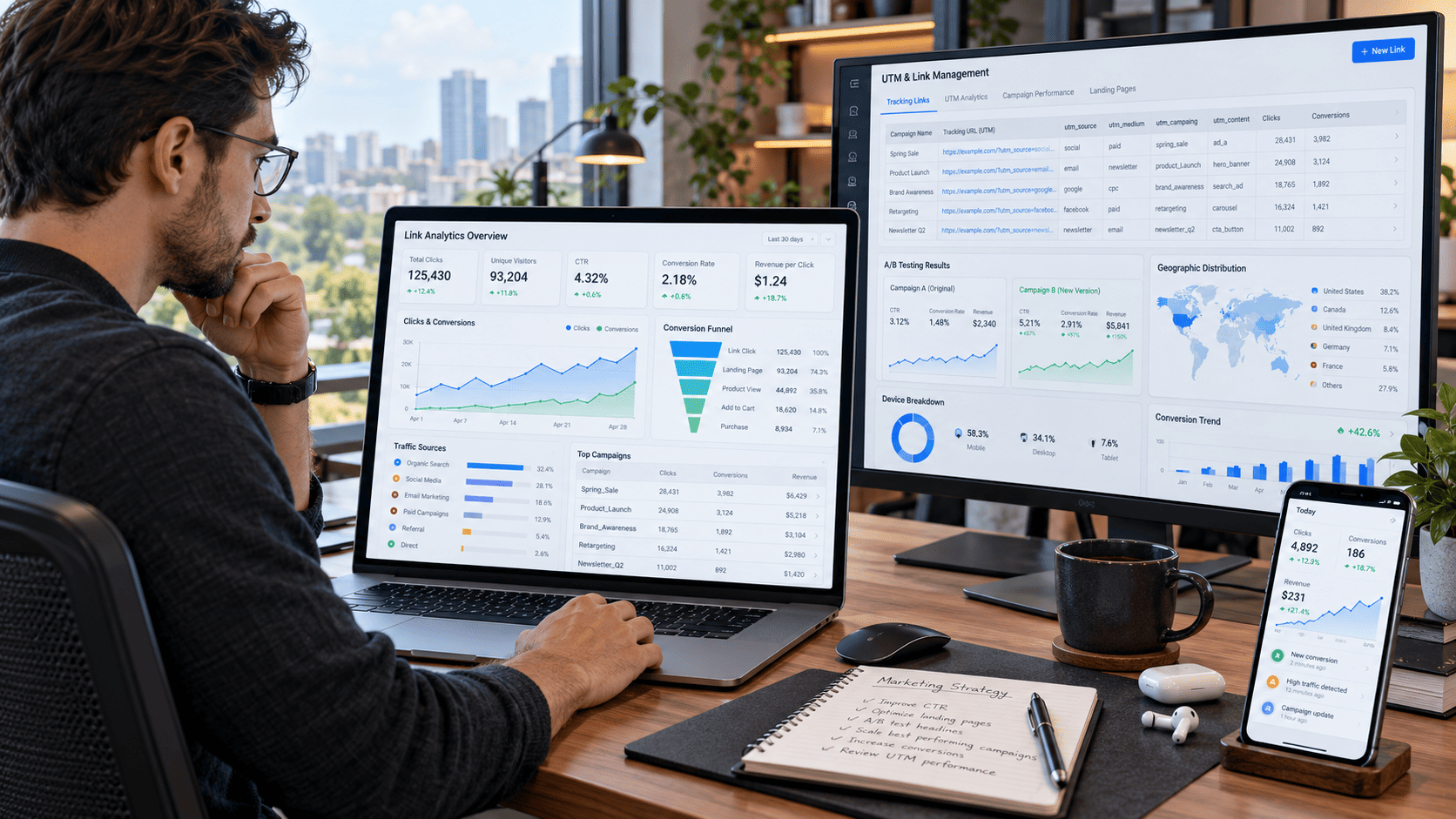

Have you ever felt like you were consistently creating content, sharing links across multiple platforms, and writing attractive captions, but the number of clicks still stayed average? This is where many content creators, online business owners, bloggers, and digital marketers often get stuck. They focus on creating as much content as possible, but forget to analyze what actually happens after the link is shared.
A link is not just an address that leads people to a specific page. A link can become an entry point for understanding audience behavior, traffic sources, reader interests, and the effectiveness of your promotional strategy. With the right link management & analytics approach, you do not only know how many people clicked your link, but also where they came from, when they were active, what device they used, and which content caught their attention the most.
In today’s highly competitive digital era, managing links properly and reading analytics data is no longer just an extra step. It has become an important part of building more targeted content, more effective promotions, and smarter digital decisions.
What Is Link Management & Analytics?
Link management is the process of organizing, shortening, tracking, and optimizing links so they are easier to use and analyze. In many cases, link management is used to turn long URLs into shorter, cleaner, more memorable, and more professional-looking links.
Meanwhile, analytics is the process of reading data from the activity behind those links. This data can include the number of clicks, visitor location, traffic source, device type, browser, click time, and the performance of each campaign.
For example, you share one product link on Instagram, Facebook, TikTok, WhatsApp, and your blog. Without analytics, you may only know the total number of visits or sales in general. But with link management & analytics, you can see which platform generates the most clicks, what time your audience is most active, and which promotional content performs best.
This is why many professional marketers do not randomly share links. They measure, compare, and optimize their strategy based on real data.
Why Link Management Matters for Digital Content
Many people think of links as simple supporting elements. In reality, links can be one of the most important assets in a digital strategy. A clean, trustworthy, and trackable link can significantly improve content performance.
Imagine seeing two different links. The first one is extremely long, full of random characters, and looks confusing. The second one is short, clean, and uses a clear brand name or keyword. Psychologically, people tend to trust links that look neat and professional.
Link management also helps you avoid confusion when running multiple campaigns at the same time. For example, you may be promoting a product through several channels. Without proper link organization, it becomes difficult to separate traffic performance from Instagram Stories, TikTok bio, Facebook groups, email marketing, or blog articles.
With a structured link system, every campaign becomes easier to monitor. You no longer have to guess. You can make decisions based on actual data.
The Benefits of Link Management & Analytics for Increasing Clicks
One of the biggest benefits of link management & analytics is that it helps increase clicks more strategically. It is not only about making links shorter, but also about understanding what makes people interested enough to click.
1. Makes Links Look More Professional
Short and clear links are easier to share, nicer to look at, and more trustworthy. This is especially important for content creators, affiliate marketers, online store owners, and businesses that often share links with their audience.
For example, a clean link structure like brand.com/promo feels more convincing than a long URL filled with numbers and symbols. Even if both links lead to the same destination, the way a link looks can influence whether someone decides to click or not.
2. Makes Campaign Performance Easier to Track
Each link can be created specifically for a certain channel. You can create different links for Instagram, Facebook, TikTok, WhatsApp, email, or paid ads. From there, you can see which channel is the most effective at generating clicks.
If your TikTok link produces more clicks than your Facebook link, it may be a sign that you should strengthen your content strategy on TikTok. On the other hand, if one channel has low clicks, you can evaluate the caption, visuals, posting time, or audience targeting.
3. Helps Identify the Content Your Audience Likes Most
Analytics can show which links get the most clicks. From this data, you can understand which topics, products, or content styles are most attractive to your audience.
For example, you run a technology blog and share several articles about apps, gadgets, tutorials, and digital security tips. If tutorial links get the most clicks, it means your audience may prefer practical content they can apply immediately.
How to Understand Audience Behavior Through Link Analytics
Click data is not just a number. Behind every click, there is an audience behavior pattern that you can learn from. The more often you analyze your data, the easier it becomes to understand what your readers actually need.
Traffic Sources
Traffic sources show where your audience comes from. They may come from social media, search engines, email, chat groups, ads, or other websites. This data is important because every platform has a different audience behavior.
Audiences from TikTok may prefer short, fast, and visual content. Audiences from blogs are usually more prepared to read longer information. Meanwhile, audiences from WhatsApp often feel more personal because links are commonly shared through direct recommendations.
By understanding traffic sources, you can adjust your promotional style for each platform.
Peak Click Times
Analytics can also help you see when your audience is most active. For example, most clicks may happen at night after work, or in the morning when people first check their phones.
This data can be used to determine your posting schedule. Instead of sharing links randomly, you can choose more strategic times when your content has a higher chance of getting attention.
Devices Used by Your Audience
Knowing whether your audience mostly uses mobile or desktop is also very important. If most of your audience opens links from smartphones, then your landing page must be mobile-friendly, fast-loading, and easy to navigate.
Do not let your link successfully attract many clicks, only for visitors to leave immediately because the page is too heavy, the buttons are hard to tap, or the layout looks messy on a small screen.
Effective Link Management Strategies for Content Creators and Online Businesses
To make link management truly useful, you need to apply it with a clear strategy. It is not enough to simply shorten a link. You also need a system that is easy to read and analyze.
Use Clear Link Names
Create link names that are easy to understand. Avoid random structures that can confuse you later. For example, use the campaign name, product name, or platform name as part of the link.
You can separate links for promotions from Instagram, TikTok, and email. That way, when you read the analytics report, you instantly know which link came from which channel.
Separate Links Based on Campaigns
Do not use the same link for every platform if you want to read performance clearly. Create different links for each campaign or traffic source.
For example:
- A special link for Instagram bio
- A special link for TikTok videos
- A special link for Facebook groups
- A special link for email newsletters
- A special link for blog articles
With this method, you can see the performance of each channel in more detail.
Monitor Data Regularly
Analytics will not be useful if you only check it once and then forget about it. Make it a habit to check your data regularly, whether daily, weekly, or after a campaign ends.
Through regular monitoring, you can find repeated patterns. For example, educational content may get more clicks in the morning, while promotional content may perform better at night. Patterns like these can become the foundation for your next strategy.
Common Mistakes in Managing Links
Even though it looks simple, many people still make mistakes in link management. As a result, the data becomes messy and difficult to use for decision-making.
Using One Link for All Platforms
This is one of the most common mistakes. Using one link may feel practical, but it makes it difficult to know the real source of your clicks. If the link performs well, you will not know whether the traffic came from Instagram, TikTok, Facebook, or WhatsApp.
Not Labeling Campaigns Properly
Without clear labels, you may get confused when looking at many links in your dashboard. This becomes even more difficult if campaigns run for a long time or are managed by multiple people in one team.
Use consistent naming so your data is easier to read. For example, include the platform name, date, or campaign goal.
Only Looking at Click Numbers
The number of clicks is important, but it is not the only measure of success. High clicks do not always mean good results if visitors do not read, register, buy, or stay on the page.
Combine click data with other metrics such as visit duration, conversion rate, bounce rate, and landing page performance. This helps you evaluate traffic quality, not just traffic quantity.
Practical Tips to Get More Link Clicks
Increasing clicks is not only about the link itself, but also about how you present it to your audience. A good link still needs strong context.
First, use an introduction that clearly explains the benefit of opening the link. Avoid simply writing “click here.” Give people a reason to open it.
Second, place your link where it is easy to see. On social media, make sure the link is available in your bio, caption, first comment, story, or a clear button. In blog articles, place links naturally in relevant sections.
Third, make sure the destination page matches the promise you made earlier. If you offer a guide, visitors should actually get a guide. If you offer a product, the product page should be clear, fast, and easy to understand.
Fourth, test several variations. Try different captions, calls-to-action, posting times, or visual designs. From there, analytics will help show which version performs best.
Link Management Helps Content Grow Faster
Content that grows quickly is not only content that is published often. It is content that keeps improving based on data. Link management & analytics gives you the ability to see what works and what needs to be improved.
For example, you create five types of content in one week. After checking your link data, you find that tutorial content gets the most clicks, review content gets strong engagement, while direct promotional content gets less attention. From this insight, you can adjust your strategy by creating more tutorials, adding reviews, and inserting promotions more naturally.
This kind of strategy is far more effective than creating content without direction. Data helps you work smarter, not just harder.
Conclusion
Link management & analytics is one of the most powerful secrets to increasing clicks, understanding audience behavior, and growing content faster. By managing links properly, you can make your promotions look more professional, track the performance of every channel, understand audience interests, and make decisions based on real data.
Start with simple steps: organize your links, separate them by platform, create clear campaign names, and monitor their performance regularly. From the small data you collect today, you can discover bigger strategies for your next stage of content growth.
If you have been sharing links without checking the results, now is the right time to be more strategic. Manage your links wisely, read your analytics carefully, and turn every click into a clue for creating content that is more relevant, engaging, and impactful.