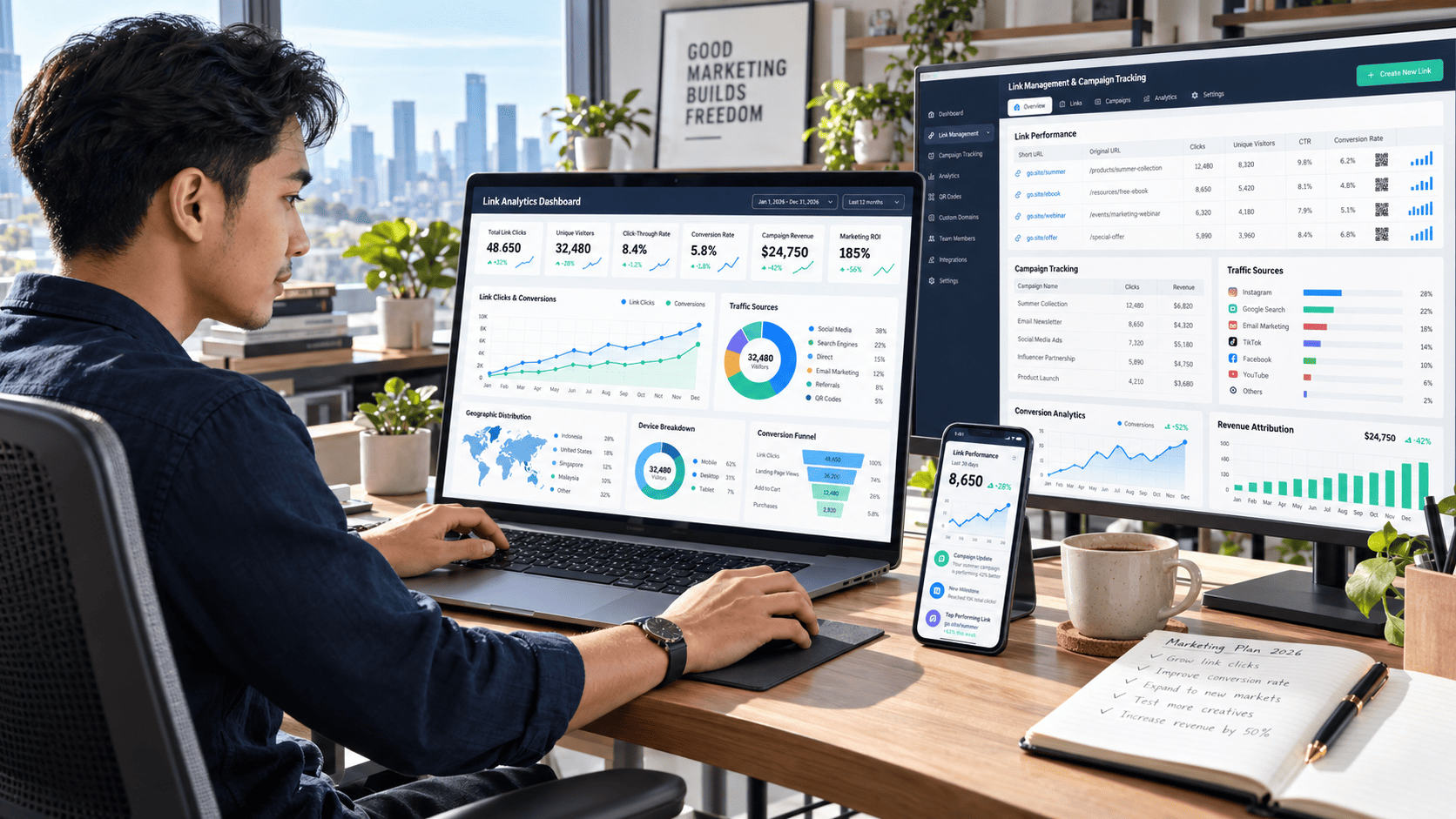

Every link you share tells a story. It can reveal where your audience comes from, what catches their attention, which campaigns actually work, and where potential customers disappear before converting. The problem is that many creators, marketers, and online businesses still treat links as simple pathways instead of valuable sources of data.
That is where link management and analytics become powerful. With the right system, you can move beyond counting clicks and start understanding the behavior behind them. You can identify your best traffic sources, improve weak campaigns, optimize landing pages, and make smarter decisions based on real performance data rather than assumptions.
Whether you manage a blog, social media account, email newsletter, affiliate campaign, or online store, these 17 practical strategies can help you turn ordinary links into measurable marketing assets.
1. Create a Centralized Link Management System
The first step is keeping your links organized in one place. Scattered URLs across spreadsheets, chat messages, social posts, and old campaign documents quickly become difficult to manage.
A centralized link management system makes it easier to monitor active links, update destinations, compare campaigns, and avoid accidentally sharing outdated URLs.
Create clear folders or categories for campaigns, platforms, products, content, and traffic sources. A simple structure can save hours of confusion when your number of links starts growing.
2. Use Consistent Naming Conventions
Good analytics starts with clean organization. Instead of naming a campaign something vague like “promo1,” use descriptive labels that immediately explain its purpose.
For example, a name such as summer-email-productA is much easier to recognize later than a random collection of letters and numbers.
Consistency also helps when several people manage the same campaigns. Everyone can quickly understand where a link belongs and what it is supposed to track.
3. Track More Than Total Clicks
Total clicks are useful, but they rarely tell the full story. A campaign with 10,000 clicks may look impressive until you discover that only a tiny percentage of visitors take the next step.
Look deeper at metrics such as:
- Unique clicks
- Click-through rate
- Conversion rate
- Traffic source
- Device type
- Geographic location
- Time of click
- New versus returning visitors
These details help you understand whether your traffic is genuinely valuable.
4. Separate Unique Clicks From Repeat Clicks
Imagine one person opening the same link ten times. Counting every visit as a separate interested user could make your campaign look stronger than it really is.
Unique-click data gives you a more realistic picture of audience reach. Repeat clicks are still useful because they may indicate strong interest, comparison behavior, or repeated access to useful content, but they should be analyzed separately.
5. Add UTM Parameters to Important Campaigns
UTM parameters are one of the easiest ways to identify where traffic originates. They allow analytics tools to distinguish visitors coming from different channels, campaigns, placements, and creative variations.
A Simple UTM Structure
A typical tracking setup may include:
- Source: where the visitor came from
- Medium: the marketing channel
- Campaign: the specific promotion
- Content: the creative or placement variation
For example, two links leading to the same landing page can use different parameters for an email newsletter and a social media post. This makes campaign comparisons much clearer.
6. Analyze Traffic Sources Carefully
Not every traffic source delivers the same quality of visitors. One platform may generate thousands of clicks but few conversions, while another sends fewer visitors who are much more likely to buy, subscribe, or complete a form.
Compare traffic sources using both volume and outcome. The best channel is not always the one producing the most clicks; it is often the one producing the strongest results per visitor.
7. Measure Click-Through Rate Instead of Chasing Click Volume
Click-through rate, or CTR, shows how effectively your content encourages people to click.
If a post reaches 100,000 people but receives only a few hundred clicks, the headline, call-to-action, design, or audience targeting may need improvement.
Monitoring CTR across different campaigns helps you discover which messages consistently attract attention.
8. Connect Link Data With Conversion Tracking
Clicks are only the beginning of the customer journey. The real question is what happens after someone arrives.
Connect link analytics with meaningful goals such as:
- Purchases
- Newsletter sign-ups
- Form submissions
- Downloads
- Account registrations
- Product page visits
This connection allows you to calculate which links actually create business value rather than simply generating traffic.
9. Track the Entire Visitor Journey
A visitor may click a social post, read an article, visit a product page, leave, return through an email, and finally convert several days later.
Looking only at the final click can hide the role earlier touchpoints played in that decision.
Whenever possible, analyze the broader customer journey. Understanding how different links work together gives you a more accurate view of campaign performance.
10. Compare Device Performance
Mobile and desktop visitors often behave differently. A campaign may generate excellent desktop conversions while struggling on smartphones because the landing page loads slowly or the form is difficult to complete.
Review clicks, engagement, and conversions by device type. If mobile traffic is high but conversions are weak, test the entire experience from a phone rather than assuming the problem is with the audience.
11. Study Geographic Click Patterns
Location data can reveal unexpected opportunities. You may discover that a campaign performs particularly well in a specific city, region, or country.
That insight can guide future decisions about content, language, advertising budgets, publishing schedules, and localized offers.
For global campaigns, geographic analytics is especially useful for identifying markets worth expanding.
12. Monitor Click Timing
The time people click can be just as valuable as the number of clicks.
If your audience consistently becomes active in the evening, publishing important content early in the morning may reduce its potential reach. The same principle applies to email campaigns and promotional launches.
Look for recurring patterns by hour and day. Over time, these patterns can help you choose stronger publishing windows.
13. Use A/B Testing for Links and Calls-to-Action
Small changes can produce surprisingly large differences in performance.
Test variations such as:
- Button wording
- Headline style
- Link placement
- Image creative
- Landing page design
- Call-to-action length
Change one major element at a time when possible. That makes it easier to understand what caused the improvement or decline.
Avoid Ending Tests Too Early
A variation that performs better after only a handful of clicks may simply be benefiting from random variation. Allow enough traffic to accumulate before drawing conclusions.
14. Identify High-Performing Content
Link analytics can reveal which topics, formats, and headlines consistently generate interest.
Suppose three articles about productivity tools repeatedly outperform everything else on your website. That is a strong signal that your audience wants more content in that area.
Instead of guessing your next topic, use click behavior as a source of content ideas.
15. Find and Fix Underperforming Links
Not every weak link should be abandoned immediately. Sometimes the destination is valuable, but the presentation is poor.
If a link receives few clicks, investigate possible causes:
- Weak anchor text
- Poor placement
- Unclear call-to-action
- Irrelevant audience targeting
- Slow landing page
- Broken destination
- Mismatch between promise and content
Improving one of these elements may revive an otherwise useful campaign.
16. Audit Links Regularly
Links change over time. Pages are deleted, products disappear, campaigns expire, domains move, and tracking parameters become outdated.
A regular link audit keeps your system clean and protects the user experience.
What to Check During a Link Audit
Review whether each important link:
- Still reaches the correct destination.
- Loads without errors or unnecessary redirects.
- Uses accurate tracking parameters.
- Belongs to an active campaign.
- Continues to generate useful traffic.
Monthly or quarterly audits are usually enough for most content-driven websites, while high-volume campaigns may need more frequent checks.
17. Turn Analytics Into Action
Collecting data without acting on it creates attractive dashboards but little real improvement.
The most effective link management and analytics workflow follows a simple cycle:
Track → Analyze → Learn → Optimize → Repeat.
If one channel produces better conversions, allocate more attention there. If mobile visitors leave quickly, improve the mobile experience. If a particular headline repeatedly earns strong CTR, study what makes it effective and apply those lessons elsewhere.
The goal is not to monitor every metric available. The goal is to identify the numbers that help you make better decisions.
How to Build a Simple Link Analytics Workflow
You do not need a complicated enterprise system to get started. A practical workflow can be surprisingly simple.
Step 1: Define the Goal
Decide what success means before launching a link. It could be clicks, purchases, leads, downloads, or subscriptions.
Step 2: Create a Trackable Link
Add clear campaign labels and tracking parameters so the traffic can be identified later.
Step 3: Distribute the Link
Share it through the intended channels while keeping each source distinguishable.
Step 4: Review Performance
Check click volume, unique visitors, traffic quality, and conversions.
Step 5: Optimize the Weakest Point
Improve the part of the journey creating the most friction, then measure again.
This simple process prevents analytics from becoming overwhelming and keeps attention focused on measurable improvement.
Common Link Management Mistakes to Avoid
Even experienced marketers can lose valuable insights through small tracking mistakes. Common problems include using inconsistent campaign names, sharing identical untagged links across multiple platforms, focusing only on click volume, ignoring broken links, and measuring too many metrics without clear goals.
Another frequent mistake is changing several campaign elements simultaneously. If the headline, landing page, audience, and call-to-action all change at once, it becomes difficult to determine what actually improved performance.
Keep tracking structured, comparisons fair, and goals clear.
Conclusion
Effective link management and analytics is about much more than shortening URLs or watching click counters rise. It gives you a practical window into how people discover your content, what motivates them to engage, and which marketing efforts actually produce meaningful results.
By centralizing your links, using consistent tracking, monitoring unique clicks, analyzing traffic sources, measuring conversions, testing variations, and auditing performance regularly, you can transform scattered campaign data into useful business intelligence.
Start with just a few important links and apply the strategies that matter most to your current goals. As the data becomes clearer, use what you learn to improve your content, campaigns, and customer journey. If you found these link management and analytics strategies useful, share this guide with your team or fellow creators and begin testing one improvement in your next campaign today.