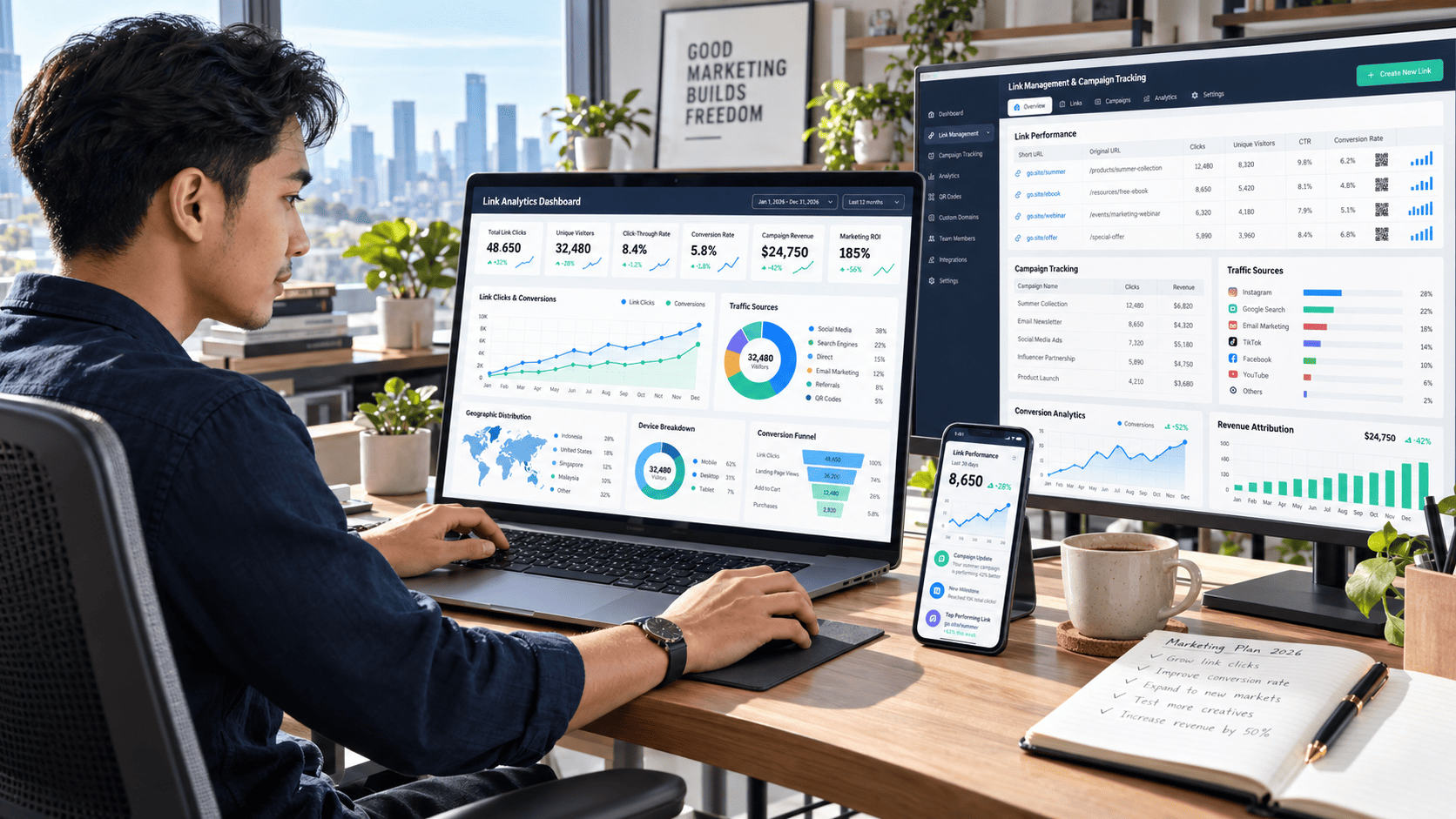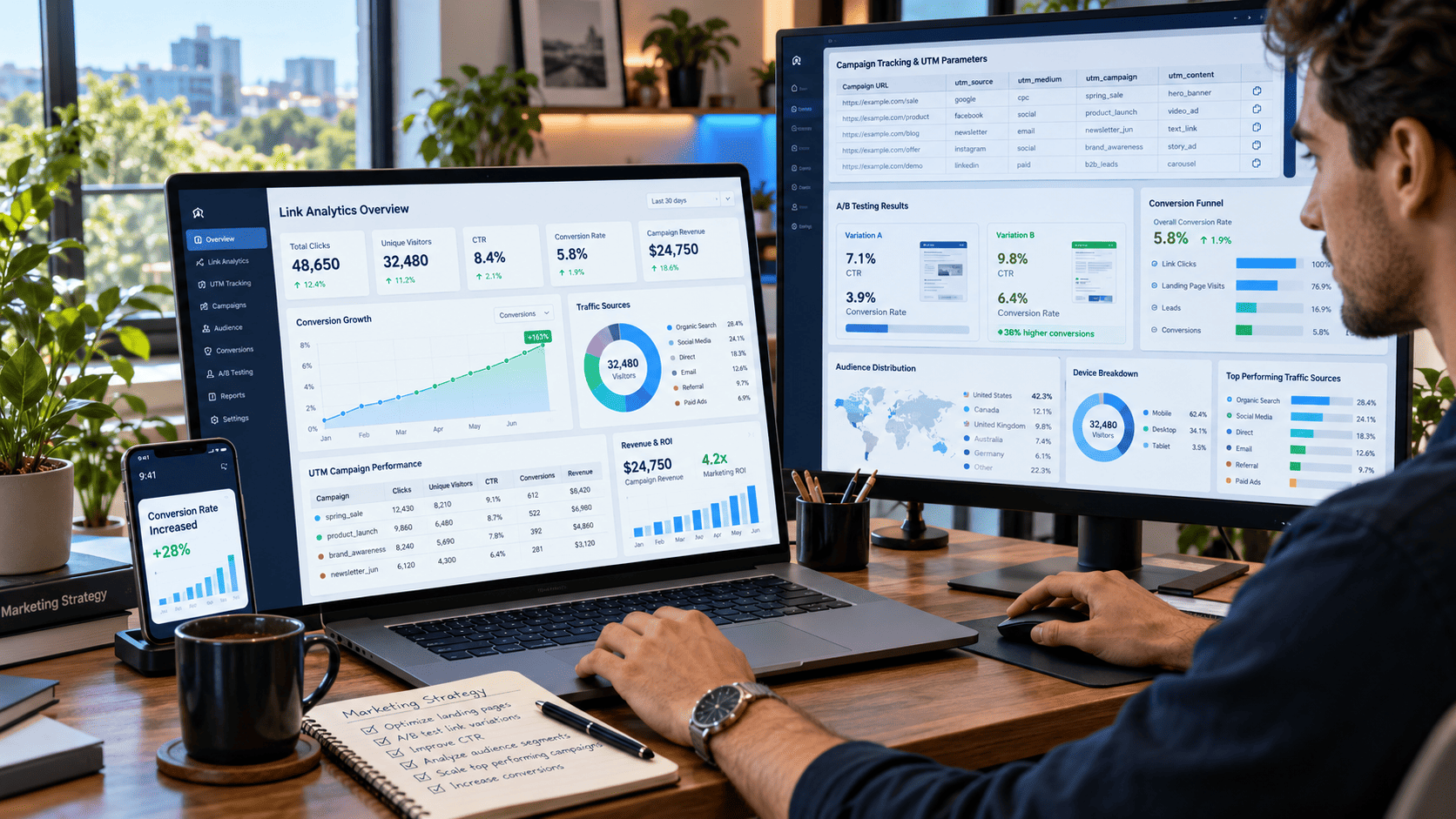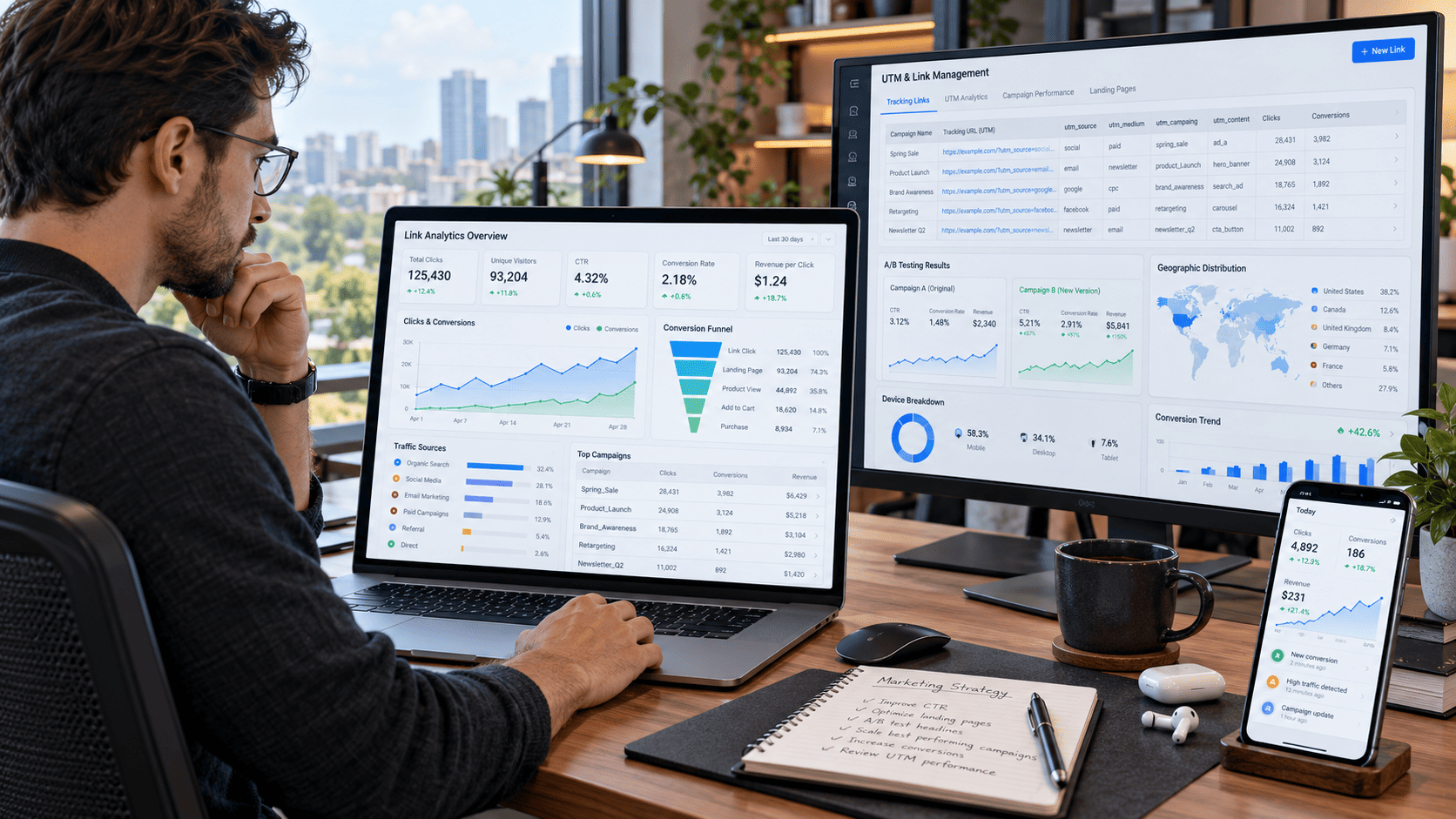

In the digital world, clicks are not just numbers. Every click can become an important clue about who your audience is, where they come from, what they like, and what kind of content makes them interested enough to take action. Unfortunately, many content creators, bloggers, online business owners, and digital marketers still share links randomly without truly understanding their performance.
In reality, a single link can store a lot of valuable information. It can show the number of clicks, traffic sources, devices used, peak activity times, and which pages attract the most attention. This is where link management & analytics play a major role. By managing and analyzing links properly, you do not only know how many people clicked, but you can also understand audience behavior more deeply.
Link management is not only about shortening URLs. More than that, it is a strategy to make promotions more organized, easier to track, more professional, and more effective in improving content performance.
What Is Link Management & Analytics?
Link management is the process of managing, organizing, shortening, tracking, and optimizing links used in digital activities. These links can be used for many purposes, such as sharing blog articles, affiliate products, landing pages, social media campaigns, bio links, WhatsApp promotions, and paid ads.
Meanwhile, analytics is the process of reading data from those links. For example, how many clicks come in, which platform visitors come from, what devices they use, the country or region they come from, and the most active clicking times.
When combined, link management & analytics become an important tool for understanding the audience journey. You are no longer just guessing, but making decisions based on real data.
For example, you share one article link on Facebook, TikTok, Instagram, and WhatsApp. Without analytics, you only know whether the article is getting many visitors or not. But with link tracking, you can see that 60% of clicks come from Facebook, 25% from WhatsApp, and the rest from Instagram. From there, you can focus on strengthening the platform that works best.
Why Is Link Management Important for Content Creators and Online Businesses?
Many people think that creating good content is enough. In reality, good content still needs the right distribution strategy. If the links you share are not managed properly, you may lose many opportunities to understand your audience.
Imagine you have many articles, products, or promotional pages. Every day, you share links across different platforms. Without a neat management system, it will be difficult to know which links generate the most clicks, which platforms are the most active, and which content needs improvement.
With link management, you can make all promotional activities more focused. Links become shorter, easier to remember, more professional, and easier to monitor. This is especially important for:
- Content creators who want to know which content attracts the most interest.
- Bloggers who want to increase article traffic.
- Affiliate marketers who want to track conversion sources.
- Online business owners who want to measure campaign effectiveness.
- Digital marketers who need data for ad optimization.
Data from link analytics can act like a compass. Without a compass, you may keep moving, but not necessarily in the most profitable direction.
The Secret to Understanding Audience Behavior Through Link Analytics
One of the biggest benefits of link analytics is its ability to read audience behavior. From click data, you can understand patterns that may not have been visible before.
For example, you notice that links shared at night receive more clicks than those shared in the morning. This may indicate that your audience is more active after working hours or after finishing their daily activities. With this information, you can adjust your posting schedule to make it more effective.
Or you may discover that traffic from TikTok is high, but visit duration is low. This means people are interested enough to click, but the destination page may not match their expectations. Maybe the title is attractive, but the page content is not strong enough, the loading speed is slow, or the mobile display is uncomfortable.
Some important data you can monitor from link analytics includes:
- Total clicks to see how attractive the link is.
- Unique clicks to identify the number of unique visitors.
- Referrers or traffic sources to know which platform works best.
- User devices to understand whether your audience mostly uses mobile or desktop.
- Visitor location to adjust language, posting time, or offers.
- Peak clicking times to determine the best promotional schedule.
By reading this data regularly, you can recognize audience habits. Over time, your content strategy will become sharper because it is no longer based only on feelings.
How Link Management Helps Increase Clicks
High clicks do not always come from luck. There are many small factors that can make someone more interested in clicking a link. Links that are too long, random, or suspicious-looking can make the audience hesitate. On the other hand, neat and clear links can increase trust.
For example, a link like:
domain.com/promo-sepatu-diskon
looks more convincing than a long link filled with random characters. The audience can more easily understand the purpose of the link before clicking.
In addition, link management allows you to create custom URLs or branded links. This is important for building identity and trust. If your audience often sees links with a consistent domain or structure, they will become more familiar and comfortable clicking them.
To increase clicks, here are several things you can apply:
Use a Clear Link Slug
A slug is the final part of a URL that usually explains the page content. Create a slug that is short, relevant, and easy to understand. Avoid slugs that are too long or filled with unclear numbers.
Good example:
/tips-digital-marketing-pemula
Less attractive example:
/post?id=8392xyzpromo2026
A clear slug is not only good for users, but also helps SEO because search engines can understand the topic of the page more easily.
Adjust Links Based on Platform
Every platform has a different audience character. A link for an Instagram bio can be made short and visual. A WhatsApp link can directly lead to chat. An email marketing link can use tracking parameters so its performance is easier to measure.
Do not use the same link for every platform if you want to read performance in detail. Create specific link variations for each channel so the data becomes cleaner.
For example:
- Facebook-specific link
- TikTok-specific link
- Instagram-specific link
- WhatsApp-specific link
- Email-specific link
This way, you can know which platform truly brings quality traffic.
Monitor the Links That Get the Most Clicks
Sometimes, content that you think is ordinary can receive high clicks. On the other hand, content you consider very good may perform poorly. This kind of data is important for evaluation.
If a link gets many clicks, pay attention to the topic, title style, publishing time, and distribution platform. From there, you can create follow-up content with a similar pattern.
Link Analytics for Growing Content Faster
Content that grows quickly usually does not grow just because the creator posts often, but because the creator reads data consistently. Link analytics can help you discover new content ideas based on audience interest.
For example, you share several articles with different topics. After analyzing them, you find that an article about “tips to save internet data” gets far more clicks than an article about “the history of technology.” This can be a signal that your audience prefers practical content that can be applied immediately.
From that one piece of data, you can create related content such as:
- How to save internet data while streaming.
- Apps that consume too much data and how to fix them.
- Fast internet tips without wasting data.
- How to monitor data usage on your phone.
This is the power of analytics. One high-performing link can become the source of many new content ideas.
In addition, link analytics also helps you know when to update old content. If an article still gets many clicks but the information is outdated, you can update it so it remains relevant. This is good for SEO because fresh content tends to be more liked by readers and search engines.
Common Mistakes in Managing Links
Although it may look simple, many people still make mistakes in link management. These mistakes can make data messy and make strategies difficult to evaluate.
One of the most common mistakes is using the same link for every platform. As a result, you cannot accurately identify the traffic source. All clicks are mixed together, making it difficult to determine which platform is most effective.
Another mistake is not naming campaigns properly. If you run many promotions, use consistent naming. For example:
facebook_artikel_marketing_mei
instagram_bio_produk_mei
tiktok_video_tutorial_mei
This kind of naming makes it easier to read reports later.
Also, avoid changing links too often without a clear reason. If a link has already been widely shared and suddenly changes, the audience may lose access. It is better to use a safe redirect system so old links can still lead to the new page.
Practical Tips to Start Link Management & Analytics
To start using link management & analytics, you do not need to immediately use a complicated system. Start with something simple but consistent.
First, define the purpose of every link. Is the link meant to increase article traffic, sell products, collect leads, direct people to WhatsApp, or measure a specific campaign? A clear purpose makes the data easier to read.
Second, create a neat link structure. Use names that are easy to recognize, short, and relevant to the page content. Do not create short links without meaning.
Third, separate links based on platform. A Facebook link should be different from a TikTok, Instagram, or email link. This will help you see the performance of each channel.
Fourth, check the data regularly. It does not have to be every hour, but make it a habit to read daily or weekly data. Pay attention to which links are rising, which are dropping, and what may be causing the change.
Fifth, use the data to take action. Do not just look at the click numbers and stop there. If a link performs well, find out why. If it performs poorly, evaluate the title, platform, posting time, or destination page.
Advanced Strategies to Make Links More Effective
Once you are familiar with the basics of link management, you can start using more mature strategies. One of them is A/B testing. You can create two versions of a link with different titles, captions, or distribution platforms, then see which one generates more clicks.
For example, you want to promote an article about digital marketing. The first version uses an educational caption, while the second version uses a more emotional caption. From the click results, you can identify which communication style your audience prefers.
Another strategy is creating a dedicated landing page for a specific campaign. Do not always direct all traffic to the homepage. If the audience comes from TikTok content about online business tips, direct them to a page that is relevant to that topic. The more relevant the destination page is, the greater the chance that the audience will stay, read, and take action.
You can also combine link analytics with other data sources, such as Google Analytics, Search Console, or social media dashboards. This way, your understanding of audience behavior becomes more complete.
Conclusion
Link management & analytics is one of the important secrets to making digital content more focused, organized, and effective. By managing links properly, you can increase audience trust, improve click opportunities, and understand which platforms generate the highest-quality traffic.
More than just shortening URLs, link management helps you understand real audience behavior. From click data, traffic sources, user devices, and peak activity times, you can build a smarter content strategy that does not rely only on guessing.
If you want your content to grow faster, start treating every link as a valuable data source. Organize your links, separate them by platform, monitor their performance, and use analytics results to create more relevant content. The better you understand your audience, the greater your chance of getting your content clicked, read, shared, and creating a bigger impact.