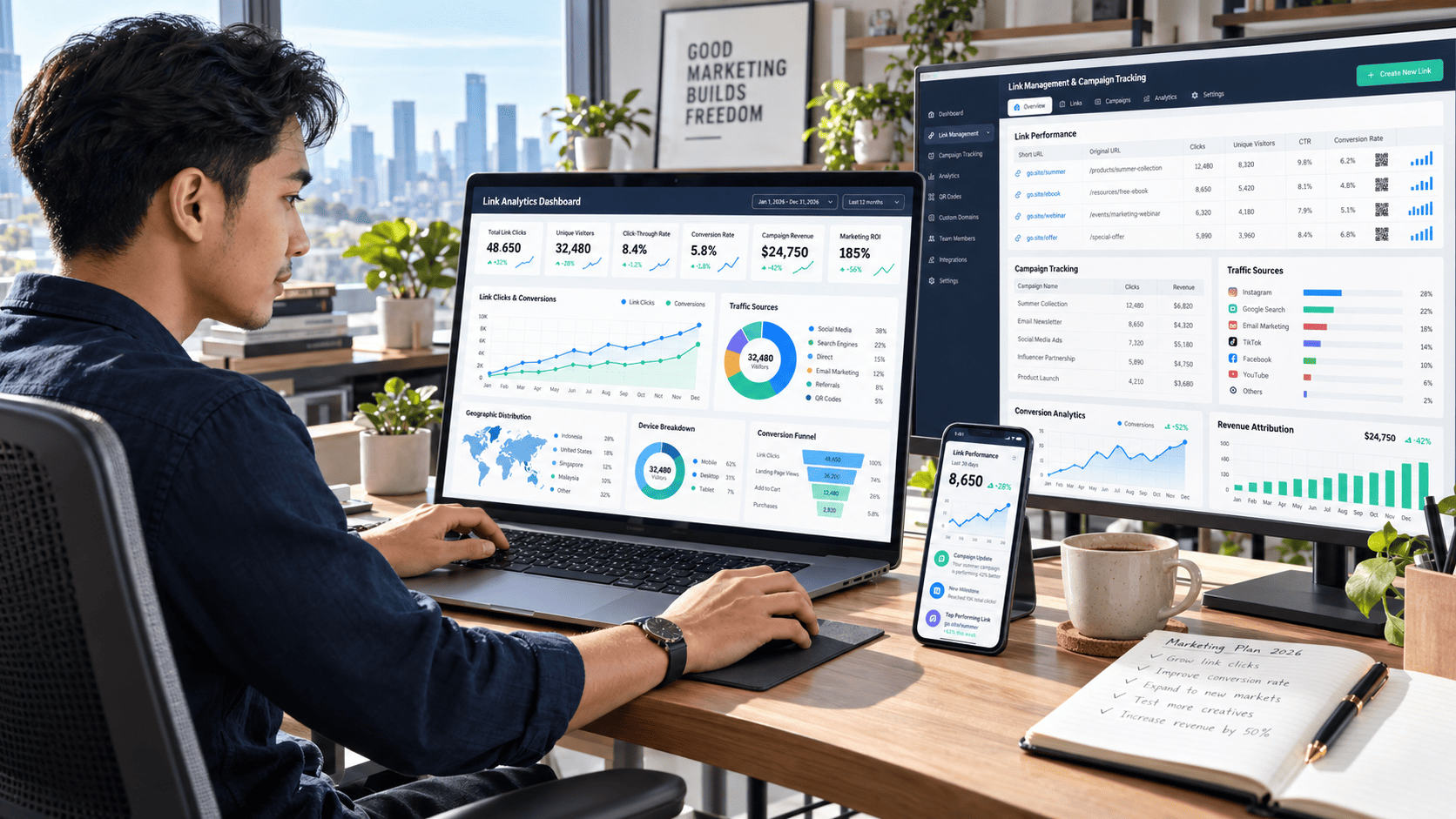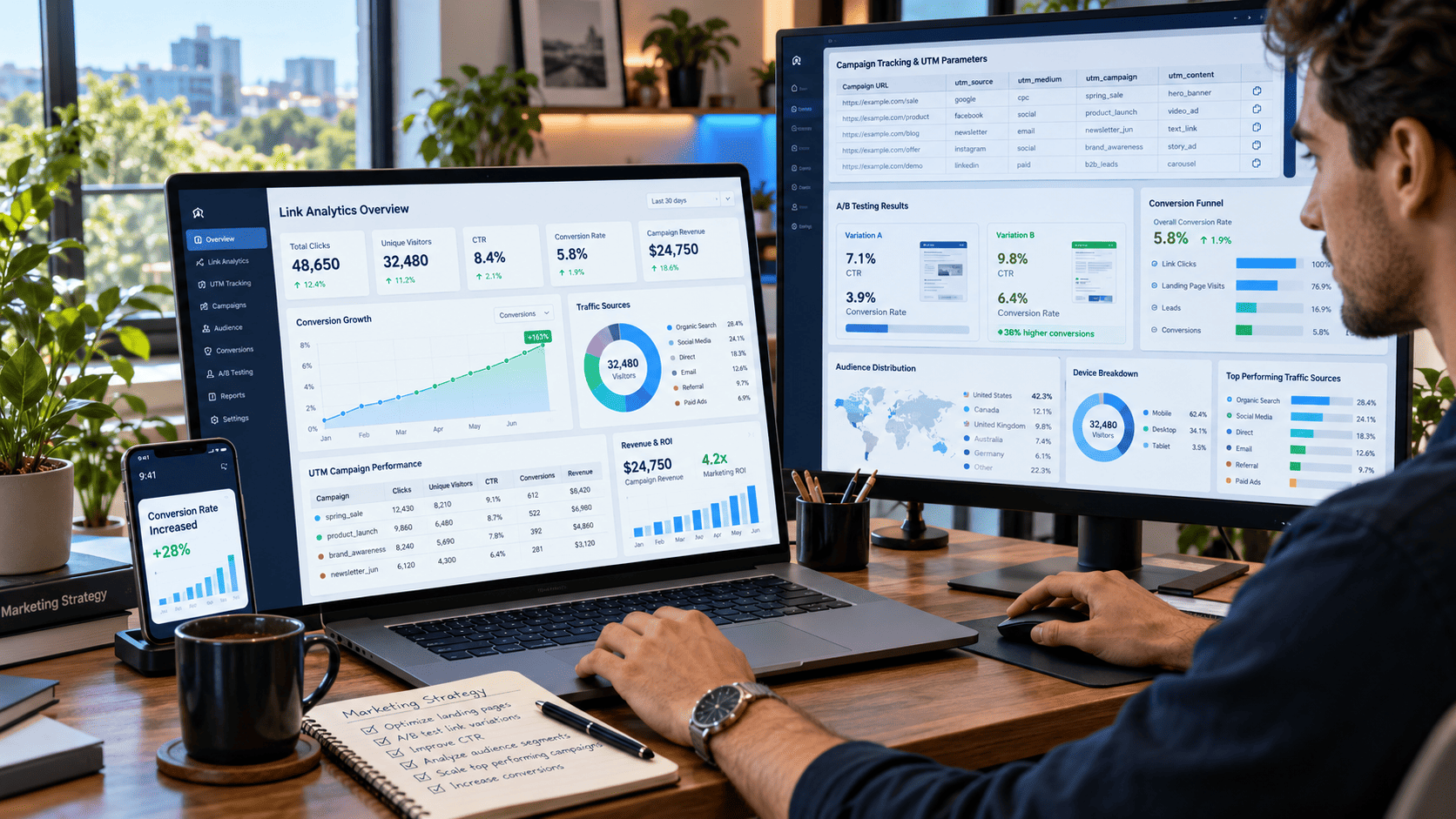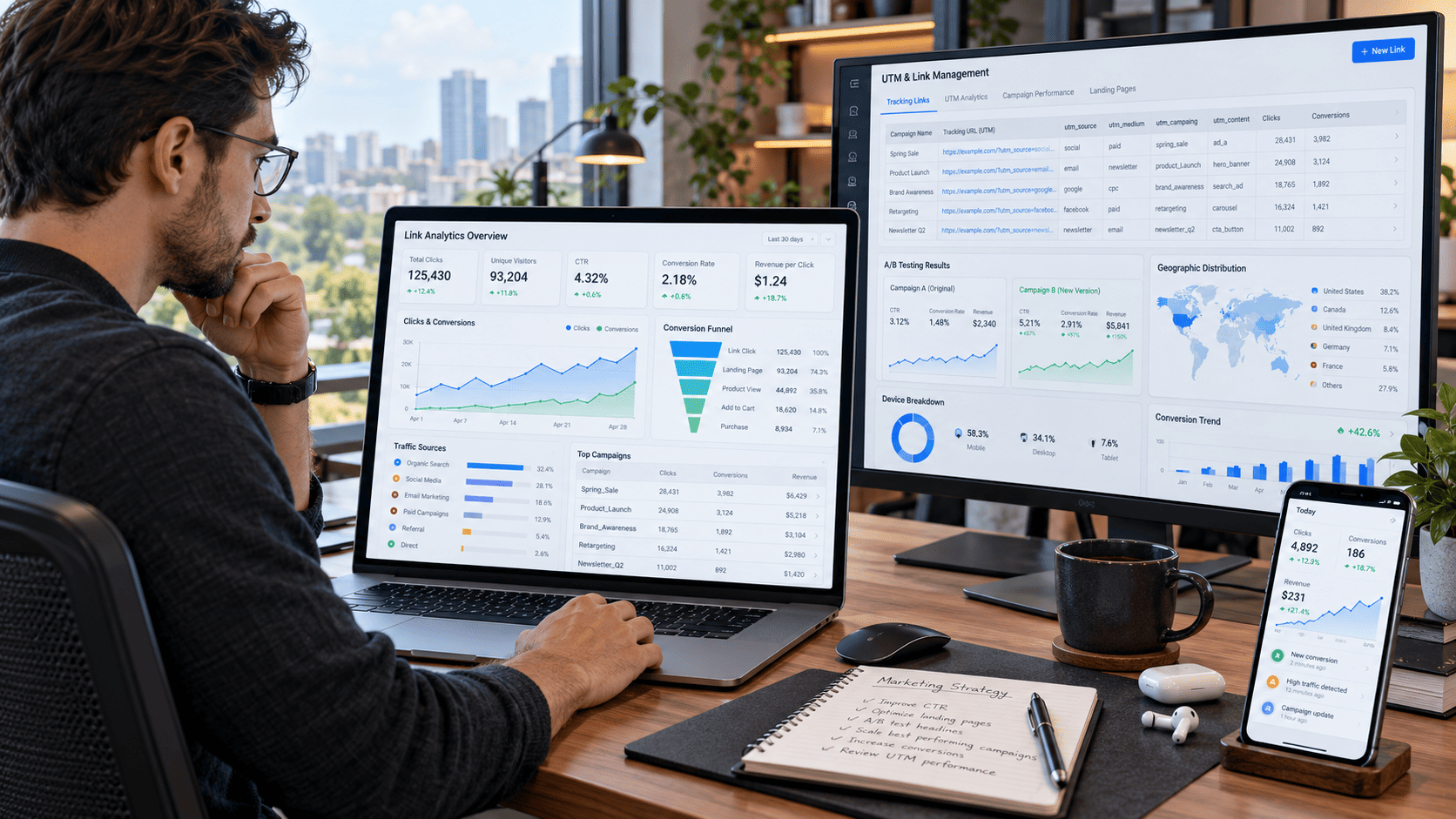

Publishing content is easy. Knowing what happens after someone clicks your link is where things become more complicated.
A link shared on social media may receive hundreds of clicks but produce very little engagement. Another link may attract fewer visitors yet generate more email subscriptions, purchases, or completed forms. Without proper link management and analytics, both links may appear successful even though their real impact is completely different.
That is why content creators, digital marketers, bloggers, business owners, and social media managers need more than basic traffic numbers. They need a clear system for organizing links, tracking audience behavior, comparing campaigns, and discovering which content actually delivers results.
With the right link management and analytics strategy, you can stop guessing and start making decisions based on real audience activity.
What Is Link Management and Analytics?
Link management is the process of creating, organizing, editing, monitoring, and controlling the links used across your digital channels.
Instead of sharing long, confusing URLs and forgetting where they were published, a link management system allows you to keep everything organized in one place. You can create customized links for social media posts, email newsletters, advertisements, blog articles, landing pages, and other campaigns.
Link analytics focuses on measuring what happens when people interact with those links. It can reveal information such as:
- The total number of clicks
- Unique visitors
- Traffic sources
- Visitor locations
- Devices and operating systems
- Click times and dates
- Conversion activity
- Campaign performance
Together, link management and analytics create a clearer picture of how your audience discovers, interacts with, and responds to your content.
Why Basic Click Counts Are Not Enough
Imagine that you publish two promotional posts.
The first post receives 1,000 link clicks. The second receives only 500 clicks. Based on click volume alone, the first post looks like the obvious winner.
However, deeper analytics may show that visitors from the first post leave the landing page after a few seconds. Meanwhile, visitors from the second post stay longer, explore more pages, and complete more purchases.
The second post produced fewer clicks but delivered higher-quality traffic.
This is why total clicks should never be treated as the only performance indicator. A click tells you that someone showed interest, but it does not explain what they did next.
Effective link analytics helps you look beyond popularity and evaluate the real value of each visitor.
How Link Management Improves Content Performance
A strong link management system gives you more control over every campaign. It also prevents the confusion that often appears when the same destination URL is shared through multiple platforms.
Keep Campaign Links Organized
Without a clear system, links can quickly become difficult to manage. You may forget which URL belongs to a specific Instagram post, email campaign, advertisement, or affiliate promotion.
Create separate trackable links for every important channel or campaign. For example:
- One link for Facebook
- One link for Instagram
- One link for an email newsletter
- One link for a paid advertisement
- One link for an influencer collaboration
Even when all these links lead to the same landing page, separate tracking allows you to compare their performance accurately.
A simple naming structure can also make reporting easier. Use clear labels that include the platform, campaign, content type, and publication period.
Update Destinations Without Replacing Published Links
One of the most useful features of link management is the ability to change a destination URL without changing the public-facing link.
Suppose you share a link in dozens of social media posts, but the original landing page later becomes outdated. Instead of editing every post manually, you can redirect the managed link to a newer page.
This protects existing traffic and prevents visitors from landing on broken or irrelevant pages.
Maintain Consistent Branding
Short, customized links usually look cleaner and more trustworthy than long URLs filled with random characters.
A branded link can also improve recognition because users immediately know which company, website, or creator is behind it. This is especially helpful when links are shared through social media bios, printed materials, video descriptions, or messaging applications.
The goal is not simply to make a link shorter. The goal is to make it easier to recognize, remember, and trust.
How to Track Clicks Correctly
Click tracking becomes valuable when the data is connected to a clear campaign objective.
Before creating a link, decide what you want visitors to do after clicking it. The goal may be reading an article, watching a video, subscribing to a newsletter, downloading a guide, registering for an event, or purchasing a product.
Once the goal is clear, you can choose the right performance metrics.
Monitor Total and Unique Clicks
Total clicks show how many times a link was clicked, including repeated clicks from the same person.
Unique clicks estimate how many individual visitors interacted with the link. Comparing these metrics can help you understand whether the same users are returning multiple times.
A large gap between total and unique clicks may indicate repeated interest, comparison behavior, or accidental clicks. The context of the campaign will determine how the data should be interpreted.
Compare Traffic Sources
Traffic source data shows where your clicks come from.
You may discover that Facebook produces the highest click volume, while email generates visitors who are more likely to convert. Search traffic may bring highly interested readers, while another platform may produce brief visits with limited engagement.
This information helps you decide where to invest more time, content, and advertising budget.
Look Beyond the Biggest Platform
The channel with the most traffic is not always the most valuable channel.
Compare sources using several metrics, including:
- Click volume
- Engagement rate
- Time on page
- Conversion rate
- Revenue or lead value
- Cost per result
A smaller platform can become one of your strongest channels if its visitors take meaningful actions.
Track Click Timing
Click analytics can reveal the days and hours when your audience is most active.
For example, a professional audience may respond better during weekday mornings, while entertainment content may receive stronger engagement during evenings or weekends.
Instead of following generic posting advice, use your own click data to identify the schedule that works best for your audience.
How Analytics Reveals Audience Behavior
Link analytics can provide useful clues about what your audience wants, how they consume content, and what prevents them from taking action.
Understand Device Preferences
If most visitors use smartphones, your landing pages must load quickly and display correctly on smaller screens.
Buttons should be easy to tap, forms should be simple to complete, and important information should appear without excessive scrolling. A desktop-focused page may perform poorly even when the content itself is strong.
Device data can also guide your content format. Mobile audiences may prefer shorter paragraphs, clear headings, vertical visuals, and faster checkout processes.
Identify Geographic Patterns
Location data helps you understand where your audience is coming from.
A creator may discover unexpected traffic from a particular city or country. A business may notice stronger interest in regions it has not actively targeted. These insights can support localized content, regional campaigns, language adjustments, and more relevant offers.
However, location data should be treated as a general signal rather than a perfect description of every visitor. Privacy tools, network routing, and shared connections can affect accuracy.
Study the Journey After the Click
The most important question is not simply, “Did someone click?”
The better question is, “What happened after the click?”
Connect link data with website analytics and conversion tracking to evaluate the complete visitor journey. Look at:
- Landing page engagement
- Scroll depth
- Pages viewed
- Form completions
- Product additions
- Purchases
- Downloads
- Newsletter subscriptions
If a link receives many clicks but few conversions, the problem may not be the promotion. The landing page, offer, page speed, messaging, or call-to-action may need improvement.
A Practical Link Management Workflow
You do not need a complicated setup to begin. A simple, consistent workflow can already produce valuable insights.
Step 1: Define the Campaign Goal
Choose one primary objective for each campaign. Avoid trying to measure everything at once.
A campaign may focus on traffic, leads, sales, downloads, registrations, or audience growth.
Step 2: Create a Separate Link for Each Channel
Use different trackable links for each platform, advertisement, partner, or content placement.
This separation makes comparison easier and prevents multiple traffic sources from being mixed together.
Step 3: Use Clear Campaign Labels
Create a naming system that your team can understand.
A useful label may include the campaign name, traffic source, content format, and date. Consistent naming prevents reporting mistakes and saves time later.
Step 4: Test Every Link
Before publishing, open each link on desktop and mobile devices.
Confirm that it leads to the correct page, loads properly, and retains any tracking parameters required for analytics.
Step 5: Review Performance Regularly
Avoid checking analytics every few minutes. Short-term fluctuations can create unnecessary confusion.
Review campaigns at reasonable intervals based on their duration. A short promotion may require daily monitoring, while an evergreen article can be reviewed weekly or monthly.
Step 6: Make One Improvement at a Time
When performance is weak, avoid changing everything at once.
Test one element, such as:
- The headline
- Link placement
- Call-to-action
- Thumbnail
- Posting time
- Landing page design
- Offer description
Changing one variable at a time makes it easier to understand what actually improved the result.
Common Link Analytics Mistakes to Avoid
Even powerful analytics tools can produce poor decisions when the data is misunderstood.
Focusing Only on Click Volume
High click numbers may look impressive, but they do not guarantee engagement, conversions, or revenue.
Always connect clicks to the campaign’s main objective.
Mixing Multiple Campaigns Into One Link
Using the same link everywhere makes it difficult to identify which platform or promotion generated the best results.
Create separate links whenever channel-level comparison matters.
Ignoring Broken or Outdated Links
A high-performing old post can continue sending traffic for months or years. If its destination page no longer works, valuable visitors may be lost.
Regularly review important links and update outdated destinations.
Collecting Data Without Taking Action
Analytics is useful only when it changes your decisions.
Do not create reports simply to display numbers. Use the information to improve content, remove ineffective tactics, strengthen successful channels, and create a better experience for visitors.
How to Turn Link Data Into Better Content
Your link data can guide future content planning.
Start by identifying the topics, formats, and platforms that generate both strong engagement and meaningful actions. Look for patterns rather than isolated results.
You may discover that practical tutorials receive fewer social reactions but more website visits. Short videos may generate awareness, while detailed articles produce leads. Email subscribers may click less frequently but convert more consistently.
These patterns help you create content for different stages of the audience journey.
Use high-performing topics as inspiration for follow-up articles, videos, guides, or campaigns. Improve weaker content by adjusting the headline, distribution channel, or call-to-action.
Over time, your content strategy becomes less dependent on assumptions and more responsive to real audience behavior.
Conclusion
Link management and analytics give you the visibility needed to understand what happens between publishing content and achieving a meaningful result.
By creating separate campaign links, tracking clicks accurately, comparing traffic sources, studying device and location patterns, and monitoring post-click behavior, you can identify which strategies deserve more attention.
The most successful approach is not chasing the highest click count. It is attracting the right visitors and guiding them toward a useful next step.
Start by organizing your most important links, assigning clear campaign goals, and reviewing the data behind your strongest content. Use those insights to improve one element at a time. When every link has a purpose and every click provides a lesson, your content can become more focused, measurable, and effective.
Share this guide with your team or fellow content creators, then begin tracking your next campaign with a clearer link management and analytics strategy.