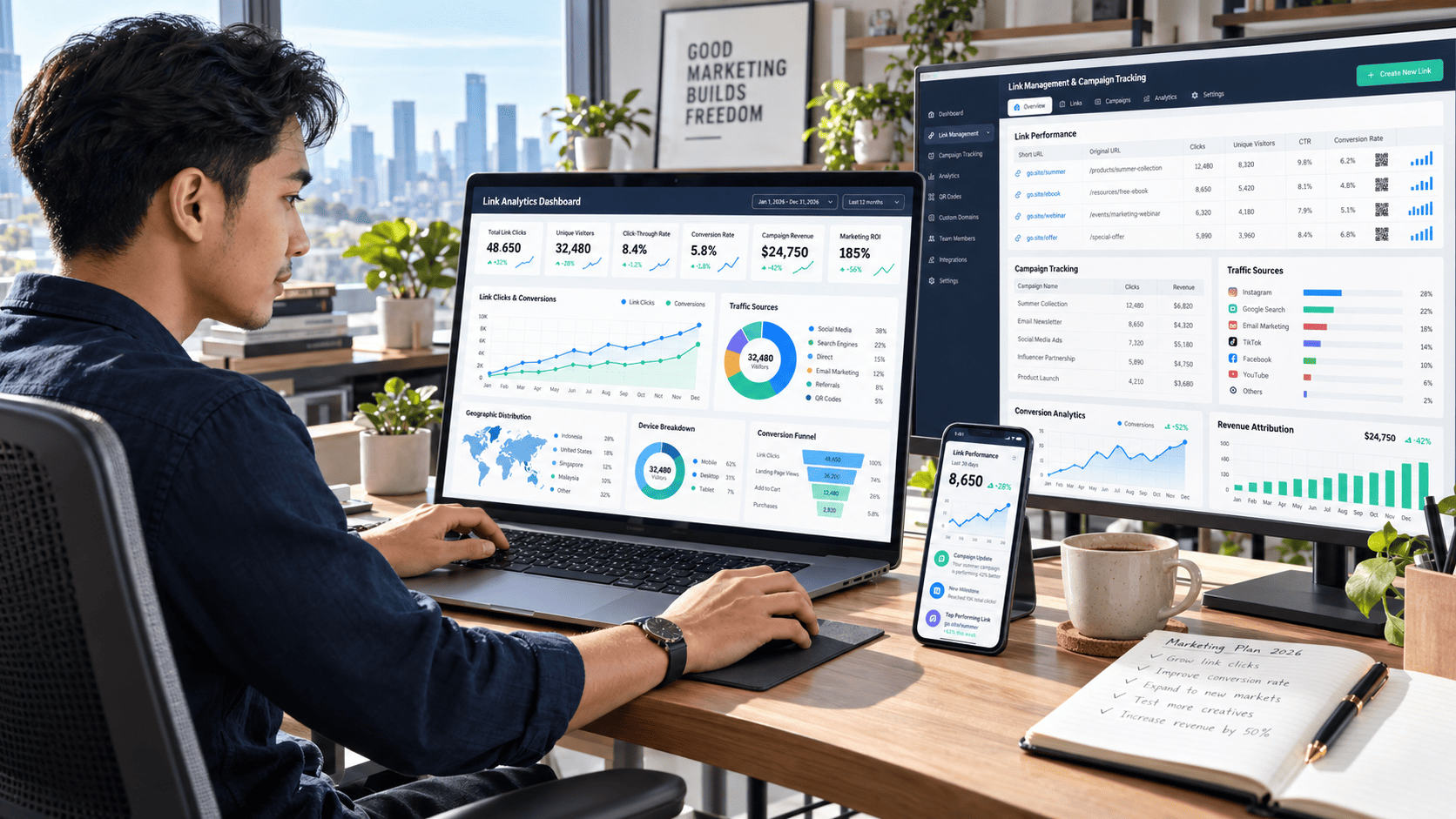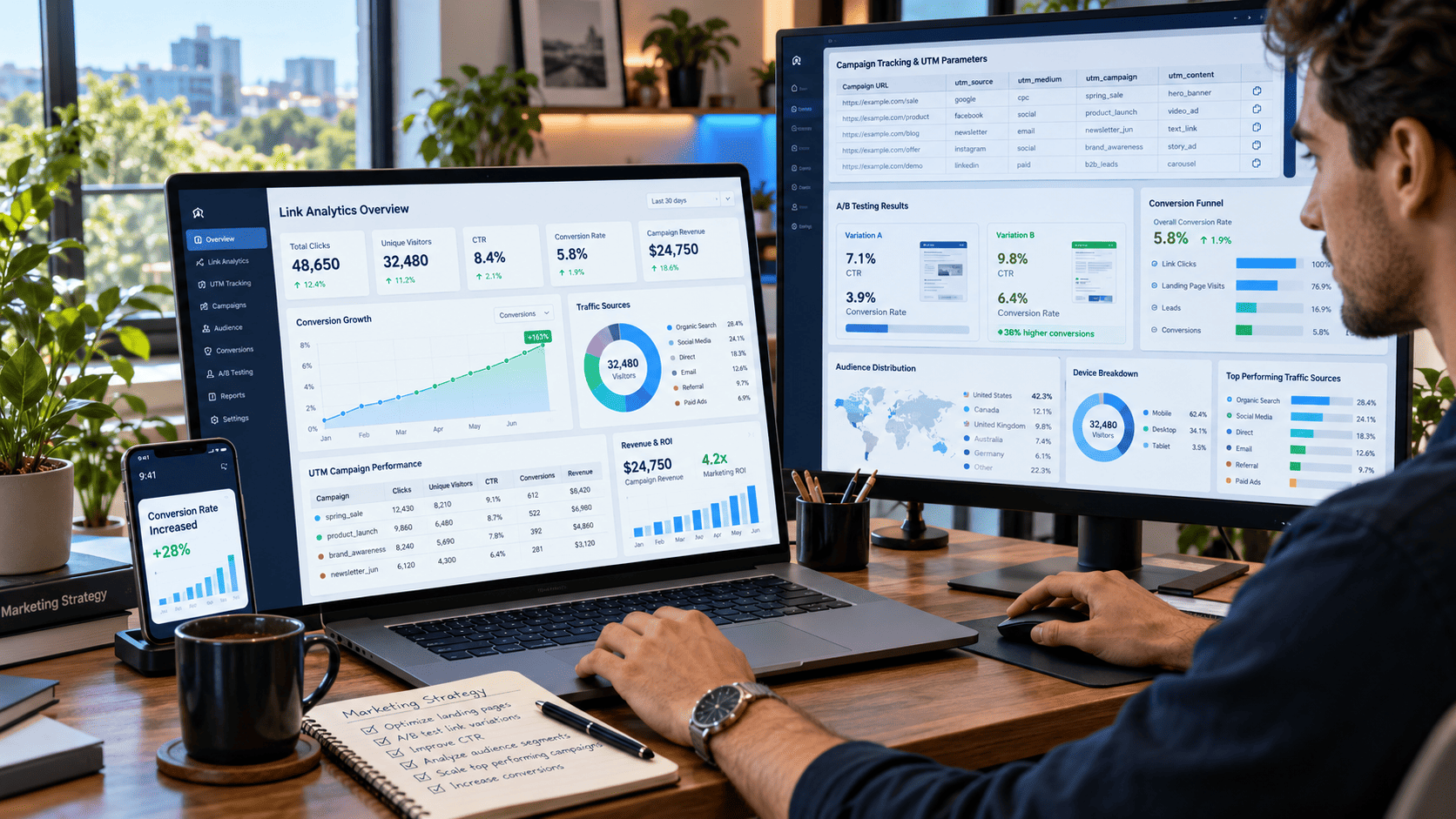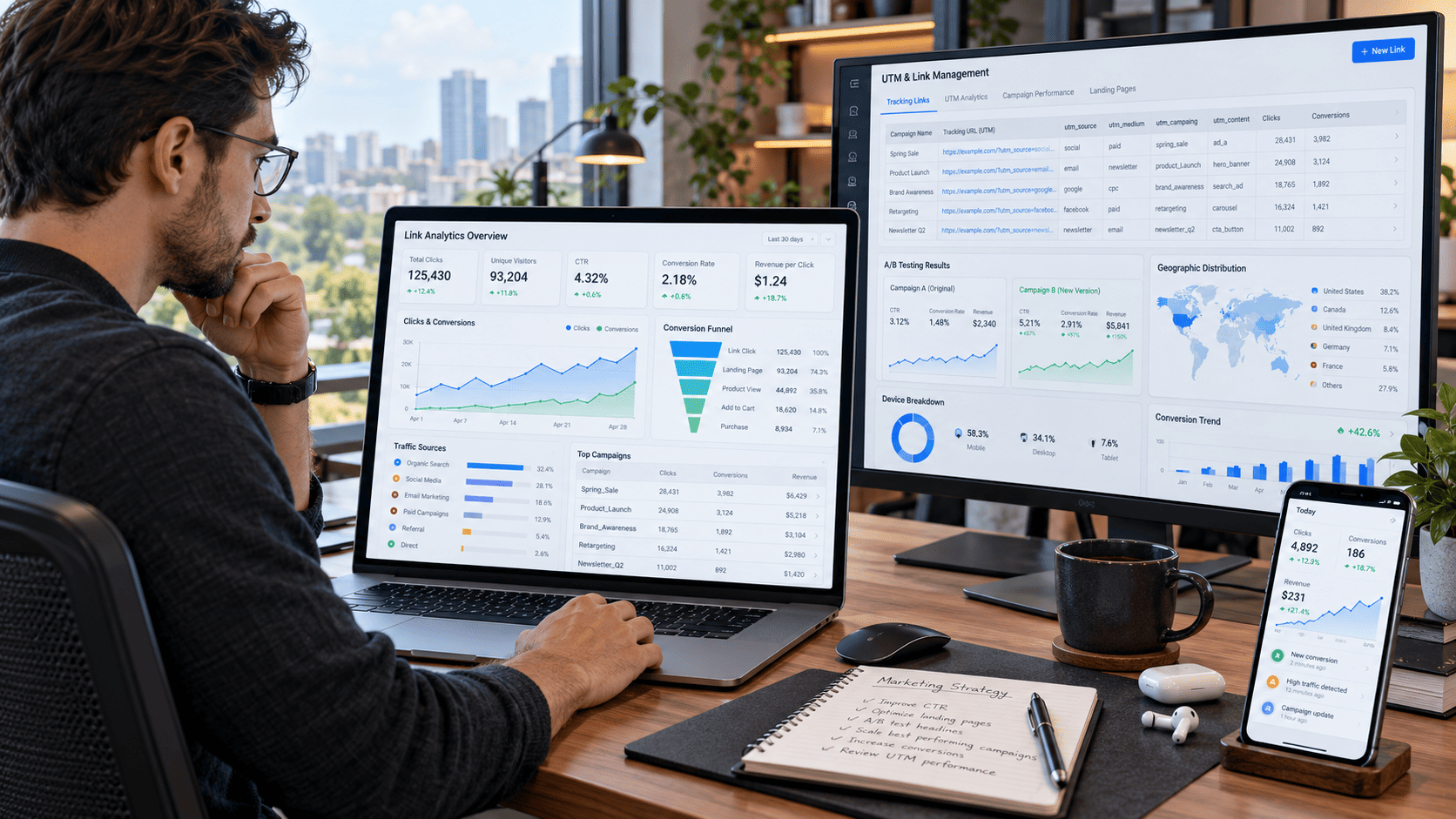
Someone discovers your post on social media, taps a promotional link, visits a landing page, explores your offer, and either converts or disappears. Without proper link management & analytics, most of that journey remains invisible.
You may know that a campaign generated traffic, but not which channel produced the best visitors. You may see thousands of clicks without knowing whether they came from email, social media, paid campaigns, influencers, or returning customers.
That missing information can quickly turn marketing into guesswork.
A smarter link management system changes that. By organizing links, tracking clicks, analyzing visitor behavior, and connecting traffic data with conversions, you gain a clearer picture of what actually drives results.
Here is how to build a practical link management and analytics formula that helps transform ordinary clicks into meaningful business insights.
What Is Link Management & Analytics?
Link management is the process of creating, organizing, tracking, updating, and optimizing the URLs used across your marketing channels.
Link analytics goes one step further by measuring what happens when people interact with those links.
Instead of simply seeing that a URL received 5,000 clicks, analytics can help reveal information such as:
- Which campaign generated the clicks
- Where visitors came from
- Which devices they used
- What locations produced the most engagement
- When people clicked
- Which links generated conversions
- Which traffic sources produced higher-quality visitors
Together, link management and analytics create a bridge between your marketing activities and actual audience behavior.
For marketers, content creators, publishers, affiliate marketers, and online businesses, that visibility can dramatically improve decision-making.
Why Tracking Every Click Matters
Imagine running three campaigns promoting the same landing page.
One campaign runs through email, another through social media, and the third through an influencer partnership.
All three campaigns use the same destination URL.
At the end of the week, the page receives 12,000 visitors and generates 300 conversions.
That sounds promising.
But one important question remains: which campaign actually produced those conversions?
Without separate tracking links, the answer may be difficult to determine.
Click Data Reveals What Traffic Numbers Hide
Raw traffic alone rarely tells the complete story.
A campaign generating 10,000 clicks may appear stronger than another generating only 4,000. However, if the smaller campaign produces significantly more conversions, it may actually be the more valuable traffic source.
That is why marketers should look beyond clicks.
Useful performance signals include:
- Click-through rate
- Unique clicks
- Conversion rate
- Engagement time
- Geographic location
- Device type
- Traffic source
- Cost per acquisition
- Revenue per visitor
When these metrics are connected, marketing performance becomes much easier to understand.
Build a Clear Link Management Structure
Good analytics starts with organization.
If dozens of campaigns use random URLs with inconsistent naming conventions, reporting quickly becomes confusing.
A structured link system makes performance analysis much easier.
Create Separate Links for Every Campaign
Avoid using one identical tracking link everywhere.
Instead, create different links for major traffic sources.
For example:
- Email newsletter
- Facebook campaign
- Instagram bio
- YouTube description
- Affiliate partner
- Influencer campaign
- Paid advertisement
Even when all links point to the same landing page, separate tracking parameters allow you to identify which channel generated each visit.
Use Consistent Campaign Naming
Consistency becomes especially important when managing dozens or hundreds of campaigns.
A simple naming structure might include:
Channel + Campaign + Content + Date
For example:
instagram-productlaunch-video
or
email-summerpromo-newsletter
A clear naming system prevents confusing reports filled with slightly different campaign names that actually refer to the same campaign.
Use UTM Parameters to Understand Traffic Sources
UTM parameters are one of the easiest ways to improve marketing attribution.
They add tracking information to a destination URL without changing the actual page visitors see.
Common UTM parameters include:
UTM Source
Identifies where traffic originates.
Examples include:
- Newsletter
- YouTube
- Influencer
UTM Medium
Describes the marketing channel.
Examples might include:
- Social
- CPC
- Referral
- Affiliate
UTM Campaign
Identifies the specific campaign.
For example:
product-launch
or
black-friday-promo
Using these parameters consistently allows analytics platforms to organize visitors based on where they came from and which marketing activity generated the click.
Shorten Long Tracking Links Without Losing Data
Tracking URLs can become extremely long after several parameters are added.
That is where branded or shortened links become useful.
Instead of sharing a complicated URL filled with tracking parameters, marketers can use cleaner links that are easier to remember and share.
For example, instead of:
example.com/product?utm_source=social&utm_medium=instagram&utm_campaign=summer_sale
a branded short link might look like:
brand.link/summer
The destination remains the same, while the tracking system records important click data behind the scenes.
Why Cleaner Links Can Improve Marketing
Shorter links are especially useful in:
- Social media bios
- SMS campaigns
- QR codes
- Podcasts
- Printed advertisements
- Video descriptions
- Influencer campaigns
They also make campaign management easier when hundreds of destination URLs are involved.
Analyze More Than Total Clicks
Click count is useful, but it should never be the only metric used to judge performance.
A stronger analytics strategy looks deeper into the behavior behind those clicks.
Unique Clicks vs. Total Clicks
Total clicks include repeated interactions from the same visitor.
Unique clicks attempt to show how many individual users interacted with the link.
For example:
A campaign may generate 10,000 total clicks but only 6,500 unique visitors.
That difference matters because repeated clicks can sometimes make campaign activity appear larger than the actual audience.
Device Data
Understanding device usage can influence design decisions.
If most visitors arrive from smartphones, your landing pages should prioritize mobile performance.
That means checking:
- Page loading speed
- Mobile navigation
- Button size
- Form usability
- Checkout experience
Even a successful traffic campaign can lose conversions if the destination page performs poorly on the devices visitors actually use.
Geographic Data
Location data can reveal where interest is strongest.
Suppose a campaign aimed at a global audience generates most of its conversions from only three countries.
That insight could influence future advertising budgets, content localization, pricing strategies, and campaign targeting.
Rather than spreading resources evenly, marketers can focus more attention on regions showing stronger engagement.
Track the Entire Conversion Journey
A click should not be viewed as the final goal.
In most campaigns, it is only the beginning.
A visitor might follow a journey like this:
Ad → Tracking Link → Landing Page → Product Page → Checkout → Purchase
Link analytics tells you how visitors entered the journey.
Conversion analytics tells you what happened afterward.
Connecting both sides creates a much clearer picture.
Measure Conversion Rate
A simple conversion rate formula is:
Conversions ÷ Visitors × 100
If 2,000 visitors arrive from a campaign and 100 complete the desired action, the conversion rate is 5%.
Comparing conversion rates across different links can reveal which channels deliver higher-quality audiences.
A campaign with fewer clicks may produce better business results if those visitors are more likely to convert.
Discover Hidden Audience Insights
One of the biggest benefits of link analytics is discovering patterns that would otherwise remain invisible.
For example, you may discover that:
- Mobile visitors convert better than desktop visitors
- Email subscribers click more during the evening
- Certain countries produce higher engagement
- One social platform generates traffic but few conversions
- Another platform produces fewer clicks but significantly more sales
These patterns can influence future marketing decisions.
Instead of asking, “Where can we get more traffic?”
A more useful question becomes:
“Where can we get more of the traffic that actually converts?”
That shift can completely change how campaigns are planned.
Use A/B Testing to Improve Link Performance
Small changes can sometimes produce meaningful differences in engagement.
A/B testing allows marketers to compare two versions of a campaign element.
You might test:
- Call-to-action wording
- Landing page headlines
- Button placement
- Promotional offers
- Social media captions
- Email subject lines
Each version should use separate tracking links.
After collecting enough data, compare not only clicks but also conversions.
For example:
Version A may generate 3,000 clicks and 90 conversions.
Version B may generate 2,500 clicks and 150 conversions.
If you only looked at traffic, Version A would appear stronger.
Conversion analytics reveals that Version B actually performed better where it mattered.
Watch for Suspicious or Low-Quality Traffic
Not every click represents a real potential customer.
Automated bots, repeated requests, accidental clicks, and suspicious traffic can distort analytics.
Large spikes in clicks with almost no engagement may indicate low-quality traffic.
Possible warning signs include:
- Extremely high click volume within seconds
- Unusual geographic patterns
- Repeated clicks from the same source
- Very short session duration
- High traffic with almost zero conversions
Filtering unreliable traffic helps create cleaner datasets and better marketing decisions.
Create a Simple Link Analytics Dashboard
You do not need an overly complicated reporting system.
A useful dashboard can focus on several key metrics:
- Total clicks
- Unique clicks
- Traffic source
- Conversion rate
- Device distribution
- Geographic distribution
- Top-performing campaigns
- Revenue or leads generated
Review these metrics regularly instead of waiting until a campaign ends.
That makes it easier to identify problems early and shift resources toward stronger opportunities.
Turn Analytics Into Action
Collecting data has little value if nothing changes afterward.
The most important part of link management & analytics is turning insights into decisions.
A simple workflow can look like this:
1. Track
Create separate links for campaigns and traffic sources.
2. Measure
Monitor clicks, visitors, conversions, devices, locations, and engagement.
3. Compare
Identify which campaigns perform better or worse.
4. Optimize
Improve landing pages, targeting, messaging, or distribution based on the data.
5. Repeat
Continue testing and measuring.
Marketing optimization is rarely a one-time task. Audience behavior changes, platforms evolve, and campaigns that perform well today may behave differently months later.
Continuous measurement keeps your decisions grounded in actual performance.
Conclusion: Turn Every Click Into a Smarter Marketing Decision
Effective link management & analytics is not simply about counting how many people clicked a URL.
It is about understanding where those clicks came from, who generated them, how visitors behaved afterward, and which channels ultimately produced meaningful results.
A strong system combines organized tracking links, consistent campaign naming, UTM parameters, conversion tracking, audience insights, and regular performance analysis.
Once these pieces work together, marketing becomes less dependent on assumptions.
You can identify your strongest traffic sources, discover hidden audience patterns, eliminate weak campaigns, and focus resources on channels that produce real outcomes.
Start by reviewing the links you already use. Organize them, add proper tracking, measure the results, and compare performance over time.
Every click already contains useful information. The real advantage comes from learning how to read it—and turning that knowledge into more conversions.