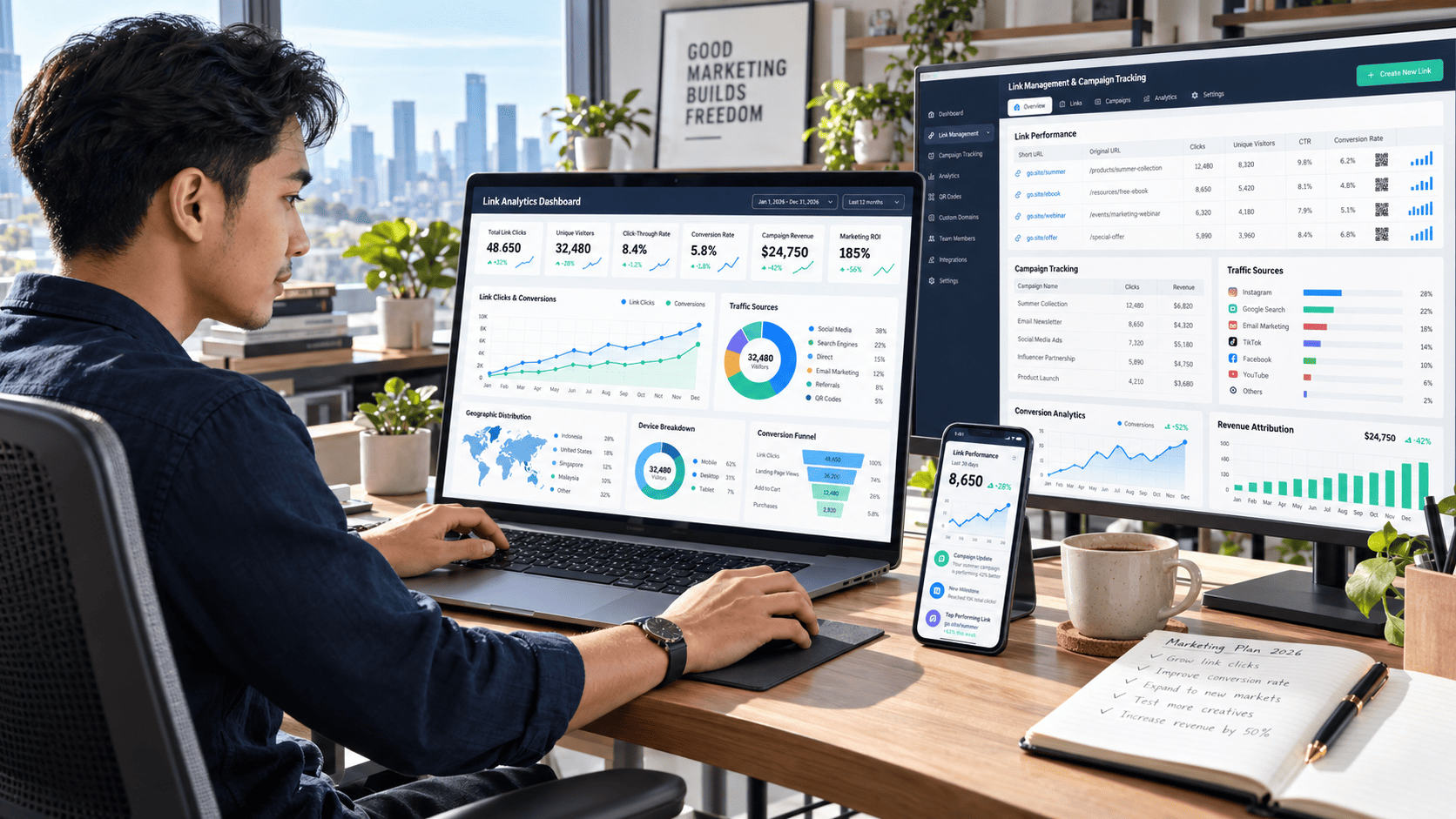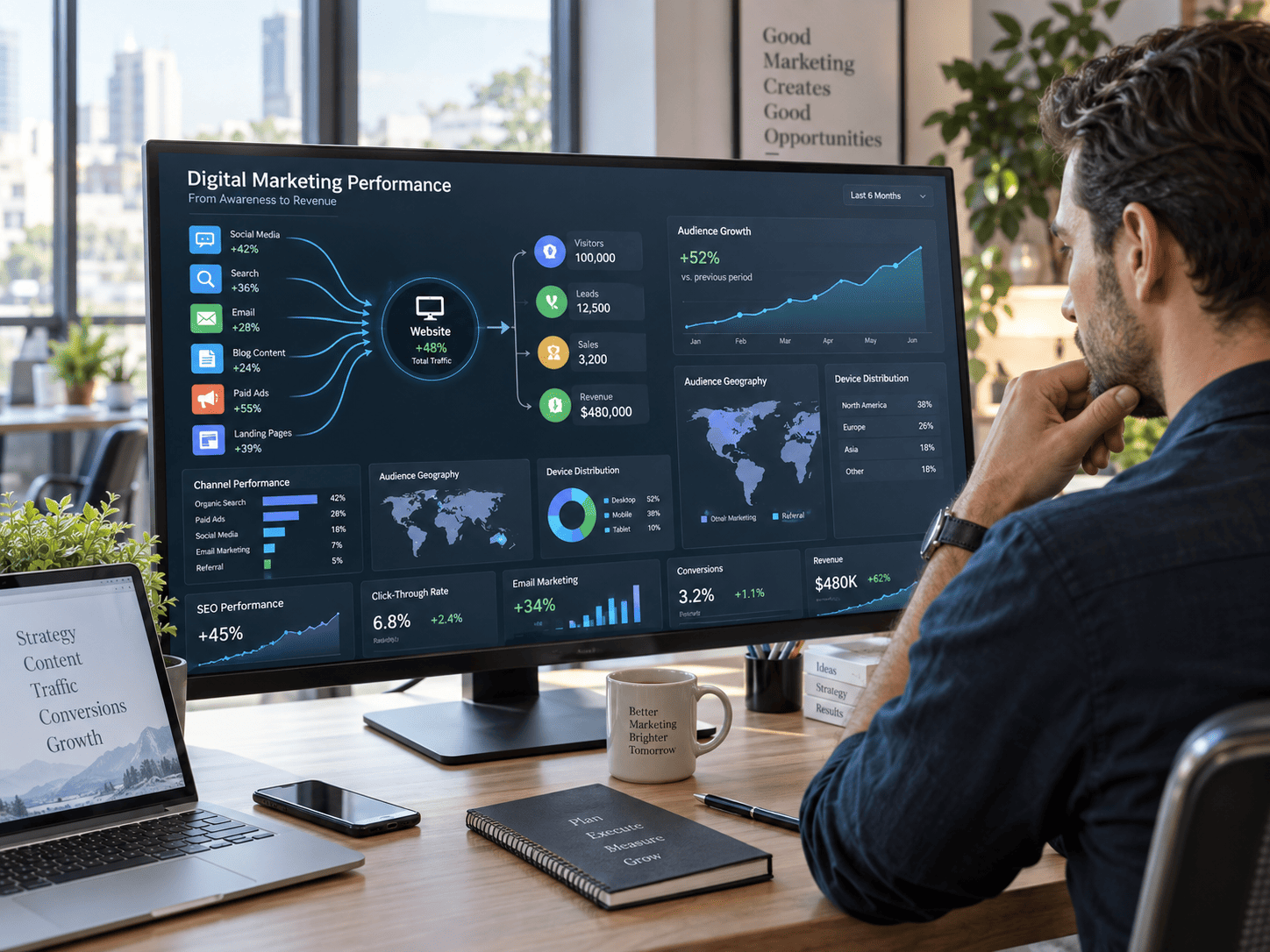
Getting traffic is only half the battle. You can spend hours creating content, launching campaigns, posting on social media, and sending emails, yet still struggle to understand what actually happens after someone clicks your link.
Where did that visitor come from? Which campaign attracted the highest-quality audience? Why did one link generate hundreds of clicks but almost no conversions, while another produced fewer clicks and better results?
This is where Link Management & Analytics becomes incredibly valuable.
Instead of treating links as simple paths from one page to another, smart marketers use them as measurable data points. Every click can reveal something about audience behavior, traffic quality, campaign performance, and conversion potential.
With the right approach, link analytics can help you stop guessing, understand what your audience really wants, and make smarter decisions that turn more traffic into meaningful results.
What Is Link Management & Analytics?
Link management is the process of organizing, tracking, controlling, and optimizing the links used across your marketing channels.
Link analytics goes one step further by collecting data about what happens when people interact with those links.
A well-managed tracking system can reveal information such as:
- Total clicks
- Unique clicks
- Traffic sources
- Geographic location
- Device type
- Referral websites
- Campaign performance
- Conversion rates
- Returning visitors
- Click times and behavior patterns
Think of every marketing link as a small sensor.
Without analytics, you only know that people visited your website. With proper Link Management & Analytics, you can understand how they arrived, what encouraged them to click, and whether that visit eventually produced the desired action.
Why Tracking Every Click Matters
Imagine running three campaigns promoting the same landing page.
One campaign comes from social media, another from email, and the third from a blog article.
Your analytics dashboard shows 5,000 total visitors.
That number looks useful, but it does not tell the full story.
Perhaps social media generated 3,000 visitors but only 30 conversions. Email generated 800 visitors and 120 conversions. Meanwhile, the blog generated 1,200 visitors and 150 conversions.
Suddenly, the situation becomes much clearer.
The channel producing the most traffic is not necessarily the channel producing the best results.
Tracking individual links allows you to evaluate the quality of traffic rather than focusing only on volume.
Click Data Helps You Understand Intent
Different audiences click for different reasons.
Someone clicking a product link from a detailed review may already be close to making a purchase. Meanwhile, someone clicking from a viral social post might simply be curious.
By comparing click behavior across different sources, you can identify which audiences demonstrate stronger intent.
That insight can influence everything from your content strategy to advertising budgets.
Build a Clear Link Tracking Structure
Strong analytics begins with organization.
If links are created randomly without consistent naming or tracking parameters, analyzing results becomes unnecessarily difficult.
A simple link structure can make a huge difference.
Use Consistent Campaign Parameters
UTM parameters are commonly used to identify where traffic originates.
A campaign might include parameters representing:
- Source
- Medium
- Campaign
- Content variation
- Keyword or promotion
For example, links shared through an email newsletter should be distinguishable from links posted on social platforms.
Instead of seeing everything grouped together as generic referral traffic, you can identify exactly which campaign generated each visit.
Create Clear Naming Conventions
Naming consistency becomes especially important when managing dozens or hundreds of campaigns.
A simple convention might follow a structure such as:
channel + campaign + content type + variation
For example:
social_productlaunch_video_a
This makes reports much easier to understand compared with random labels created by different team members.
Look Beyond Total Clicks
One of the biggest mistakes in link analytics is focusing too heavily on total clicks.
Clicks matter, but context matters more.
A link with 10,000 clicks and 20 conversions may perform worse than a link with 2,000 clicks and 200 conversions.
Several additional metrics can provide a more complete picture.
Unique Clicks
Total clicks may include repeated visits from the same person.
Unique clicks help estimate how many individual visitors interacted with a link.
Comparing total and unique clicks can also reveal repeat interest.
If 1,000 unique users generate 1,800 total clicks, some visitors are clearly returning.
Click-Through Rate
Click-through rate, or CTR, measures how effectively content encourages users to click.
A strong CTR can indicate that your headline, call-to-action, placement, or creative successfully captures attention.
However, CTR should always be viewed alongside conversion performance.
High CTR with weak conversions may indicate that the message attracts curiosity but does not match what users find after clicking.
Conversion Rate
Conversion rate often tells the most important part of the story.
A conversion may include:
- Completing a purchase
- Submitting a form
- Registering an account
- Downloading a resource
- Joining a mailing list
- Requesting a consultation
Tracking links through the entire journey helps connect traffic acquisition with actual business outcomes.
Reveal Hidden Audience Insights
Link analytics can uncover patterns that traditional pageview reports may overlook.
Sometimes the most valuable insights are hidden inside small differences between audiences.
Analyze Traffic by Device
Suppose mobile users account for 70% of clicks but only 35% of conversions.
That could indicate a problem with the mobile experience.
Maybe the landing page loads slowly. Perhaps the checkout process contains too many fields. Or the call-to-action is difficult to find on smaller screens.
Without device-level analytics, these problems might remain invisible.
Compare Geographic Performance
Geographic data can reveal where your strongest audiences are located.
A campaign might attract significant traffic from multiple countries but convert particularly well in only a few regions.
That information can influence localization, advertising targeting, pricing, content topics, and even publishing schedules.
Study Click Timing
The time people click can also reveal useful behavior.
If engagement consistently increases during certain hours or days, campaign timing can be adjusted accordingly.
An email sent when your audience is most active may achieve significantly better results than the same email delivered during a quiet period.
Connect Links to the Customer Journey
A single click rarely represents the entire customer journey.
Someone may discover your brand through social media, read a blog post, return through search, click an email several days later, and finally convert.
Understanding these touchpoints helps marketers avoid giving all credit to the final click.
Track Different Funnel Stages
Links can be categorized based on their role in the funnel.
Awareness Links
These typically lead to educational articles, videos, or introductory content.
Their main purpose is attracting attention.
Consideration Links
These may lead to product comparisons, case studies, reviews, or detailed guides.
Visitors at this stage are evaluating options.
Conversion Links
These direct users toward high-intent actions such as checkout pages, signup forms, demos, or offers.
Separating links by funnel stage makes performance easier to evaluate fairly.
An educational blog link should not necessarily be judged by the same conversion expectations as a checkout button.
Use A/B Testing to Improve Link Performance
Small changes can produce surprisingly large improvements.
Testing allows you to compare different versions instead of relying on assumptions.
You might test:
- Call-to-action wording
- Link placement
- Button design
- Headlines
- Landing pages
- Email copy
- Promotional messages
Suppose one call-to-action says:
Learn More
Another says:
See How It Works
If the second consistently generates more qualified clicks and conversions, you now have evidence to guide future content.
The goal is not simply generating more clicks. The goal is generating better clicks.
Identify and Remove Weak Traffic Sources
Not every traffic source deserves equal attention.
Link analytics makes it easier to identify sources generating large amounts of low-quality traffic.
Warning signs can include:
- High clicks with extremely low engagement
- Unusually short sessions
- Repeated clicks from suspicious patterns
- High bounce rates
- Large traffic spikes without conversions
- Traffic from irrelevant locations
When these patterns appear, investigate the source before allocating additional resources.
Removing low-quality traffic can sometimes improve overall campaign performance more effectively than chasing additional visitors.
Build Simple Link Management Reports
Analytics becomes useful when data turns into decisions.
A practical reporting dashboard does not need dozens of complicated metrics.
Start with a few questions:
- Which links generated the most qualified traffic?
- Which channels delivered the highest conversion rates?
- Which campaigns improved compared with the previous period?
- Which links produced clicks but failed to convert?
- Which audience segments performed best?
From there, organize your reporting around metrics such as clicks, unique visitors, conversions, conversion rate, traffic source, device, and campaign.
The goal is clarity.
A dashboard containing 50 charts may look impressive, but five meaningful metrics that influence real decisions are often far more valuable.
Turn Link Analytics Into Better Marketing Decisions
Collecting data alone does not improve performance.
Action does.
A useful Link Management & Analytics workflow follows a simple cycle:
Track → Analyze → Identify patterns → Optimize → Test again
For example, analytics might reveal that visitors from educational blog posts convert better than visitors from short promotional posts.
Instead of simply celebrating the result, turn the insight into action.
Publish more high-intent educational content. Add relevant internal links. Improve calls-to-action inside successful articles. Build campaigns around the topics already attracting qualified visitors.
Over time, these small optimizations can compound.
Avoid Common Link Analytics Mistakes
Even good analytics systems can produce misleading conclusions if the underlying process is inconsistent.
Some common mistakes include:
- Using different naming formats across campaigns
- Forgetting tracking parameters
- Measuring clicks without conversions
- Combining unrelated traffic sources
- Ignoring mobile performance
- Making decisions from very small datasets
- Tracking too many metrics without clear objectives
Another mistake is changing campaigns too quickly.
A small performance drop does not always mean something is wrong. Look for meaningful patterns across enough data before making major decisions.
Create a Smarter Link Optimization Routine
You do not need to analyze every link every day.
A simple routine is usually enough.
Weekly
Review major campaigns, traffic sources, unusual changes, and conversion performance.
Monthly
Compare channels, top-performing content, audience segments, and campaign trends.
Quarterly
Evaluate broader patterns, remove outdated links, update tracking structures, and identify opportunities for larger strategic improvements.
Consistent analysis is more valuable than checking dashboards constantly without taking action.
Conclusion
Effective Link Management & Analytics transforms ordinary links into powerful sources of marketing intelligence.
Instead of measuring success only by how many people click, you can understand where visitors come from, which audiences show the strongest intent, what devices they use, which campaigns produce conversions, and where opportunities for improvement are hiding.
The smartest strategy is simple: organize your links, track meaningful metrics, connect clicks with conversions, study audience behavior, and continuously test improvements.
Every click contains information.
The more clearly you understand that information, the easier it becomes to focus your time, content, and marketing budget on what actually works.
Start by reviewing your most important campaign links today. Identify which sources produce the strongest engagement and conversions, improve one weak point, and measure the result. Small data-driven changes can eventually turn ordinary traffic into consistent growth.