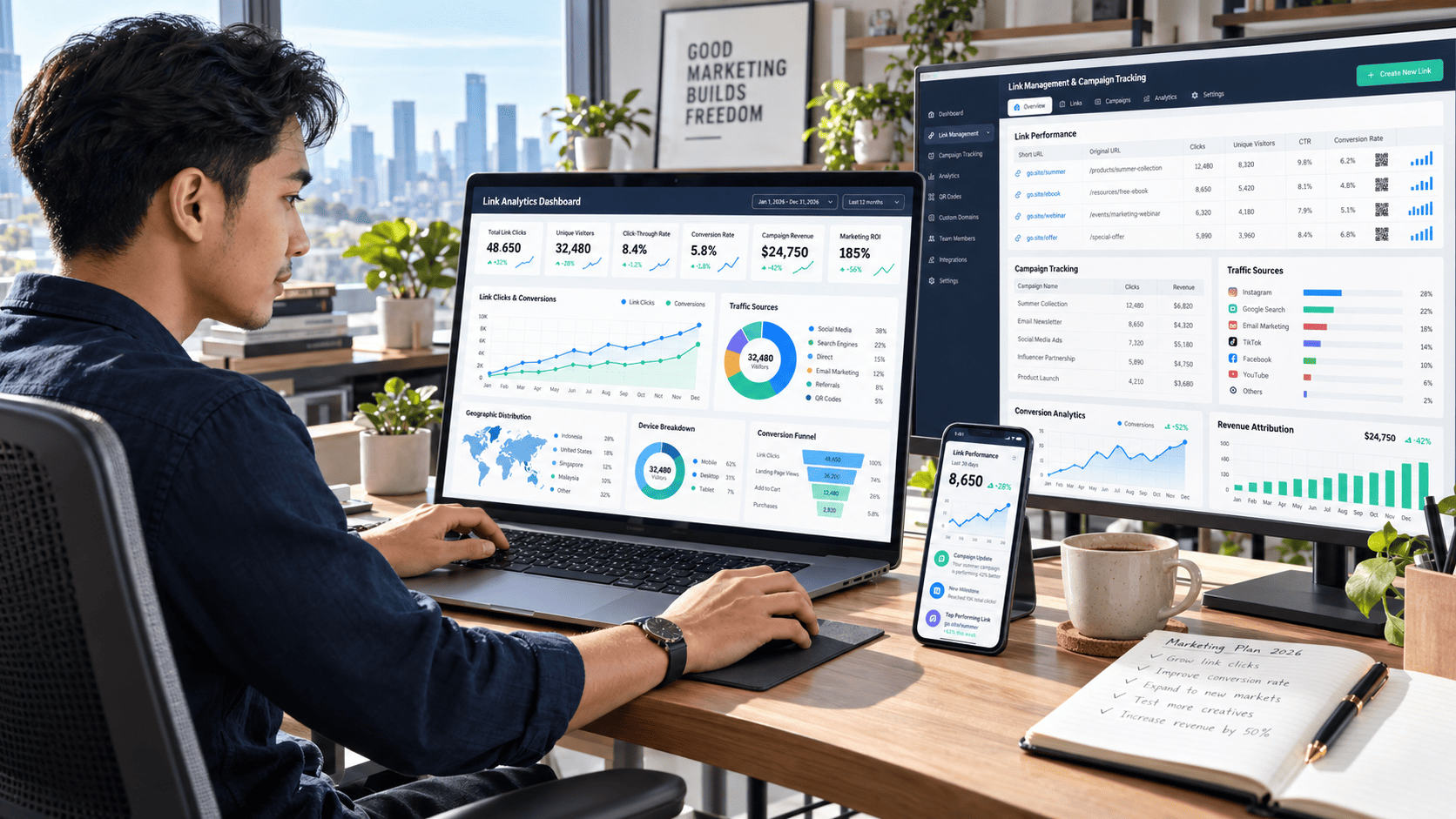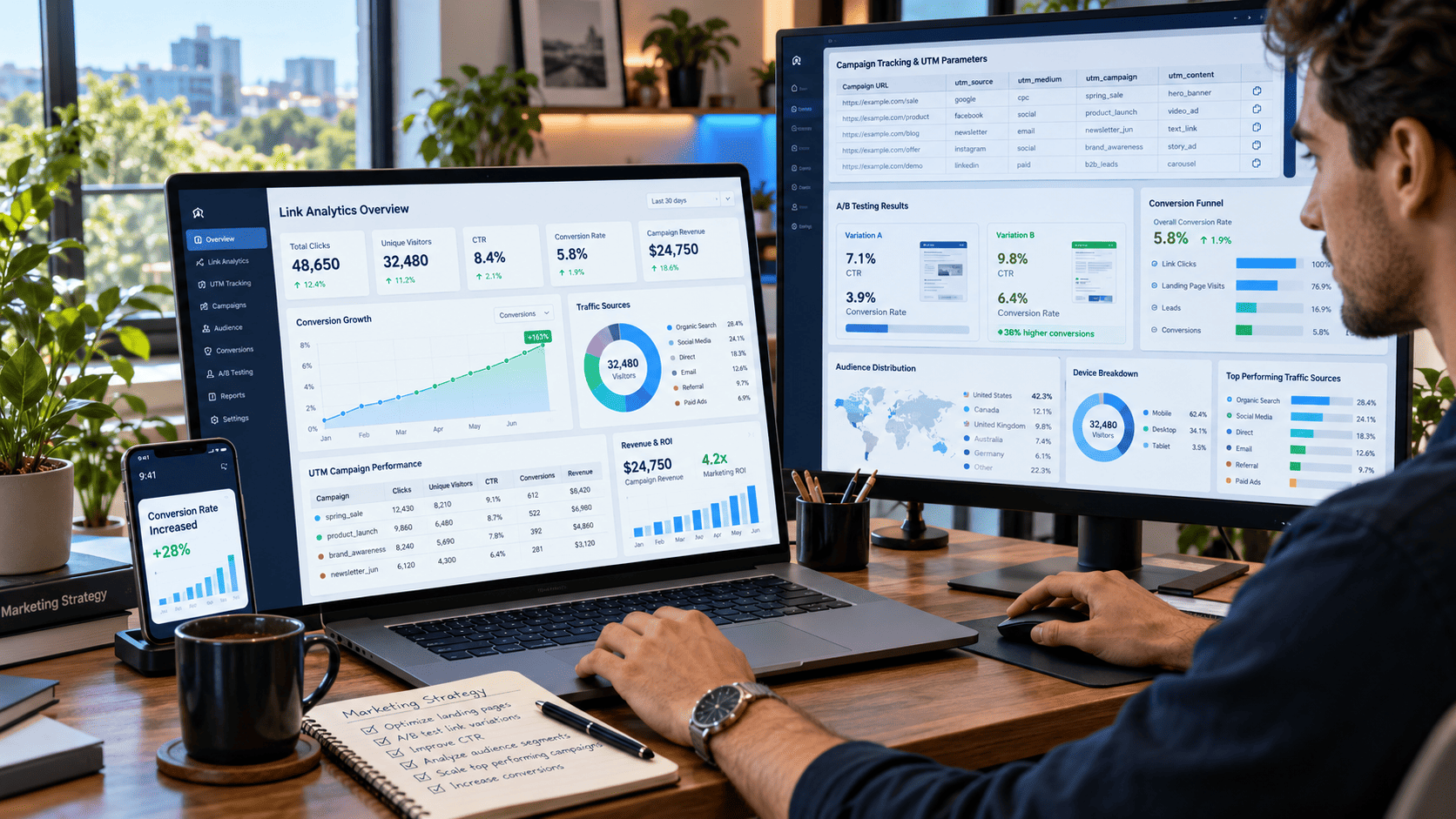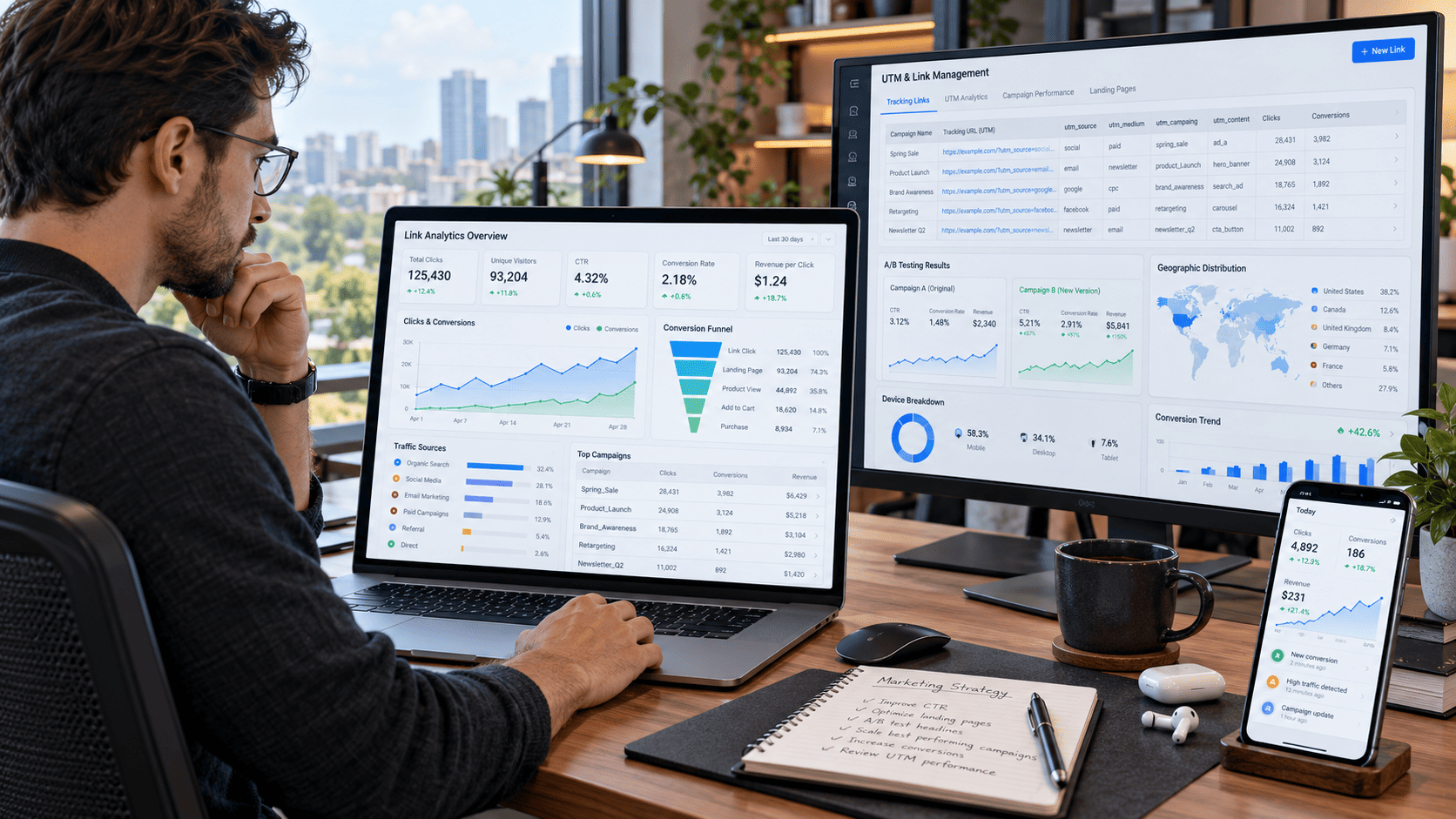
Getting more clicks sounds like progress—until you realize that thousands of clicks can still produce very few leads, sales, or meaningful actions. A campaign may look successful on the surface while quietly losing visitors somewhere between the first click and the final conversion.
That is where link analytics becomes valuable.
Instead of simply counting how many people clicked a link, smart link analytics helps you understand where those visitors came from, which campaigns attracted them, what devices they used, when they clicked, and whether those clicks eventually produced results.
For marketers, bloggers, content creators, affiliate publishers, and online businesses, these insights can transform link tracking from a basic reporting tool into a practical growth system.
Why Link Analytics Matters More Than Total Clicks
A simple click counter tells you how much attention a link received. It does not tell you whether that attention was useful.
Imagine two campaigns promoting the same landing page.
Campaign A receives 5,000 clicks and generates 50 conversions.
Campaign B receives only 2,000 clicks but generates 120 conversions.
Looking only at traffic volume would make Campaign A appear more successful. But once conversion performance is considered, Campaign B clearly brings more valuable visitors.
This is the fundamental advantage of link analytics: it helps you move from asking “How many people clicked?” to asking “Which clicks actually mattered?”
Useful link analytics can reveal:
- Traffic sources
- Unique versus repeat clicks
- Geographic location
- Device type
- Browser or operating system
- Campaign performance
- Conversion behavior
- Time and date of engagement
When these signals are combined, hidden patterns begin to appear.
Track Every Link With a Clear Purpose
Before collecting data, every important link should have a reason to exist.
A common mistake is sharing the same generic URL across social media, newsletters, advertisements, blog posts, and messaging apps. The destination may be identical, but the traffic sources become difficult to separate.
A smarter approach is to create trackable versions of the same destination.
For example:
- Facebook campaign → dedicated tracking link
- Email newsletter → dedicated tracking link
- YouTube description → dedicated tracking link
- Influencer campaign → dedicated tracking link
- Paid advertisement → dedicated tracking link
Visitors may still land on the same page, but your analytics can identify which channel generated each click.
Use Consistent Campaign Parameters
UTM parameters are among the simplest ways to organize campaign tracking.
A typical tracked link can identify information such as:
utm_source— where the traffic came fromutm_medium— the marketing channelutm_campaign— the campaign nameutm_content— the specific creative or link variation
Consistency matters.
If one campaign uses facebook, another uses Facebook, and another uses fb, analytics platforms may treat them as different sources. Establishing a simple naming convention keeps reporting cleaner and easier to analyze.
Find Hidden Click Patterns in Your Traffic
The most useful insights often appear when you stop looking at clicks as one large number and begin dividing them into segments.
Analyze Clicks by Traffic Source
Start by comparing channels.
You may discover that social media generates the largest volume of visitors while email produces the highest conversion rate. Search traffic might bring fewer visitors but keep them engaged longer.
These differences reveal visitor intent.
Someone clicking from a promotional social post may behave differently from someone clicking a link inside an educational newsletter.
Instead of treating every visitor equally, link analytics allows you to optimize each channel according to its actual performance.
Compare Unique Clicks and Total Clicks
Total clicks can be misleading when the same visitor clicks several times.
Suppose a campaign reports:
- 12,000 total clicks
- 7,500 unique clicks
That gap tells you repeat activity is occurring.
Repeated clicks are not automatically bad. They may indicate strong interest, comparison behavior, or users returning before making a decision.
However, an unusually large difference can also signal duplicated traffic, automated activity, or poor reporting quality.
Unique clicks provide a clearer picture of actual audience reach.
Understand Visitor Behavior After the Click
Getting someone to click is only the beginning.
The real question is what happens next.
Connect Click Data With On-Site Behavior
Link tracking becomes much more powerful when it is connected with website analytics.
For example, imagine a campaign that sends 3,000 visitors to a landing page.
After reviewing the data, you find:
- 3,000 clicks
- 2,700 landing-page sessions
- 1,100 visitors reaching the pricing section
- 300 starting checkout
- 90 completing the purchase
Now you can see the entire journey instead of a single click metric.
The biggest opportunity may not be getting more traffic at all. It could be improving the step between the pricing page and checkout.
That insight can save advertising money and increase revenue without increasing traffic volume.
Measure Conversion Rate, Not Just CTR
Click-through rate is useful, but it does not always represent business success.
A headline can generate a high CTR simply because it creates curiosity. If the landing page does not match the promise, visitors may leave immediately.
Conversion rate gives a deeper perspective.
A simple formula is:
Conversion Rate = Conversions ÷ Visitors × 100
If 1,000 visitors generate 50 purchases:
50 ÷ 1,000 × 100 = 5% conversion rate
Now compare that with another campaign generating 500 visitors and 50 purchases.
Its conversion rate is 10%.
The second campaign produces the same number of conversions with half the traffic.
That is why smart link analytics focuses on traffic quality as much as traffic quantity.
Segment Visitors by Device
Device analytics can uncover conversion problems that are easy to miss.
Suppose mobile visitors generate 70% of your clicks but only 35% of your conversions.
That gap deserves investigation.
Possible causes include:
- Slow mobile loading speed
- Buttons that are difficult to tap
- Forms with too many fields
- Poor responsive design
- Checkout pages that feel complicated
- Pop-ups blocking important content
Turn Device Data Into Action
Compare desktop, mobile, and tablet performance separately.
If one device category performs much worse than the others, test the entire visitor journey from that device.
Sometimes a small usability change can improve conversions more effectively than launching another marketing campaign.
Use Geographic Insights to Improve Campaign Targeting
Link analytics can also reveal where your visitors are located.
This information can be especially valuable for international campaigns.
Imagine that a campaign attracts visitors from the United States, Indonesia, India, Canada, and the United Kingdom.
You may discover that visitors from one country click frequently but rarely convert, while visitors from another country convert at a much higher rate.
That can influence:
- Advertising budgets
- Landing-page language
- Pricing strategy
- Posting schedules
- Regional offers
- Content topics
Geographic analytics should not be used in isolation, but combined with conversion data it can reveal where your strongest audiences actually exist.
Discover the Best Time to Share Links
Timing affects engagement more than many marketers realize.
Link analytics often provides timestamp data that shows when audiences are most active.
Look for patterns by:
- Hour
- Day of the week
- Campaign period
- Time zone
For example, you might notice that newsletter links receive the highest engagement within the first three hours after sending.
Social media traffic may peak during lunch breaks or evenings.
Instead of following generic advice about the “best time to post,” your own analytics can provide a schedule based on real audience behavior.
Use A/B Testing to Improve Click Performance
Guessing which headline, button, or CTA will perform best is rarely necessary.
A/B testing allows you to compare two variations.
For example:
Version A: “Learn More”
Version B: “See the Full Strategy”
Both buttons can lead to the same destination while using separate tracking links.
After collecting enough traffic, compare:
- Click-through rate
- Bounce rate
- Engagement
- Conversion rate
The winning version should not necessarily be the one with the most clicks.
If Version A generates 20% more clicks but Version B generates 40% more conversions, Version B may be the better choice.
Build a Simple Link Analytics Dashboard
You do not need dozens of metrics to make better decisions.
A clean dashboard can focus on a few core indicators.
Essential Metrics to Monitor
Track these first:
- Total clicks — overall activity
- Unique clicks — actual reach
- Traffic source — where visitors originated
- CTR — how effectively content attracts clicks
- Conversion rate — how many visitors complete the goal
- Device distribution — mobile versus desktop behavior
- Top-performing campaigns — which links generate the best results
Once those metrics become useful, additional measurements can be added gradually.
The goal is not to create the most complicated dashboard possible. The goal is to make decisions faster.
Watch for Suspicious or Low-Quality Clicks
Not every recorded click represents a genuine potential customer.
Traffic can sometimes include bots, accidental clicks, repeated requests, or low-quality referral sources.
Warning signs may include:
- Extremely high click volume in a short period
- Hundreds of clicks with almost no engagement
- Unusual geographic concentration
- Repeated clicks from similar sources
- Very high CTR with almost zero conversions
Instead of celebrating sudden traffic spikes immediately, compare them with engagement and conversion data.
Real growth usually produces meaningful downstream behavior.
Create a Weekly Optimization Routine
Analytics becomes valuable when it leads to action.
A simple weekly workflow can keep your campaigns improving.
Step 1: Identify the Best Link
Find the campaign generating the strongest combination of traffic and conversions.
Step 2: Find the Weakest Link
Look for campaigns with high traffic but poor results.
Step 3: Investigate the Difference
Compare traffic source, audience, device, location, landing page, CTA, and offer.
Step 4: Make One Improvement
Change one important variable instead of everything at once.
You could test a new headline, shorter form, stronger CTA, faster landing page, or different audience segment.
Step 5: Measure Again
Review the next reporting period and compare the results.
Small improvements repeated consistently can produce significant gains over time.
Avoid These Common Link Analytics Mistakes
Even powerful analytics becomes unreliable when tracking is inconsistent.
Common mistakes include:
- Using identical links across every channel
- Changing campaign naming conventions
- Focusing only on total clicks
- Ignoring conversion tracking
- Comparing campaigns with completely different goals
- Making decisions from very small datasets
- Forgetting to test mobile experiences
The most useful analytics system is usually the one that remains simple, consistent, and connected to business goals.
Conclusion
Smart link analytics turns ordinary URLs into valuable sources of audience intelligence.
Instead of measuring success through clicks alone, you can uncover which channels attract valuable visitors, how audiences behave after clicking, which devices convert best, when engagement peaks, and where potential customers disappear from the funnel.
The biggest advantage is not collecting more data. It is using the right data to make better decisions.
Start by tracking your most important links, organizing campaign parameters consistently, connecting clicks with conversion data, and reviewing performance regularly. Over time, those insights can help you eliminate wasted traffic, improve your visitor experience, and turn more clicks into measurable conversions.
Choose one important campaign today, examine its complete click-to-conversion journey, and identify one improvement you can test. That single habit can become the foundation of a smarter, more profitable marketing strategy.