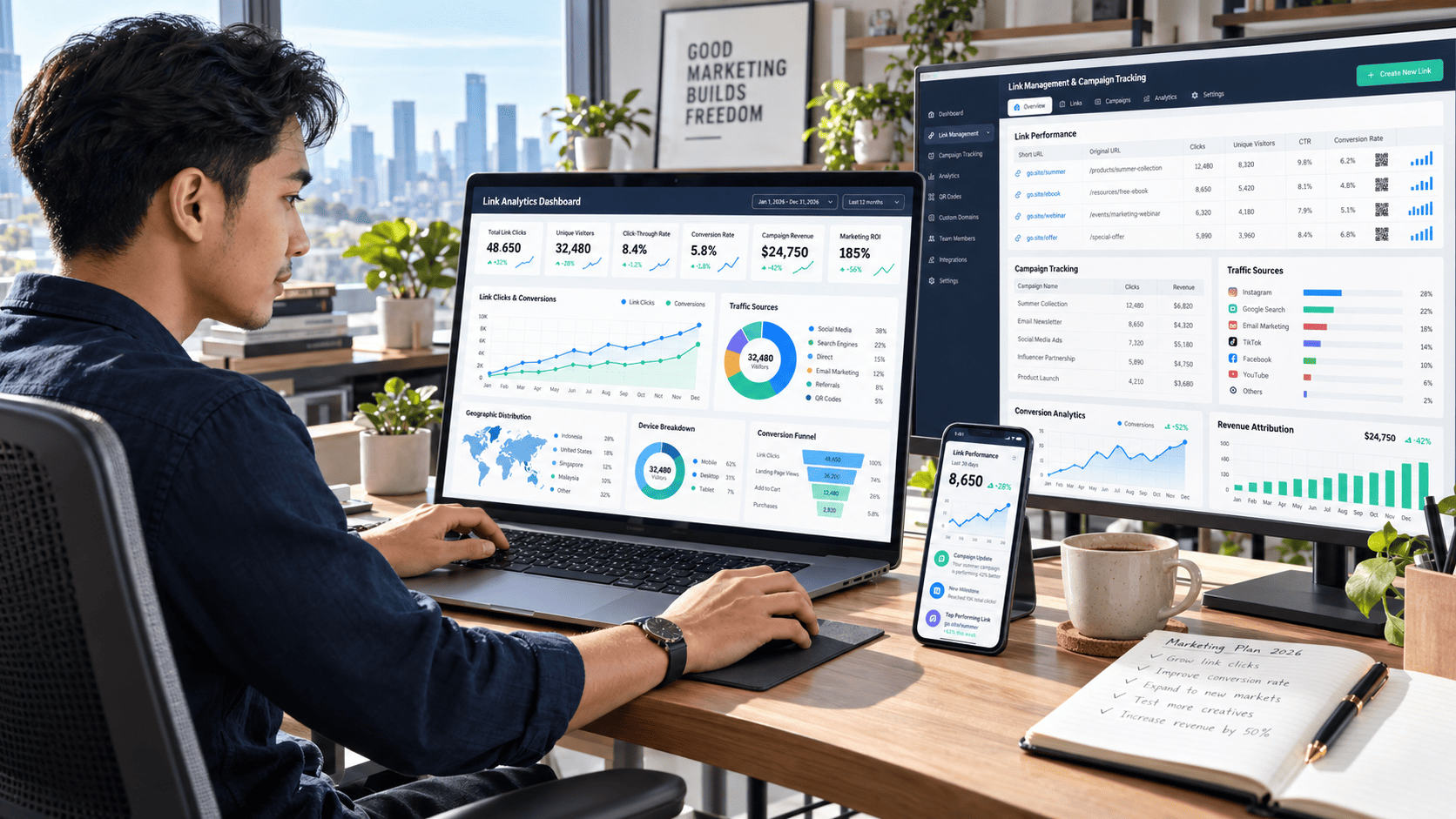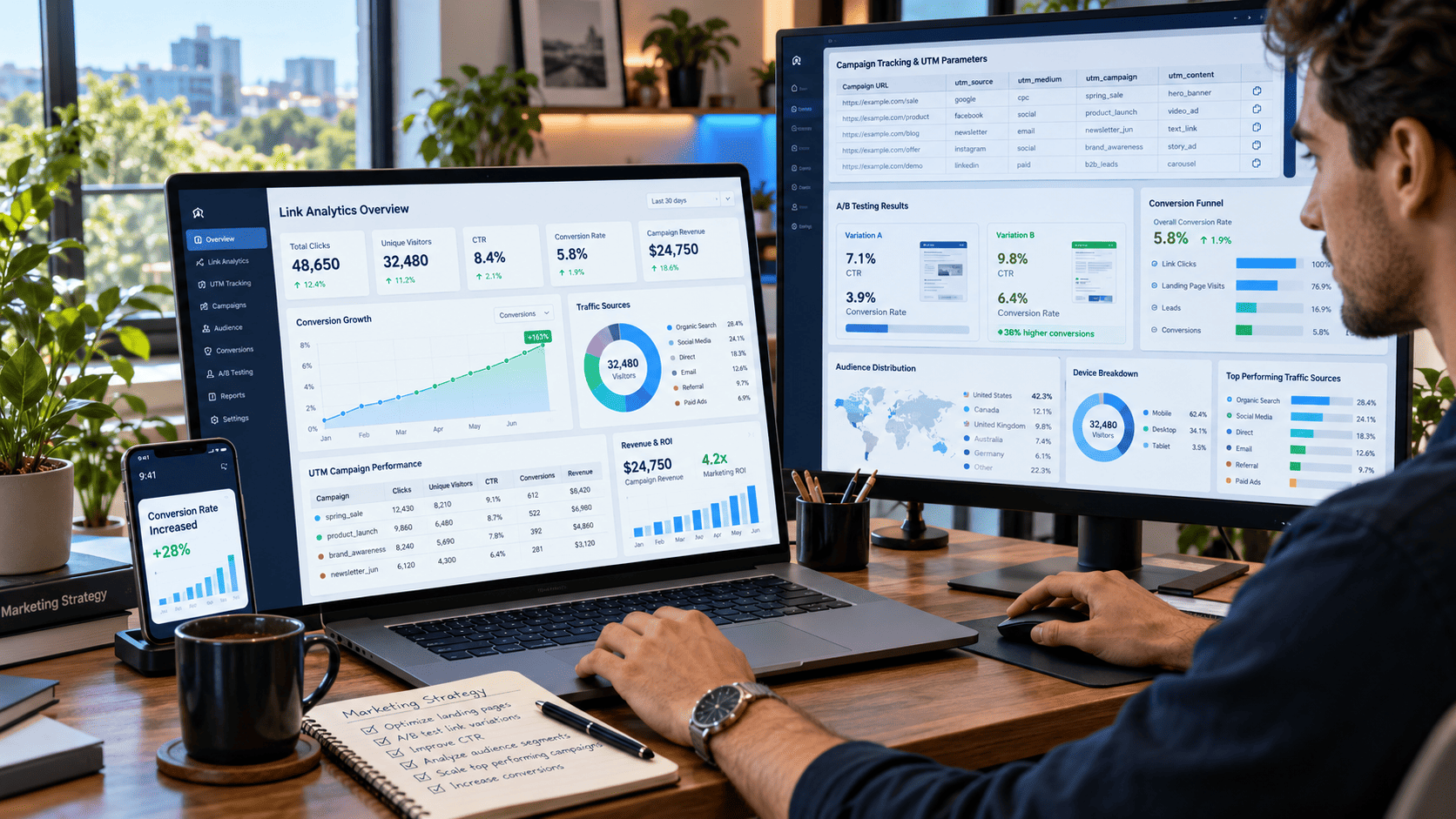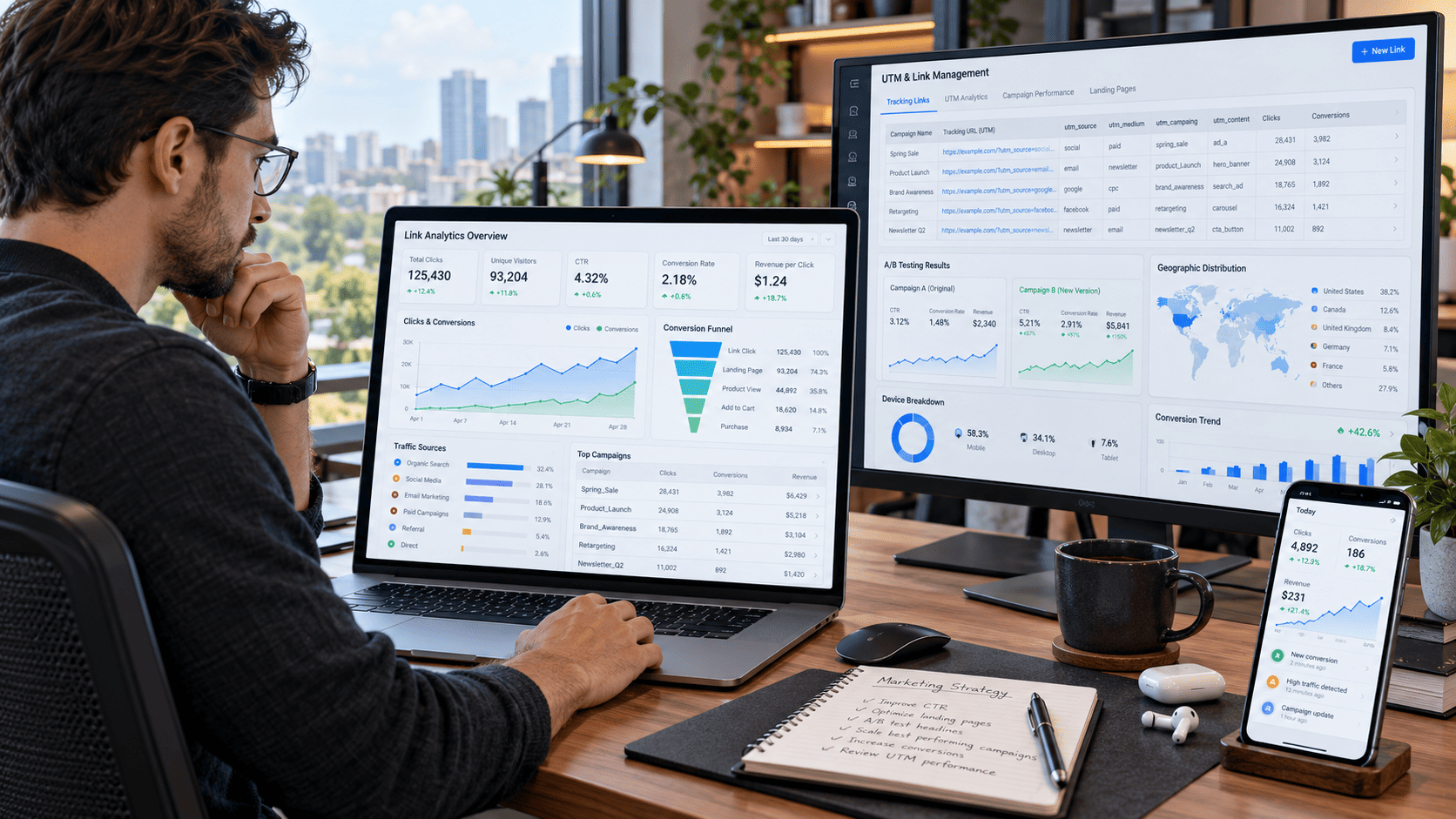
You publish a new article, share it across several platforms, and watch the first few clicks arrive. A few hours later, traffic begins to slow down. The problem is not always the quality of your content. Sometimes, the real issue is that you do not know which links are working, where your visitors come from, or what they do after clicking.
This is where link management and analytics become powerful.
Instead of treating every link as a simple pathway to a webpage, successful marketers, content creators, bloggers, and online businesses use links as measurable assets. Each click provides valuable information about audience interests, traffic sources, campaign performance, and content opportunities.
The proven secret is simple: organize every important link, track its performance, and use the data to improve your next move.
Why Link Management Matters More Than Ever
Links appear everywhere in digital marketing. You use them in social media posts, email campaigns, advertisements, blog articles, video descriptions, landing pages, and private messages.
Without a proper link management system, these links quickly become difficult to control. You may forget where a link was published, which version belongs to a specific campaign, or whether the destination page is still active.
Poor link organization can lead to several problems:
- Broken links that frustrate visitors
- Long and unattractive URLs
- Inaccurate campaign reporting
- Duplicate tracking links
- Missed opportunities to understand audience behavior
- Difficulty comparing traffic sources
- Inconsistent branding across platforms
Imagine promoting the same article on Facebook, Instagram, LinkedIn, and an email newsletter. If you use one identical link everywhere, you may see the total number of visitors, but you will not clearly know which channel generated the best results.
A structured link management strategy solves this problem by assigning a unique, trackable link to each platform.
The Proven Secret: Treat Every Link as a Data Source
The most effective link management strategy is not simply shortening URLs. It is about connecting every link to a specific purpose.
Before creating or sharing a link, define three things:
- Where the link will be published
- What action you want visitors to take
- Which performance metrics you need to measure
For example, suppose a content creator publishes a guide about building an email list. The guide is promoted through an Instagram Story, a Facebook post, a YouTube description, and an email newsletter.
Instead of using one general URL, the creator can build four separate tracking links. Each link points to the same article, but the analytics identify its original source.
After several days, the results may show:
- Instagram generated the most clicks
- Email visitors spent the most time reading
- YouTube visitors produced the highest conversion rate
- Facebook generated traffic but few meaningful actions
This information changes how the creator plans future campaigns. More effort can be invested in the channels that attract valuable visitors rather than simply producing the largest number of clicks.
How Link Analytics Reveals Audience Behavior
A click is only the beginning of the customer journey. Link analytics can reveal much more than the total number of people who opened a page.
Traffic Sources
Traffic source data shows where visitors discovered your link. This may include social media platforms, websites, search engines, email campaigns, advertisements, or direct messages.
Knowing the source helps you understand which channels deserve more attention.
A campaign with 5,000 clicks may appear successful. However, if most visitors leave immediately without taking action, the traffic may have limited value. Meanwhile, another campaign with only 1,000 clicks may generate more subscriptions, sales, or completed forms.
The quality of traffic matters more than the raw number of clicks.
Geographic Location
Location data helps you understand where your audience lives. This is useful for businesses serving specific countries, cities, or regions.
For example, an online store may discover that a large percentage of visitors come from a country where shipping is not currently available. That insight could reveal an opportunity to expand delivery options or create regional campaigns.
Location data can also help determine:
- The best language for future content
- Suitable campaign schedules
- Regional product demand
- Localized landing page opportunities
Device and Browser Usage
Your audience may access your links through smartphones, tablets, laptops, or desktop computers. Understanding device usage helps you optimize the experience after the click.
If most visitors use mobile devices, your landing pages must load quickly, display properly on smaller screens, and make buttons easy to tap.
A beautifully designed desktop page can still perform poorly when mobile visitors struggle to navigate it.
Click Timing
Analytics can show when people are most likely to click your links. You may notice that your audience is more active during lunch breaks, evenings, weekends, or specific weekdays.
This information allows you to publish and promote content when your audience is ready to engage.
Instead of guessing the best posting time, you can use actual audience behavior to guide your schedule.
A Practical Link Management System
You do not need a complicated setup to manage links effectively. A simple and consistent system is often enough.
Step 1: Create Clear Link Categories
Organize links based on their purpose. Common categories include:
- Blog content
- Social media campaigns
- Email marketing
- Product promotions
- Affiliate links
- Paid advertising
- Lead generation
- Event registration
Clear categories make links easier to find, update, and analyze.
Step 2: Use Consistent Naming Conventions
Each tracking link should have a recognizable name. Avoid random labels that become confusing later.
A useful naming structure may include:
- Campaign name
- Platform
- Content type
- Publication date
- Target action
For example:
email-product-launch-july
is easier to understand than:
campaign-link-27-final-new
Consistent naming saves time when managing dozens or hundreds of links.
Step 3: Add Campaign Tracking Parameters
Tracking parameters help analytics platforms identify the source, medium, and campaign connected to each visitor.
Common campaign elements include:
- Source: The platform sending traffic
- Medium: The type of channel, such as email or social
- Campaign: The specific promotion or project
- Content: The button, image, post, or variation used
These details make campaign comparisons more accurate.
Step 4: Shorten and Brand Important Links
Long tracking URLs can look messy, especially on social media or printed materials. Short links are easier to share, remember, and manage.
Branded links can also improve trust because the domain looks connected to the publisher or business.
However, shortened links should still lead visitors to safe, relevant, and expected destinations. Misleading links may increase clicks temporarily, but they damage trust and long-term performance.
Step 5: Review Performance Regularly
Link analytics should not be checked only at the end of a campaign.
Review important links regularly to identify:
- Sudden traffic increases
- Declining click-through rates
- Broken destinations
- High-performing traffic sources
- Unusual geographic activity
- Differences between campaign versions
Frequent reviews allow you to improve campaigns while they are still active.
Metrics That Actually Matter
Not every metric deserves equal attention. The best measurements depend on your campaign goals.
Total Clicks
Total clicks show the overall level of interest. This metric is useful for comparing reach and initial engagement.
However, it should not be evaluated alone.
Unique Clicks
Unique clicks estimate how many individual visitors opened the link. This prevents repeated clicks from one person from making performance appear stronger than it really is.
Click-Through Rate
Click-through rate measures the percentage of people who clicked after seeing a link, advertisement, email, or call-to-action.
A low click-through rate may indicate that the headline, placement, design, or message needs improvement.
Conversion Rate
Conversion rate measures how many visitors completed the desired action after clicking.
That action could be:
- Buying a product
- Joining an email list
- Downloading a file
- Booking a consultation
- Completing a registration form
- Reading another article
A link with fewer clicks but a higher conversion rate may be more valuable than a link with large traffic and weak results.
Engagement After the Click
The visitor’s behavior after arriving on the page provides important context.
Useful engagement signals include:
- Time spent on the page
- Scroll depth
- Pages viewed
- Video completion
- Button interactions
- Bounce or exit rate
These signals reveal whether the link attracted the right audience.
How to Turn Analytics Into Content Growth
Collecting data is easy. Using it correctly is what creates growth.
Repeat Successful Topics
If several links about one topic consistently receive high engagement, your audience is showing clear interest.
Create supporting content around that topic, such as:
- Beginner guides
- Advanced tutorials
- Comparison articles
- Case studies
- Checklists
- Videos
- Downloadable resources
One successful link can become the foundation of an entire content cluster.
Improve Weak Headlines and Calls-to-Action
A strong article can underperform because the promotional message is not attractive enough.
If impressions are high but clicks are low, test a different:
- Headline
- Thumbnail
- Button text
- Description
- Link placement
- Opening sentence
Small wording changes can produce noticeable improvements.
Match Content to Each Platform
People behave differently across platforms. A message that works in an email newsletter may not perform well on Instagram or LinkedIn.
Link analytics helps you see these differences.
You can then adapt the presentation while keeping the destination content consistent. A professional headline may work on LinkedIn, while a curiosity-driven caption may attract more clicks on Facebook.
Update Old High-Performing Content
Older content may continue receiving clicks long after publication. These pages are valuable assets.
Review popular older links and update:
- Outdated information
- Broken references
- Screenshots
- Calls-to-action
- Internal links
- Product recommendations
Improving an existing page is often faster than creating new content from zero.
Common Link Management Mistakes to Avoid
Even a good strategy can fail when basic mistakes are ignored.
Tracking Everything Without a Purpose
Too many tracking links can create unnecessary complexity. Only create separate links when the data will support a real decision.
Focusing Only on Click Volume
High click numbers may look impressive, but clicks without engagement or conversions rarely support sustainable growth.
Ignoring Broken or Expired Links
Broken links damage user experience and can reduce trust. Schedule regular checks for important pages and campaigns.
Using Inconsistent Campaign Names
Inconsistent labels make reports difficult to understand. Decide on a naming format and use it across the entire team.
Failing to Protect User Privacy
Analytics should be used responsibly. Collect only the information needed to improve performance, follow applicable privacy requirements, and clearly explain tracking practices when necessary.
Conclusion: Make Every Click More Valuable
The proven link management and analytics secret is not a hidden tool or complicated formula. It is a disciplined process of organizing links, tracking meaningful data, studying audience behavior, and using those insights to improve future content.
When every important link has a clear purpose, you can see which platforms attract the right visitors, which messages generate interest, and which content leads to meaningful action.
Start by choosing one active campaign. Create separate tracking links for each traffic source, monitor the results, and compare the quality of the visitors you receive. Use what you learn to improve your next headline, promotion, landing page, or content idea.
Every click tells a story. The sooner you begin listening to that story, the faster you can build a smarter content strategy, understand your audience, and create sustainable growth.