.png)
You publish a new piece of content, share it across several platforms, and wait for the clicks to arrive. A few hours later, traffic starts appearing, but an important question remains: where are those visitors actually coming from, and what happens after they click?
Without proper link management and analytics, the answer is often unclear. You may know that a campaign generated traffic, but you cannot easily identify which post, platform, audience segment, or promotional strategy produced the best results. This uncertainty makes content growth feel like guesswork.
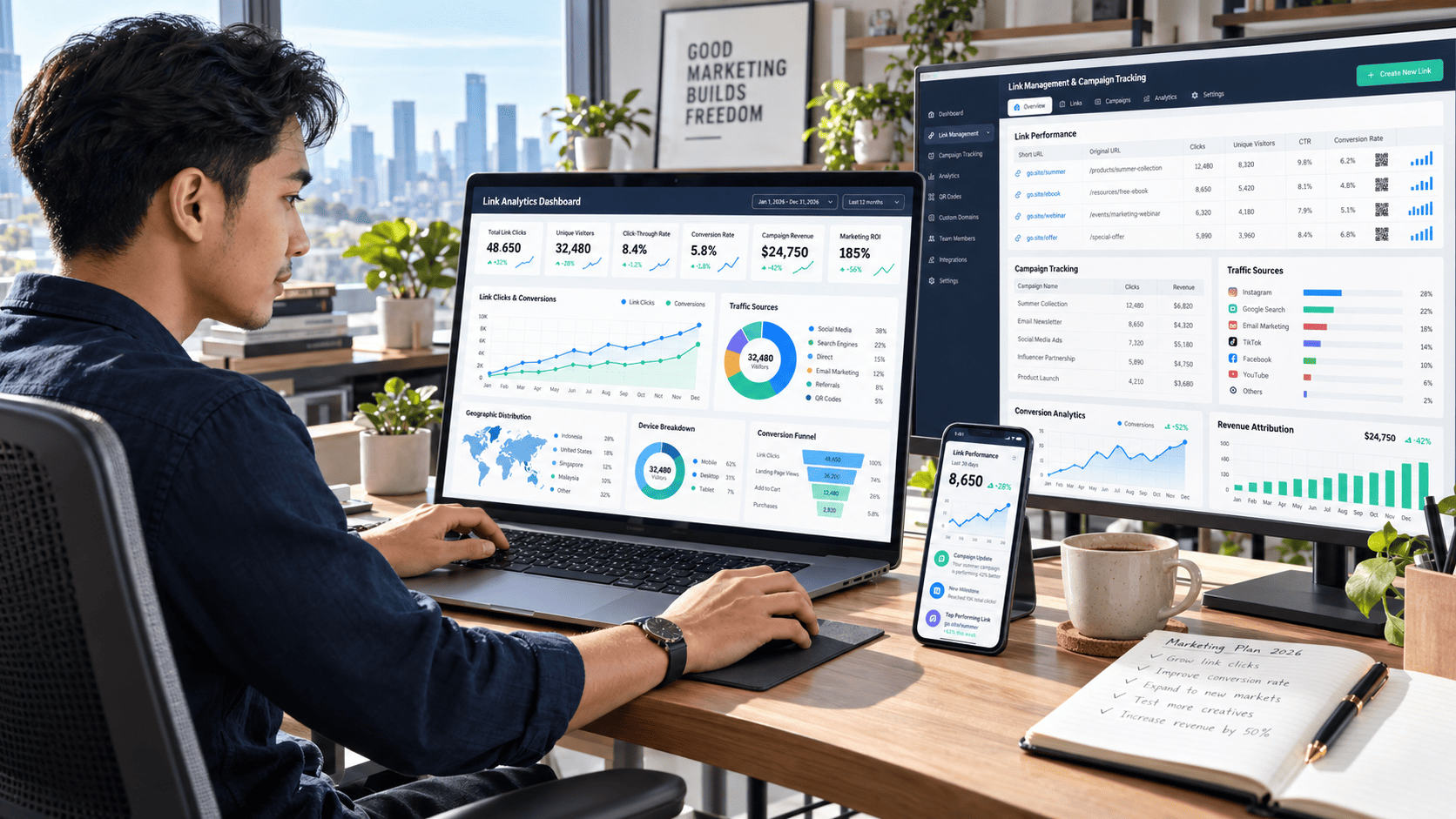
Effective link management changes that. Instead of treating links as simple web addresses, you can use them as measurable assets that reveal how people discover, interact with, and respond to your content. When combined with accurate analytics, managed links help you increase click-through rates, understand audience behavior, improve campaigns, and make smarter content decisions.
What Is Link Management?
Link management is the process of creating, organizing, tracking, updating, and optimizing the links used across your website, social media, email campaigns, advertisements, and digital content.
A basic link sends visitors from one page to another. A managed link does much more. It can show where the visitor came from, which campaign attracted the click, what device they used, where they are located, and whether they completed a valuable action afterward.
For content creators, bloggers, marketers, and online business owners, this information is extremely useful. It transforms an ordinary URL into a source of actionable audience data.
The Difference Between Sharing and Managing Links
Imagine that you publish a guide and share the same long URL on Facebook, Instagram, LinkedIn, an email newsletter, and a messaging group.
Traffic increases, but because every platform uses the same link, you cannot clearly identify which channel generated the most valuable visitors.
With link management, you can create a separate tracked link for each platform. The destination remains the same, but the tracking data becomes much more detailed.
For example:
- One link is used for Facebook posts.
- Another link is placed in your email newsletter.
- A third link is added to your Instagram bio.
- A fourth link is shared with an online community.
You can then compare their performance and see which channel deserves more attention.
Why Link Management and Analytics Matter
Publishing more content does not automatically produce faster growth. Sustainable growth comes from learning what works and using that information to improve future decisions.
Link management and analytics provide that learning process.
You Can See What Actually Generates Clicks
It is easy to assume that a popular platform will deliver the most traffic. However, analytics may reveal a different story.
A social media post with hundreds of likes may generate fewer website visits than a small email list. A short tutorial may attract more clicks than a long promotional post. A link placed at the beginning of an article may perform better than one hidden near the bottom.
These insights help you focus on actions that create real results rather than visible engagement alone.
You Can Understand Audience Behavior
Clicks are only the beginning. The real value comes from understanding what happens around and after each click.
Link analytics may reveal:
- The platforms sending the most visitors
- The countries or regions where users are located
- The devices and operating systems they use
- The times and days when engagement is highest
- The campaigns generating repeat visits
- The links that lead to subscriptions, purchases, or downloads
This information helps you build a clearer picture of your audience.
For example, if most visitors access your content from mobile devices, your pages, buttons, forms, and calls to action should be optimized for smaller screens. If engagement peaks in the evening, scheduling content during that period may improve performance.
You Can Optimize Content Faster
Without analytics, content optimization often depends on assumptions. You might change a headline, redesign a page, or publish on a different platform without knowing whether the change actually helped.
Tracked links allow you to compare results more accurately.
Suppose you promote the same article with two different headlines. By assigning a separate tracked link to each headline, you can measure which version attracts more clicks. The result gives you practical guidance for future content.
This simple testing process can be used for:
- Social media captions
- Email subject lines
- Call-to-action buttons
- Landing page layouts
- Promotional images
- Content headlines
- Product descriptions
Instead of guessing what your audience prefers, you can let their behavior provide the answer.
The Proven Secret: Give Every Link a Clear Purpose
The most effective link management strategy is surprisingly simple: every link should have one clear purpose.
Many creators share links without deciding what they want the visitor to do. As a result, they collect clicks but gain little useful information.
Before publishing a link, define its role.
Is the link designed to bring readers to a blog post? Encourage people to subscribe? Promote a product? Generate leads? Download a resource? Register for an event?
When the purpose is clear, tracking becomes more meaningful.
Match the Link to the User’s Intent
A person clicking a tutorial link expects useful information. A person clicking a product link expects pricing, features, and purchasing details. A person clicking a newsletter link expects a clear reason to subscribe.
The destination page should match that expectation immediately.
If the promise in your post does not match the landing page, users may leave within seconds. This creates clicks without meaningful engagement.
A strong link experience connects three elements:
- The message that attracts attention
- The link that guides the visitor
- The destination that fulfills the promise
When all three are aligned, click quality improves.
How to Build an Effective Link Management System
You do not need a complicated setup to begin. A simple and consistent system can produce valuable insights.
1. Organize Links by Campaign and Channel
Avoid placing every link in one unstructured list. Group links based on their purpose, campaign, platform, or content category.
A practical naming structure might include:
- Campaign name
- Traffic source
- Content title
- Publication date
- Target action
For example, a tracked link name could identify that it belongs to an email campaign promoting a specific guide.
Clear naming makes reports easier to understand and prevents confusion when you manage dozens or hundreds of links.
2. Use Branded and Readable Links
Long URLs filled with random characters can look confusing or untrustworthy. Short, readable links are easier to share, remember, and recognize.
A branded link can also strengthen credibility because the audience can identify the business or website behind it.
However, shortening a link is not enough. The destination must still be relevant, secure, and transparent. Avoid misleading paths that hide where the user is going.
3. Add Campaign Tracking Parameters
Campaign tracking parameters help analytics platforms identify the source and purpose of website traffic.
They can show whether a visitor came from:
- A Facebook post
- A newsletter
- A paid advertisement
- A partner website
- A messaging application
- A specific content campaign
Consistent tracking parameters make it easier to compare channels. Use a clear naming format so that reports do not become fragmented by inconsistent labels.
For instance, using several variations such as “Facebook,” “facebook,” and “FB” may separate data that should appear in one category. Standardization keeps reporting clean.
4. Monitor More Than Total Clicks
Total clicks are useful, but they do not tell the complete story.
A link may receive thousands of clicks and still produce weak results if visitors leave immediately. Another link may receive fewer clicks but generate more subscriptions or sales.
Important metrics to monitor include:
- Unique clicks
- Click-through rate
- Conversion rate
- Engagement time
- Bounce or exit behavior
- Device type
- Traffic source
- Geographic location
- Returning visitors
The best metric depends on the purpose of the link.
If the goal is awareness, reach and unique clicks may matter most. If the goal is sales, conversions and revenue are more important.
5. Review Performance Regularly
Analytics become valuable when they influence future action.
Set a regular schedule for reviewing link performance. Weekly reviews may work well for active campaigns, while monthly reviews may be enough for evergreen content.
During each review, ask:
- Which links performed best?
- Which traffic sources produced quality visitors?
- Which campaigns underperformed?
- Where did visitors drop off?
- Which content should be promoted again?
- What should be tested next?
The goal is not to collect more reports. The goal is to turn data into decisions.
Practical Ways to Boost Clicks
Tracking links helps you measure performance, but several practical improvements can increase the number of people who click.
Write Clear Calls to Action
A vague phrase such as “click here” gives users little reason to act. A stronger call to action explains the benefit.
Instead of saying “click here,” try language such as:
- Read the complete guide
- Compare the available options
- See the full results
- Download the free resource
- Learn the step-by-step process
Specific calls to action reduce uncertainty and make the next step more attractive.
Place Links Where Attention Is Highest
Link placement has a major effect on visibility.
In long articles, placing only one link at the bottom may limit engagement because many readers will not reach it. Relevant links can be placed naturally near the sections where readers are most interested.
In social media posts, the call to action should appear clearly instead of being buried beneath unnecessary text.
In email campaigns, the main link should be easy to find and should not compete with too many secondary actions.
Keep the Message Consistent
The words surrounding a link should accurately describe what users will find after clicking.
If a headline promises a free template but the destination immediately asks for payment, trust can disappear quickly. If a social post promotes a beginner guide but the landing page uses advanced technical language, visitors may leave.
Consistency improves both click quality and audience trust.
Common Link Management Mistakes
Even a good strategy can produce weak results when basic mistakes are ignored.
Tracking Everything Without a Clear Goal
More data does not always create better decisions. Tracking dozens of metrics without knowing why they matter can become distracting.
Start with the business or content goal, then choose the metrics that reflect progress toward it.
Using Inconsistent Campaign Names
Poor naming creates messy reports. Small differences in capitalization, spelling, or abbreviations can divide related traffic into multiple categories.
Create a simple naming convention and use it consistently across every campaign.
Ignoring Broken or Outdated Links
Broken links damage the user experience and may reduce trust. Old links can also send visitors to expired offers, removed content, or outdated information.
Regular link audits help identify:
- Broken destinations
- Redirect chains
- Expired campaigns
- Incorrect tracking parameters
- Pages that need updating
Focusing Only on Click Volume
A large number of clicks can look impressive, but quality matters more than volume.
One hundred highly interested visitors may create more value than ten thousand accidental or poorly targeted clicks. Always connect click data to deeper outcomes such as engagement, leads, subscriptions, or revenue.
Turn Analytics Into a Content Growth Engine
The greatest advantage of link analytics is its ability to improve your entire content strategy.
Patterns begin to appear when you review data consistently. You may discover that certain topics generate more clicks, specific platforms produce more engaged readers, or particular calls to action lead to higher conversions.
Those patterns can guide your next decisions.
You can create more content around proven topics, republish high-performing resources, improve weak landing pages, and stop investing time in channels that repeatedly deliver poor results.
This process creates a simple growth cycle:
- Publish content.
- Share tracked links.
- Measure audience behavior.
- Identify strong and weak performance.
- Improve the next campaign.
- Repeat the process.
Over time, each campaign becomes more informed than the one before it.
Conclusion
Link management and analytics are not only technical tools for marketers. They are practical systems for understanding how people discover your content, what motivates them to click, and which actions lead to meaningful growth.
The proven secret is to give every link a clear purpose, track it consistently, and use the results to improve future decisions. When links are organized, measurable, and aligned with audience intent, you can increase click quality, reveal valuable behavior patterns, and accelerate content growth without relying on guesswork.
Start by reviewing the links you already use. Organize them by campaign, improve their tracking, and identify the metrics that matter most to your goals. Even small improvements can reveal opportunities that were previously hidden.
Apply these strategies to your next campaign, compare the results, and share this guide with other creators or marketers who want to make smarter decisions with every click.