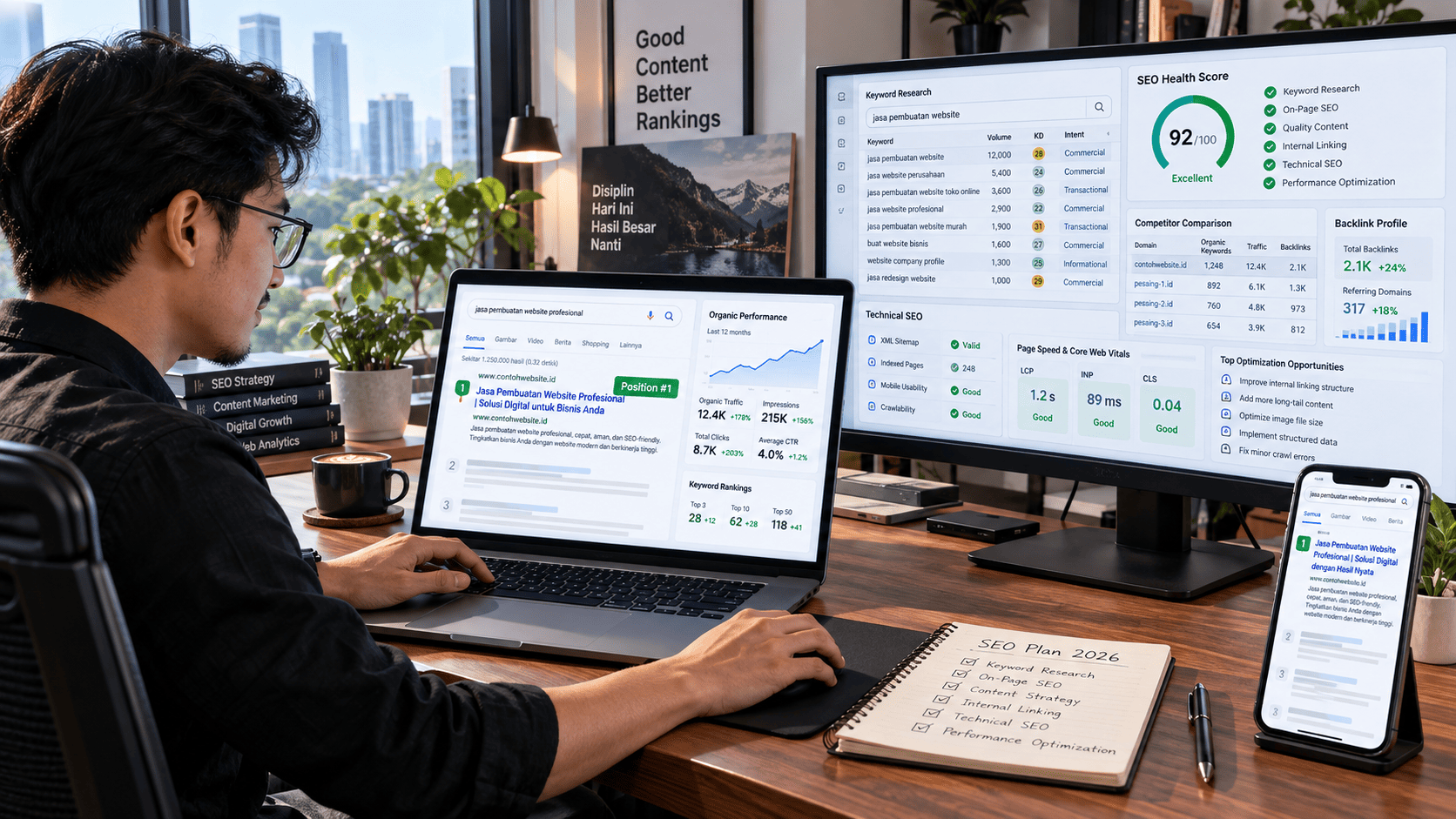
Digital marketing can feel overwhelming when every platform, trend, and algorithm seems to demand your attention at the same time. You publish content, run campaigns, optimize landing pages, post on social media, and check analytics—yet traffic remains inconsistent and sales do not always grow as expected.
The problem is rarely a lack of effort. More often, the problem is that individual marketing activities are not working together as one connected growth system.
A strong digital marketing growth strategy combines audience research, valuable content, search visibility, social engagement, conversion optimization, and performance measurement. When these elements support one another, attracting the right visitors becomes easier, building trust becomes faster, and turning attention into revenue becomes far more predictable.
Here are 15 powerful strategies you can use to build that system.
1. Understand Your Audience Before Creating Campaigns
Successful digital marketing starts with knowing exactly who you want to reach.
Instead of targeting everyone, define the people most likely to need your product, service, or content. Consider their goals, frustrations, buying habits, preferred platforms, and questions they frequently search online.
For example, a productivity software company targeting freelancers may focus on problems such as managing deadlines, tracking clients, and reducing repetitive tasks.
Create Simple Audience Profiles
You do not need complicated customer personas. Start with basic questions:
- What problem does the audience want to solve?
- What motivates them to take action?
- Where do they spend time online?
- What prevents them from buying?
- What type of content earns their attention?
The better you understand these answers, the easier it becomes to create marketing messages that feel relevant.
2. Build a Clear Digital Marketing Funnel
Random traffic rarely produces consistent growth.
A marketing funnel creates a clear path from discovering your brand to becoming a customer.
A simple funnel usually includes:
- Awareness — people discover your content or brand.
- Interest — they explore your website, videos, or social profiles.
- Consideration — they compare solutions and evaluate your credibility.
- Conversion — they purchase, subscribe, register, or contact you.
- Retention — you continue providing value so they return.
Every campaign should support one or more stages of this journey.
3. Create High-Value Content That Solves Real Problems
Content becomes powerful when it provides useful answers instead of simply promoting products.
Educational blog posts, tutorials, videos, case studies, comparison guides, checklists, and industry insights can attract potential customers long before they are ready to buy.
Focus on Search Intent
Before creating content, ask what someone actually wants when entering a keyword.
A person searching for “best email marketing tools for small businesses” probably wants comparisons and recommendations. Someone searching for “how to build an email list” needs educational guidance.
Matching content with intent improves both user experience and SEO performance.
4. Use SEO to Generate Sustainable Targeted Traffic
Search engine optimization remains one of the most valuable long-term digital marketing strategies.
Unlike short-lived promotional campaigns, strong search rankings can continue bringing visitors long after content is published.
Focus on:
- Relevant keywords
- Helpful, original content
- Clear page structure
- Internal linking
- Fast loading speeds
- Mobile usability
- Descriptive titles and meta descriptions
SEO works best when the goal is not simply ranking for keywords but answering user questions better than competing pages.
5. Target Long-Tail Keywords
Highly competitive keywords may attract large search volumes, but they are not always the easiest path to conversions.
Long-tail keywords are more specific phrases that often reveal stronger intent.
Instead of targeting:
digital marketing
you might target:
digital marketing strategies for small online businesses
The second keyword has a smaller audience, but those visitors are more likely to be looking for exactly what the page provides.
Creating multiple pieces of content around related long-tail keywords can gradually build topical authority.
6. Strengthen Your Social Media Presence
Social media should do more than distribute links.
The strongest brands use social platforms to build relationships, answer questions, collect feedback, and maintain visibility.
Choose platforms based on audience behavior rather than trying to appear everywhere.
A B2B brand may prioritize LinkedIn, while a visual lifestyle brand could generate better engagement through Instagram, TikTok, or Pinterest.
Repurpose Your Best Content
One detailed blog post can become:
- Several short social posts
- A video script
- An infographic
- A carousel
- An email newsletter
- A discussion thread
Repurposing reduces production time while increasing the reach of your strongest ideas.
7. Build an Email List You Actually Own
Algorithms can change overnight. Your email list gives you a direct communication channel with your audience.
Offer something useful in exchange for an email address, such as a checklist, mini guide, template, discount, webinar, or exclusive resource.
Then focus on helping rather than constantly selling.
A simple email sequence could welcome new subscribers, share useful resources, introduce your brand story, and eventually recommend a relevant product or service.
Trust built over several useful emails often produces better conversions than aggressive promotions.
8. Improve Landing Page Conversion Rates
Driving more traffic is only one side of digital marketing growth.
If visitors reach your page but leave without taking action, attracting even more traffic may simply increase wasted opportunities.
Review your landing pages carefully.
Important Conversion Elements
A strong page usually includes:
- A clear headline
- A specific value proposition
- Easy-to-understand benefits
- Supporting evidence
- Visible calls-to-action
- Fast loading times
- Mobile-friendly design
Removing unnecessary distractions can also improve conversions.
Sometimes changing one headline or simplifying one form can create meaningful results without increasing advertising spend.
9. Use Clear Calls-to-Action
Visitors should never wonder what they are expected to do next.
Every important page should contain a clear call-to-action that matches its purpose.
Examples include:
Start Your Free Trial
Download the Guide
Join the Newsletter
Request a Quote
Explore the Full Collection
The best CTA feels like the natural next step rather than an interruption.
10. Use Paid Advertising Strategically
Paid advertising can accelerate growth when campaigns are carefully targeted and measured.
Search ads can capture people already looking for solutions, while social advertising can introduce your brand to new audiences.
However, avoid spending heavily before your landing pages and tracking systems are ready.
Start with smaller tests. Compare audiences, creatives, offers, and landing pages before scaling successful combinations.
Track Business Results, Not Just Clicks
A campaign generating thousands of clicks is not necessarily profitable.
Pay attention to metrics such as:
- Conversion rate
- Cost per lead
- Customer acquisition cost
- Revenue
- Return on ad spend
Traffic only becomes valuable when it contributes to meaningful business outcomes.
11. Retarget Visitors Who Already Know Your Brand
Most website visitors will not convert during their first visit.
Retargeting allows you to reconnect with people who have already interacted with your website, product pages, videos, or campaigns.
These audiences are often more valuable because they already recognize your brand.
A visitor who previously viewed a product page may respond well to a helpful reminder, customer testimonial, comparison guide, or limited promotion.
The key is relevance rather than repeatedly showing the same advertisement.
12. Build Trust With Social Proof
People naturally look for evidence before making decisions online.
Reviews, customer testimonials, case studies, user-generated content, certifications, and transparent performance results can reduce uncertainty.
Imagine two businesses offering similar services.
One simply says, “We deliver great results.”
The other shows real customer experiences and explains how specific problems were solved.
The second message usually feels more credible because it provides evidence instead of relying only on claims.
13. Improve User Experience Across Every Device
Even excellent marketing cannot compensate for a frustrating website.
Slow pages, confusing navigation, intrusive pop-ups, broken layouts, and complicated checkout processes can push visitors away.
Regularly test your website on desktop, tablet, and mobile devices.
Pay particular attention to mobile usability because many customers may discover your business through smartphones before ever visiting from a computer.
Small usability improvements can directly support both SEO and conversion performance.
14. Measure the Metrics That Matter
Digital marketing becomes easier when decisions are based on evidence rather than assumptions.
Analytics can reveal where visitors come from, which campaigns attract valuable users, what content keeps people engaged, and where customers leave the conversion journey.
Useful metrics include:
- Organic traffic
- Click-through rate
- Engagement rate
- Conversion rate
- Cost per acquisition
- Customer lifetime value
- Revenue by channel
- Returning visitors
Avoid becoming obsessed with vanity metrics.
A campaign generating 50,000 impressions may look impressive, but a campaign generating fewer visitors who consistently purchase may be far more valuable.
15. Test, Learn, and Optimize Continuously
The most effective digital marketing strategy is rarely perfect on the first attempt.
Successful marketers continuously test ideas and improve them using real performance data.
You might experiment with:
- Headlines
- Ad creatives
- Email subject lines
- Landing page layouts
- Calls-to-action
- Content formats
- Audience targeting
- Offers
Change one important variable at a time whenever possible. This makes it easier to understand what actually caused performance to improve or decline.
Turn Small Improvements Into Compound Growth
Imagine increasing your landing page conversion rate, improving email engagement, attracting slightly more organic traffic, and lowering advertising costs over several months.
Individually, each improvement may look small.
Together, they can create significant growth.
That is why digital marketing works best as an ongoing optimization process rather than a one-time campaign.
Build a Digital Marketing System That Grows With You
Sustainable growth rarely comes from one viral post, one advertisement, or one marketing trick. It comes from building a connected system where audience research, SEO, valuable content, social media, email marketing, advertising, conversion optimization, and analytics reinforce each other.
The digital marketing growth formula is simple in principle: attract the right audience, deliver genuine value, build trust, guide people toward the next logical action, measure the results, and continuously improve what works.
You do not need to implement all 15 strategies overnight. Start with the areas that can create the biggest impact for your current situation. Improve your content, strengthen your website experience, understand your analytics, and test new approaches consistently.
Over time, those improvements compound into stronger traffic, deeper audience loyalty, higher conversions, and more predictable sales.
Choose one strategy today, put it into action, measure what happens, and use what you learn to make the next campaign even stronger. If these ideas helped you, share this guide with someone building their digital presence and keep exploring new ways to turn online attention into sustainable business growth.