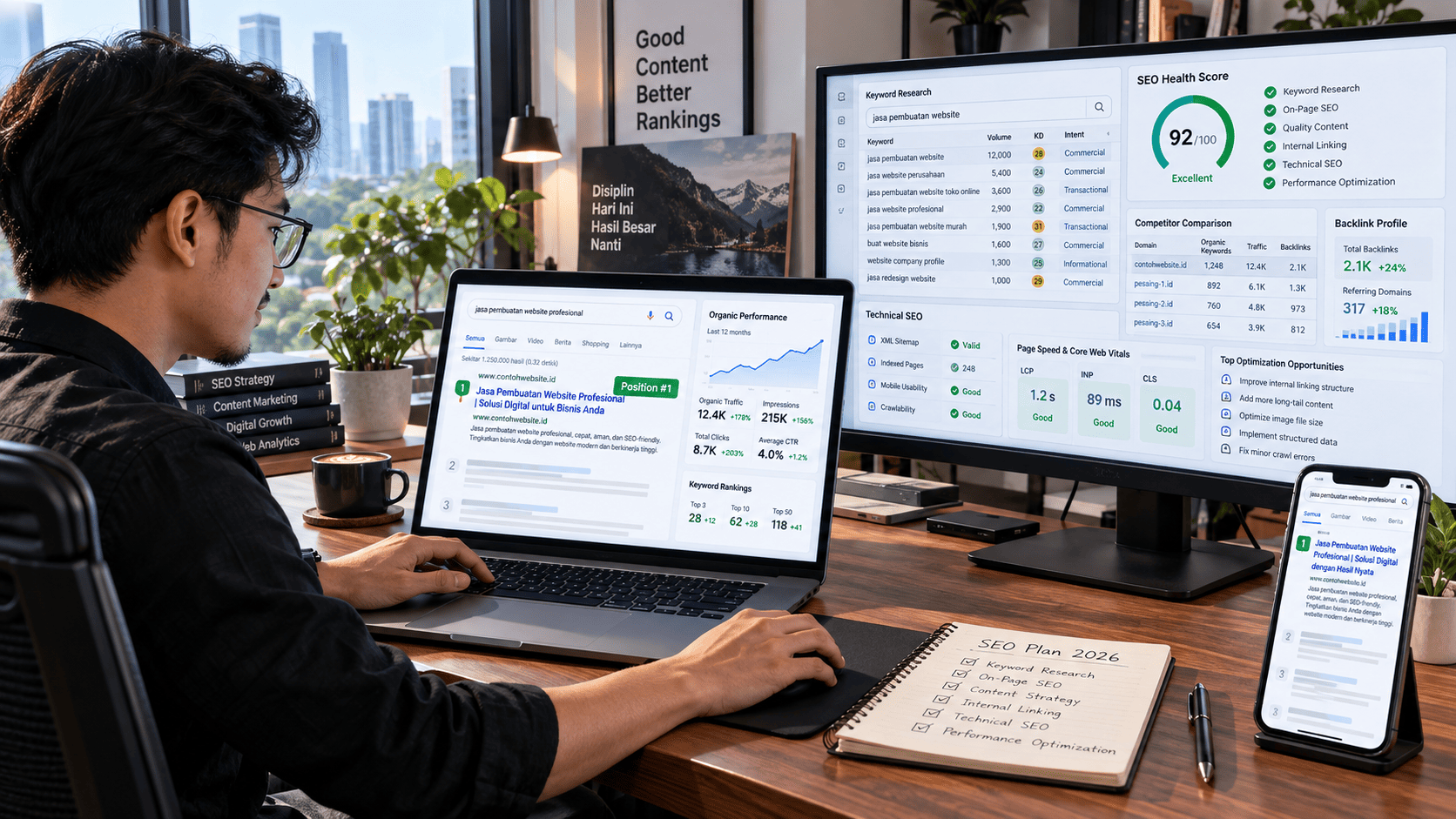

Digital marketing can look simple from the outside: publish content, run ads, post on social media, and wait for customers to arrive. In reality, the brands that grow consistently are usually doing something much more strategic behind the scenes.
The biggest challenge is not getting attention once. It is building a repeatable system that attracts the right people, earns their trust, keeps them engaged, and eventually turns that attention into revenue.
If your website traffic feels inconsistent, your social media engagement has stalled, or your campaigns generate clicks without enough sales, the problem may not be a lack of effort. You may simply need a better digital marketing strategy.
Below are 17 practical strategies that can help you attract more qualified traffic, build a loyal audience, and create a stronger path from discovery to conversion.
1. Start With a Clear Digital Marketing Goal
Before choosing tools, platforms, or content formats, decide what success actually looks like.
A business trying to increase brand awareness needs a different strategy from one focused on generating leads or increasing ecommerce sales. Without a clear goal, it is easy to chase vanity metrics that look impressive but do not improve the business.
Useful goals might include increasing organic traffic, generating more qualified leads, improving conversion rates, growing an email list, or increasing repeat purchases.
Keep Your Goals Measurable
Instead of saying, “We want more traffic,” define a measurable outcome such as increasing qualified website visits by 25% over the next six months.
Clear goals make it easier to choose the right tactics and measure what is actually working.
2. Understand Your Audience Better Than Your Competitors
Strong digital marketing starts with understanding people, not algorithms.
Learn what your audience wants, what problems they are trying to solve, what questions they repeatedly ask, and what usually stops them from making a purchase.
Use customer surveys, search data, social media comments, reviews, support conversations, and analytics to identify patterns.
The deeper you understand your audience, the easier it becomes to create content and offers that feel relevant instead of generic.
3. Build Detailed Buyer Personas
Buyer personas help transform broad audience data into more useful customer profiles.
A good persona can include age range, job role, interests, frustrations, buying motivations, preferred platforms, and common objections.
For example, a freelance designer looking for productivity software may care about speed, affordability, and ease of use. A large agency may care more about collaboration, reporting, security, and scalability.
Those differences should influence your content, landing pages, advertising, and sales messaging.
4. Create High-Value Content Consistently
Content marketing remains one of the strongest ways to attract organic traffic and build long-term trust.
Instead of publishing random articles, create content that solves specific problems your audience already has.
Useful formats include:
- Step-by-step guides
- Tutorials
- Comparison articles
- Case studies
- Checklists
- Industry insights
- Product demonstrations
- Short educational videos
The goal is simple: make your content useful enough that people want to save it, share it, or return to your website later.
5. Use SEO to Capture Existing Search Demand
Search engine optimization helps your content appear when potential customers are actively looking for answers.
Start with keyword research, but do not focus only on search volume. Look for keywords that match your audience's intent.
Someone searching “best email marketing software for small business” is often closer to making a decision than someone searching “what is email marketing.”
Focus on Search Intent
Before writing a page, study what the searcher is likely trying to accomplish.
Then make sure your article directly answers that need while offering enough depth to be genuinely useful.
6. Target Long-Tail Keywords
Long-tail keywords are usually more specific and often easier to rank for than broad competitive terms.
Instead of targeting “digital marketing,” you might target phrases such as “digital marketing strategies for small businesses” or “how to increase website traffic without paid ads.”
These keywords can attract fewer searches individually, but the visitors are often more relevant and easier to convert.
7. Improve Your Website Experience
Marketing does not stop when someone clicks your link.
If your website is slow, confusing, cluttered, or difficult to use on mobile devices, visitors may leave before taking action.
Focus on fast loading times, clear navigation, readable typography, strong calls to action, and mobile-friendly design.
A small improvement in user experience can sometimes improve conversions more than simply buying more traffic.
8. Create Landing Pages for Specific Campaigns
Sending every visitor to your homepage is rarely the best strategy.
Dedicated landing pages allow you to match the message directly to the campaign, keyword, or audience.
For example, someone clicking an advertisement for a free marketing template should land on a page focused specifically on that template, not on a general company homepage.
The closer the landing-page message matches the visitor's expectations, the stronger the conversion potential becomes.
9. Build an Email List Early
Social media platforms can change algorithms overnight. Search rankings can move. Advertising costs can increase.
An email list gives you a direct communication channel with people who already showed interest in your brand.
Offer something valuable in exchange for an email address, such as a checklist, guide, discount, template, free course, or useful newsletter.
Then focus on helping subscribers instead of constantly selling to them.
10. Use Email Automation Strategically
Automation allows you to send timely messages without manually contacting every subscriber.
A simple welcome sequence might introduce your brand, share useful resources, answer common questions, present customer success stories, and eventually recommend a relevant product or service.
The best automation feels helpful and personal rather than robotic.
11. Choose Social Media Platforms Carefully
You do not need to dominate every social platform.
Choose the channels where your target audience already spends time and where your content format naturally fits.
A B2B company may benefit more from LinkedIn and YouTube, while a lifestyle brand may perform better on Instagram, TikTok, or Pinterest.
Consistency on two strong channels usually produces better results than weak activity on six platforms.
12. Repurpose Your Best Content
One strong piece of content can become many smaller marketing assets.
A detailed blog post can become a short video, email newsletter, social media carousel, infographic, podcast discussion, or downloadable checklist.
Repurposing saves time while allowing the same idea to reach people who prefer different formats.
It also helps reinforce your message across multiple channels.
13. Use Paid Advertising to Accelerate Proven Offers
Paid advertising can generate results quickly, but it works best when you already understand your audience and have an offer that converts.
Avoid spending heavily on an untested landing page or unclear product message.
Start with smaller campaigns, test different audiences and creative variations, measure conversion quality, and increase the budget only when the numbers make sense.
Paid traffic should amplify a working system, not hide a broken one.
14. Retarget Interested Visitors
Most visitors will not buy during their first visit.
Retargeting allows you to reconnect with people who visited important pages, viewed products, watched videos, or added items to a cart.
Instead of showing the same advertisement repeatedly, change the message based on their level of interest.
Someone who read a beginner guide may need more education, while someone who abandoned checkout may simply need reassurance or a stronger incentive.
15. Use Social Proof to Build Trust
People feel more confident when they see evidence that others have already had a positive experience.
Social proof can include testimonials, reviews, case studies, user-generated content, customer numbers, awards, or measurable results.
Place strong proof near important conversion points such as pricing pages, signup forms, and product pages.
Specific testimonials are usually more convincing than vague praise.
16. Track the Metrics That Matter
Digital marketing becomes much easier to improve when you measure the right numbers.
Depending on your goals, important metrics may include:
- Organic traffic
- Cost per click
- Cost per lead
- Conversion rate
- Email click-through rate
- Customer acquisition cost
- Average order value
- Return on ad spend
- Customer lifetime value
Do not evaluate channels only by traffic volume. A smaller source of highly qualified visitors may produce far more revenue than a larger source of low-intent traffic.
17. Test, Learn, and Improve Continuously
The most successful digital marketing strategies are rarely perfect from the beginning.
They improve through testing.
Experiment with headlines, calls to action, landing-page layouts, email subject lines, advertising creative, content formats, and offers.
Change one important variable at a time when possible so you can understand what caused the result.
Small Improvements Can Create Big Gains
Imagine a business receiving 20,000 monthly visitors with a 2% conversion rate. That equals 400 conversions.
If better landing pages, stronger messaging, and smarter retargeting increase the conversion rate to 2.5%, the same traffic could generate 500 conversions without requiring more visitors.
That is why optimization is often just as important as traffic growth.
How to Combine These Digital Marketing Strategies
The real power comes from connecting these strategies instead of treating them as separate tactics.
SEO can attract new visitors. High-quality content builds trust. Email marketing keeps the relationship alive. Social media expands distribution. Retargeting brings interested visitors back. Strong landing pages improve conversions. Analytics shows where the system can be improved.
Think of digital marketing as a connected journey rather than a collection of isolated channels.
A simple customer journey might look like this:
- Someone discovers your blog through search.
- They read a useful article.
- They download a free resource and join your email list.
- They receive several valuable emails.
- They see a customer success story.
- They return to your website and purchase.
Every stage supports the next one.
Conclusion
Successful digital marketing is not about finding one secret trick that suddenly changes everything. It comes from combining clear goals, strong audience understanding, useful content, SEO, email marketing, social media, paid advertising, conversion optimization, and continuous testing.
The smartest approach is to start with the areas that can create the biggest impact for your current situation. If traffic is low, improve your SEO and content strategy. If traffic is strong but sales are weak, focus on landing pages, offers, trust signals, and conversion optimization. If customers rarely return, strengthen email marketing and audience retention.
Pick two or three strategies from this guide and put them into action this week. Measure the results, keep what works, improve what does not, and build your digital marketing system one strong step at a time. If you found these strategies useful, share this guide with someone who is also working to grow their traffic, audience, and sales.