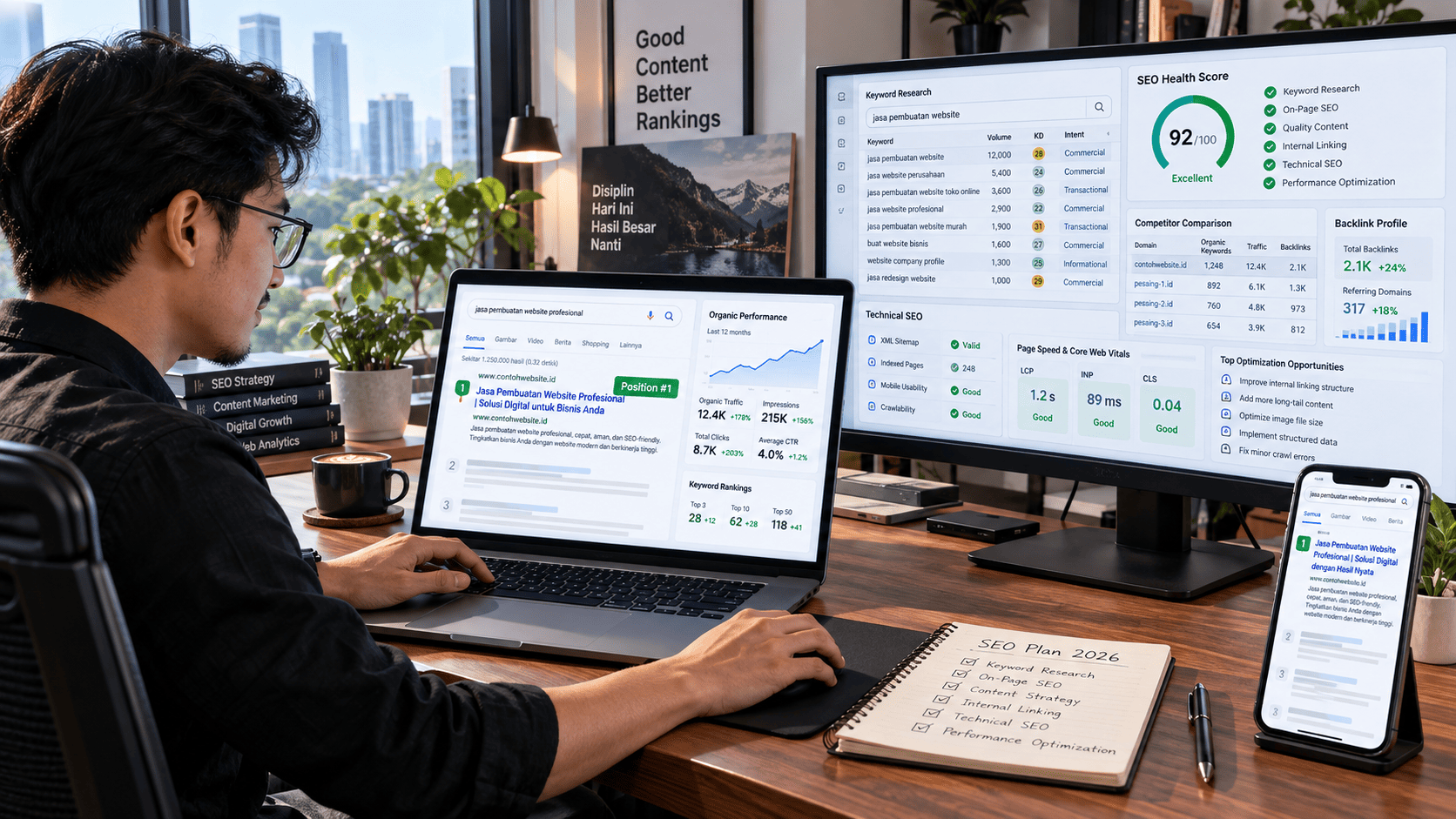
Digital marketing can bring thousands of people to your website, social media pages, or landing pages, but traffic alone does not guarantee growth. The real challenge is attracting the right people, earning their attention, building trust, and giving them a clear reason to take the next step.
Many businesses spend time creating content, running advertisements, sending emails, and posting on social media without connecting those activities into one consistent system. As a result, traffic arrives but disappears just as quickly.
A strong digital marketing growth engine works differently. Instead of relying on isolated campaigns, it creates a repeatable process for attracting qualified visitors, understanding what they need, guiding them through the customer journey, and improving performance based on real data.
When every marketing channel works together, even small improvements can compound into stronger traffic, better engagement, more leads, and higher sales.
Build Your Digital Marketing Growth Engine Around the Right Audience
Before choosing marketing channels, advertisements, keywords, or content formats, you need to understand exactly who you want to reach.
Trying to market to everyone usually produces generic messaging that connects with nobody.
A better approach is to identify the people most likely to benefit from your product, service, or content.
Understand What Your Audience Actually Wants
Demographic information is useful, but effective digital marketing goes deeper.
You should understand questions such as:
- What problem is your audience trying to solve?
- What frustrates them about existing solutions?
- What information do they search for before buying?
- Which platforms do they use most often?
- What prevents them from taking action?
- What result do they ultimately want?
Imagine a company selling productivity software.
Instead of targeting everyone interested in technology, it could focus on freelancers struggling to manage multiple clients. Its marketing could then address specific challenges such as missed deadlines, scattered project files, and complicated task management.
That message is far more likely to attract qualified traffic.
Match Your Message to Search Intent
Someone searching for "what is email marketing" has a very different goal from someone searching for "best email marketing software for small business."
The first person is learning.
The second may be close to making a purchase.
Understanding search intent allows you to create content that meets visitors at the right stage of their journey.
Capture Attention With Content That Solves Real Problems
Online audiences are constantly surrounded by advertisements, videos, notifications, emails, and social media posts. Winning attention requires more than simply publishing frequently.
Your content needs to provide immediate relevance.
Lead With a Strong Problem-Solution Hook
The first few seconds matter.
Instead of opening with a generic introduction, highlight a problem your audience recognizes.
For example:
A marketing consultant targeting small businesses might begin with the frustration of receiving plenty of website visitors but almost no inquiries.
That creates an immediate connection because the reader recognizes the problem.
From there, the content can naturally introduce solutions involving landing pages, traffic quality, conversion optimization, and customer intent.
Create Content for Different Stages of the Customer Journey
A healthy content strategy should support visitors at multiple stages.
Awareness Content
This attracts people who are discovering a problem.
Useful formats include:
- Educational blog posts
- Short social media videos
- Beginner guides
- Infographics
- Checklists
Consideration Content
This helps people evaluate possible solutions.
Examples include:
- Product comparisons
- Case studies
- Tutorials
- Webinars
- Detailed guides
Decision Content
This helps potential customers feel confident enough to act.
Examples include:
- Product demonstrations
- Customer testimonials
- Free trials
- Pricing comparisons
- Frequently asked questions
When these content types work together, visitors can move naturally from discovery to purchase.
Drive Qualified Traffic Instead of Chasing Vanity Numbers
A website receiving 50,000 monthly visits may look impressive, but those numbers mean little if visitors are not interested in what the business offers.
Qualified traffic is more valuable than large volumes of random traffic.
Use SEO to Attract High-Intent Visitors
Search engine optimization remains one of the strongest foundations for sustainable digital marketing.
Start by targeting keywords closely connected to real customer problems.
Instead of focusing only on broad terms such as "digital marketing," consider specific searches such as:
- digital marketing strategy for small businesses
- how to increase ecommerce conversion rate
- content marketing ideas for startups
- ways to generate qualified leads online
Long-tail keywords often have lower search volume, but the visitors they attract can be much more relevant.
Use Social Media Strategically
Social media works best when each platform has a clear purpose.
For example, a B2B company may use LinkedIn to reach decision-makers, while a lifestyle brand may perform better with visually driven platforms.
Avoid simply reposting identical content everywhere.
Instead, adapt the message to the behavior of each audience.
A detailed blog article might become:
- A short educational video
- A carousel explaining key points
- A quick tip post
- An email newsletter
- A discussion thread
This gives one strong content idea several opportunities to generate traffic.
Use Paid Advertising to Accelerate What Already Works
Paid advertising can bring fast visibility, but it works best when paired with a proven offer.
Before increasing your budget, verify that:
- The audience targeting is relevant.
- The advertisement matches the landing page.
- The offer is easy to understand.
- Conversion tracking is configured correctly.
- The landing page provides a clear next step.
Increasing advertising spend cannot fix a weak customer journey.
Turn More Visitors Into Customers With Better Conversion Paths
Traffic is only the beginning.
Once visitors arrive, the website must help them understand what to do next.
Simplify Your Landing Pages
A landing page should answer three questions quickly:
- What is being offered?
- Why should the visitor care?
- What should they do next?
Avoid distracting visitors with too many competing buttons, messages, and navigation options.
A strong page usually includes a clear headline, persuasive supporting copy, visible benefits, social proof, and one primary call-to-action.
Make Calls-to-Action Specific
Generic buttons such as "Submit" or "Click Here" provide little motivation.
More specific calls-to-action communicate what happens next.
Examples include:
- Start Your Free Trial
- Download the Free Guide
- Get Your Custom Quote
- See How It Works
- Join the Newsletter
The best CTA feels like a natural continuation of what the visitor already wants.
Build Trust Before Asking for the Sale
Customers rarely buy simply because they saw an advertisement once.
Trust develops through repeated positive interactions.
Use Proof Throughout the Customer Journey
Social proof can reduce uncertainty and make purchasing decisions easier.
Useful forms of proof include:
- Customer testimonials
- Reviews
- Case studies
- User results
- Industry certifications
- Real product demonstrations
For example, instead of saying that a service improves lead generation, a short case study showing how a client improved qualified inquiries can provide stronger credibility.
Create a Consistent Brand Experience
Your advertisements, website, emails, and social media channels should feel connected.
If an advertisement promises one thing but the landing page communicates something completely different, visitors may lose trust.
Consistency in messaging, tone, design, and offers makes your business feel more reliable.
Use Email Marketing to Turn Interest Into Long-Term Value
Not every visitor is ready to buy immediately.
Email allows you to continue the relationship after the initial website visit.
Instead of constantly sending promotions, provide useful information.
A simple email sequence might include:
- A welcome message.
- An educational tip related to the subscriber's problem.
- A helpful case study.
- A deeper guide or tutorial.
- A relevant product or service offer.
This approach builds familiarity before asking for a purchase.
Segment Your Email Audience
Not every subscriber should receive the same message.
You can segment people based on:
- Products they viewed
- Content they downloaded
- Previous purchases
- Email engagement
- Interests
- Position in the sales funnel
Segmentation makes messages feel more relevant and can improve engagement.
Measure the Metrics That Actually Support Growth
Digital marketing becomes much more powerful when decisions are based on useful data instead of assumptions.
However, tracking every available metric can create unnecessary confusion.
Focus on measurements connected directly to business goals.
Track the Entire Customer Journey
Useful performance metrics may include:
- Organic traffic
- Paid traffic
- Click-through rate
- Conversion rate
- Cost per acquisition
- Lead quality
- Customer acquisition cost
- Revenue per customer
- Customer lifetime value
- Return on advertising spend
Suppose one campaign generates 10,000 clicks but almost no sales, while another produces only 2,000 clicks but delivers significantly more customers.
The second campaign is clearly more valuable.
Traffic volume should always be evaluated alongside conversion quality.
Test Small Improvements and Let Them Compound
Successful digital marketing rarely comes from one dramatic change.
Growth often happens through continuous optimization.
You might test:
- Headlines
- Landing page layouts
- CTA wording
- Email subject lines
- Advertisement creative
- Audience segments
- Offer positioning
Change One Major Variable at a Time
If you change the headline, CTA, page layout, pricing, and advertisement simultaneously, it becomes difficult to understand what caused the result.
Testing one meaningful variable at a time provides clearer insight.
Even a small improvement in conversion rate can become significant when applied across thousands of visitors.
Connect Your Marketing Channels Into One System
The strongest digital marketing strategies do not treat SEO, social media, email, content marketing, and paid advertising as separate activities.
They support each other.
A potential customer might:
- Discover your brand through a search result.
- Read an educational article.
- Follow your social media account.
- Download a free resource.
- Receive several helpful emails.
- Return to your website.
- Compare your solution.
- Make a purchase.
No single touchpoint deserves all the credit.
The entire journey created the conversion.
That is why your digital marketing growth engine should focus on building connected experiences rather than isolated campaigns.
Conclusion: Build a Digital Marketing System That Gets Smarter Over Time
A sustainable digital marketing growth engine is not built by chasing every new trend or publishing content without direction. It grows from understanding your audience, creating genuinely useful content, attracting qualified traffic, improving conversion paths, building trust, and measuring the results that matter.
Start with the biggest weakness in your current marketing system. You might need better keyword targeting, stronger landing pages, clearer calls-to-action, more useful email sequences, or improved conversion tracking.
Make one improvement, measure the result, learn from the data, and continue optimizing.
Over time, those improvements begin to compound. Your marketing becomes more focused, your traffic becomes more valuable, and more visitors move from simply discovering your brand to becoming loyal customers.
Start refining your digital marketing strategy today, test what works with your audience, and keep building a growth engine that becomes stronger with every campaign.